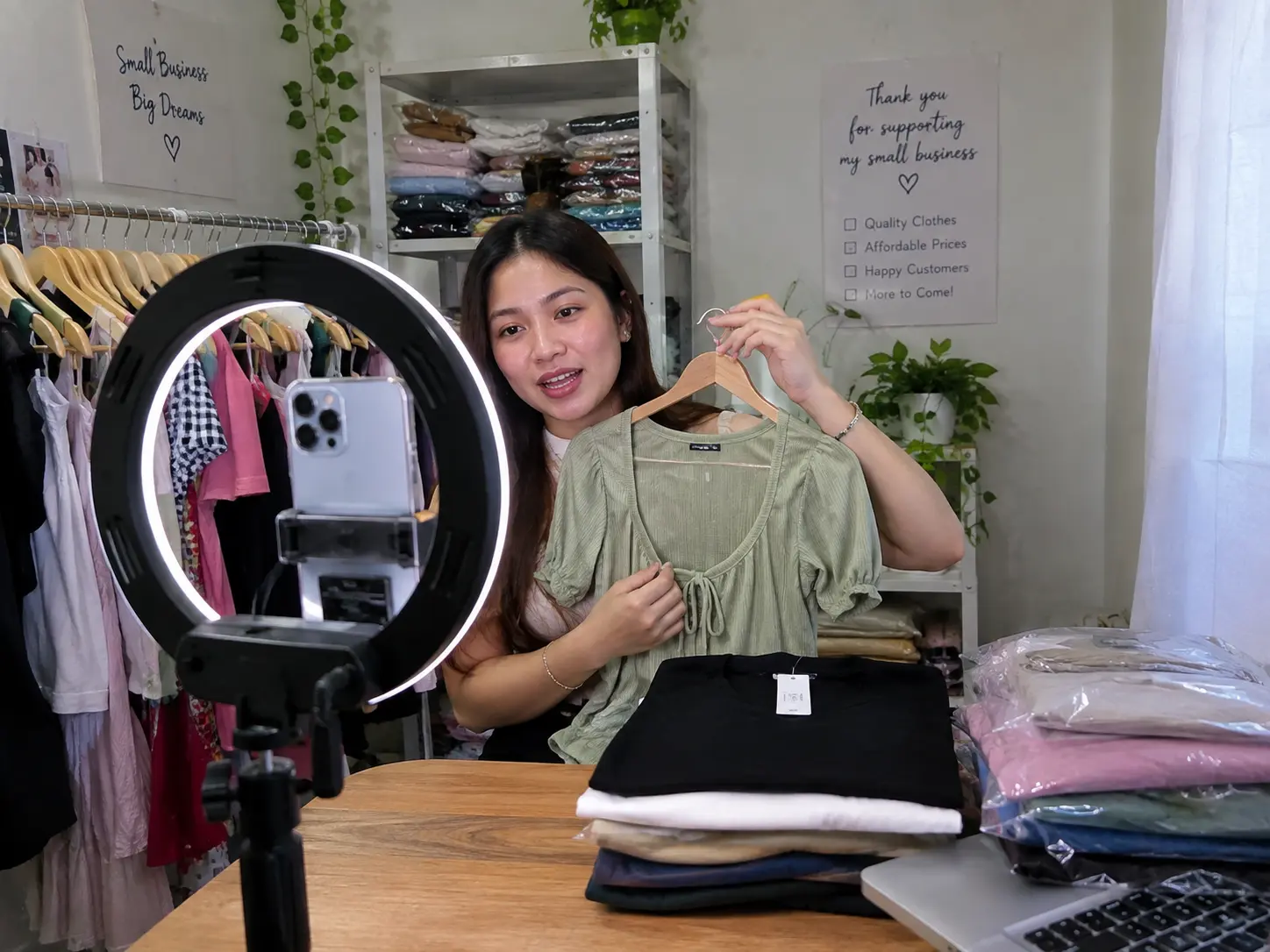
A good digital marketing thesis topic for a BSBA Marketing Management student names a specific platform or tactic — TikTok Shop, live selling, influencer partnerships, email retention, programmatic advertising — paired with a measurable outcome such as purchase intention, brand trust or repeat purchase, scoped to one locality and one respondent group your group can actually reach in a semester. Twenty-five topics below are built that way, organized by the marketing decision each one answers.
Why does “digital marketing” alone make a weak thesis title?
Because it names a whole field, not a study. A title has to name the specific channel or tactic (social commerce, influencer content, search visibility, email), the outcome variable it affects (awareness, trust, intention, retention), and the population and locale. “The Effect of Digital Marketing on Business” tells a panel nothing about what you will actually measure or how; “Live Selling Frequency and Purchase Intention Among TikTok Shop Followers of Micro Fashion Retailers in [City]” tells them exactly what to expect from Chapter 3 onward.
What theory should frame a digital marketing thesis?
The Technology Acceptance Model (Davis, 1989) is a widely cited framework for topics about a platform or tool’s adoption — perceived usefulness and perceived ease of use predicting continued use or purchase intention. For topics about persuasion and message effect (influencer credibility, ad content, social proof), the Elaboration Likelihood Model or a source-credibility framework fits better than TAM. For topics about buying-stage behavior specifically, the AIDA model (Attention, Interest, Desire, Action) remains a standard, simple frame for a descriptive study tracking where in that sequence a channel actually moves respondents. Name the theory in Chapter 1, and make sure your variables genuinely trace to its constructs — a theory mentioned once and never operationalized is a Chapter 3 objection waiting to happen. The fuller set of theories BSBA theses actually cite, including brand equity, service quality and planned-behavior frameworks beyond TAM and AIDA, is laid out in theoretical framework examples by course.
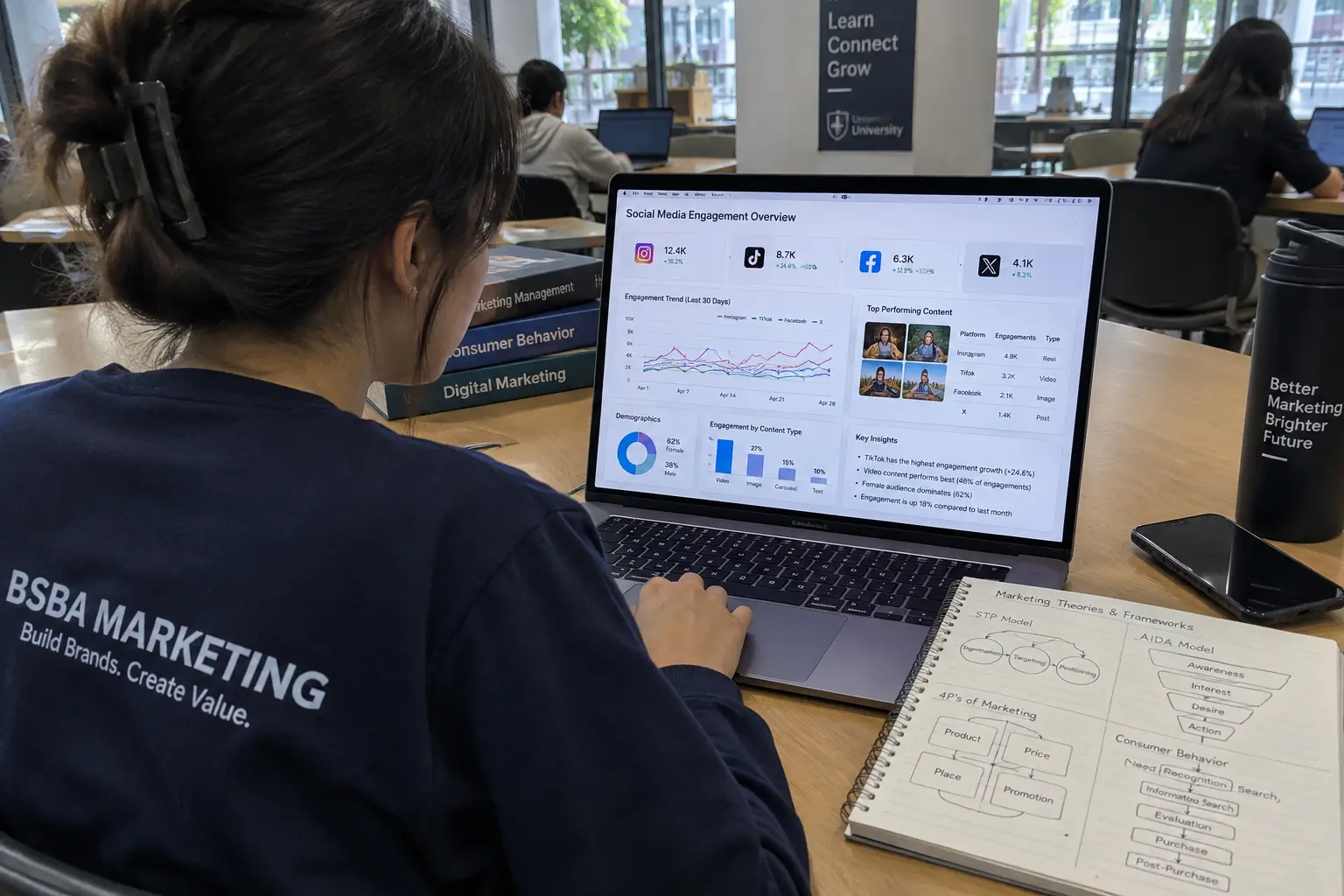
25 digital marketing thesis topics for BSBA students
Social commerce and live selling
- Live selling frequency and purchase intention among followers of micro fashion retailers in [city]
- Perceived trustworthiness of live-selling hosts and its relationship to actual purchase behavior
- Social commerce platform features (in-app checkout, reviews, seller ratings) and continued-use intention among young adult shoppers
- Comparative study of purchase intention across two social commerce platforms among the same respondent group
Influencer and content marketing
- Influencer source credibility and brand trust among college-student followers in [city]
- Micro-influencer versus macro-influencer endorsement and perceived authenticity among consumers of a specific product category
- User-generated content exposure and purchase intention for a local food or beverage brand
- Short-form video content characteristics and engagement among a brand’s social media followers
Search and discovery
- Search engine visibility practices among micro and small enterprises and their relationship to perceived customer reach
- Consumer trust in online reviews and its relationship to purchase decision for local service businesses
- Website usability factors and continued browsing intention among online shoppers in [city]
Email, messaging and retention
- Email marketing engagement (open and click-through behavior, self-reported) and repeat purchase intention among small e-commerce sellers’ customers
- Chatbot customer service responsiveness and satisfaction among online shoppers
- Loyalty programme communication frequency and perceived value among repeat digital customers
Paid and programmatic advertising
- Perceived relevance of targeted social media advertisements and purchase intention among young adult consumers
- Ad frequency and ad fatigue among social media users exposed to a local business’s campaign
- Comparative perceived effectiveness of paid social ads versus organic content among small business owners
MSME and small-business adoption
- Barriers to digital marketing adoption among sari-sari store and micro-retail owners in [municipality]
- Perceived return on investment of digital marketing efforts among owner-operated small businesses
- Digital marketing skills gaps reported by MSME owners and their training-seeking behavior
- Social media platform choice rationale among micro-entrepreneurs marketing handmade or local products
Data, privacy and platform trust
- Consumer data privacy concern and willingness to engage with personalized digital advertisements
- Perceived platform trustworthiness and willingness to complete a purchase without prior brand familiarity
- Awareness of data collection practices among frequent online shoppers and its relationship to platform loyalty

Emerging and hybrid approaches
- Omnichannel consistency (social media, website, physical store) and brand trust among a retailer’s customer base
How do I narrow one of these to fit a semester?
Three narrowing moves apply to almost every topic above. First, replace the bracketed locale with one specific city, municipality or barangay — the narrower the locale, the more defensible your sampling. Second, name one specific respondent group you can actually reach: followers of a named page, customers of a named establishment type, owners registered with a specific business association — not “consumers” generally. Third, check that the outcome variable (purchase intention, trust, satisfaction, adoption) is something a short survey instrument can measure; sales figures themselves are rarely obtainable from a small business and a title depending on them will stall at data collection.
A fourth move worth doing before you commit: search the platform your group intends to use to confirm the respondent group is actually reachable in the numbers your design needs. A niche product category’s TikTok Shop following of forty accounts will not support a 96-respondent Slovin computation, however good the topic sounds on paper — check the realistic population size before, not after, your title is approved.
What does a worked statement of the problem look like for one of these topics?
Taking topic 1 (live selling frequency and purchase intention) as an example:
General statement. This study sought to determine the relationship between live selling frequency and purchase intention among TikTok Shop followers of micro fashion retailers in [City] for the academic year 2026–2027.
Specific questions:
1. What is the profile of the respondents in terms of age, frequency of TikTok Shop use and prior purchase from a live selling session?
2. What is the level of exposure to live selling sessions among the respondents?
3. What is the level of purchase intention among the respondents?
4. Is there a significant relationship between live selling exposure and purchase intention?
Every question maps to a test your Chapter 3 has to name: frequency and percentage for question 1, weighted mean for 2 and 3, and a correlation test (Pearson r or Spearman rho, depending on your data’s distribution) for question 4 — run a normality check on both scores before picking between the two, rather than defaulting to Pearson r out of habit. The full pattern for building a statement of the problem this way, across other BSBA sub-fields, is worked through in eight statement-of-the-problem examples by course, and once your title is drafted, the four faults that most often send a business title back to committee are covered in forty BSBA and HRM thesis title examples.
How is this different from the site’s existing marketing hypotheses piece?
The site’s existing guide to variables and hypotheses examples for a Marketing Management thesis already works through a digital marketing example as one of three worked hypothesis sets, alongside brand equity and service quality. That piece shows how to write the variables and hypotheses once a topic is chosen; this list exists one step earlier, to help you choose the topic itself, and the two are meant to be used together — pick a topic here, then build its statement of the problem using that piece’s worked pattern.
Frequently asked questions
Do I need to name a specific platform, or can I say “social media” generally?
Name a specific platform or format (TikTok Shop, Instagram Reels, Facebook Marketplace, live selling) wherever your topic allows it — platforms differ enough in features and audience behavior that “social media” as a blanket term forces vague variables and a panel will ask which platform you actually studied.
Can I study a business’s actual sales data for a digital marketing thesis?
Rarely, and a title depending on it is risky — most Philippine small businesses will not share sales figures with student researchers. Measure perception, intention or self-reported behavior on the customer side instead, which a survey instrument can capture without requiring the business’s confidential records.
Should I use TAM or AIDA for a digital marketing thesis?
Use TAM when your study is about adopting or continuing to use a platform or tool; use AIDA when your study tracks a buying-stage sequence a channel moves customers through. Some topics genuinely fit either — choose based on which better matches your specific research questions, and state why in Chapter 1.
How many respondents does a digital marketing survey thesis need?
Follow the same logic as any BSBA quantitative thesis: a known population (followers of a specific page, customers of a specific establishment) supports a Slovin’s-formula computation; an unknown or very large population (all social media users) needs a purposive or convenience approach with a clearly stated limitation.
Can two groups in the same class use two different platforms for a similar topic?
Usually yes, since the platform itself becomes the differentiating scope — check with your research coordinator, but “live selling on TikTok Shop” and “live selling on Facebook” are commonly accepted as sufficiently distinct topics within the same broader tactic.
What if my chosen platform changes its features before I finish data collection?
Note the date range of your data collection explicitly in Chapter 3, and describe the platform features as they existed during that period — digital platforms change quickly, and stating your study’s timeframe protects your findings from being read as a claim about the platform’s current state at defense time.
Is a comparative-platform topic harder than a single-platform topic?
Yes, generally — a comparative design needs comparable respondent groups on both platforms and a clear justification for why the comparison matters, which adds a layer of design complexity a single-platform descriptive or correlational study does not have. Choose a comparative topic only if your group has the time and if a genuine reason exists to expect the platforms to differ, not simply because comparing feels more thorough.
Can I combine an MSME-adoption topic with a consumer-side topic in one thesis?
It is possible but usually overextends an undergraduate timeline, since the two need different respondent groups (business owners versus customers) and often different instruments. Pick one side — the business’s adoption and practice, or the customer’s perception and behavior — and let the other side appear only in your recommendations as a direction for future research.
Do I need the business’s permission to study its social media followers?
Studying publicly visible content and surveying willing individual followers does not typically require the business’s permission, but if your design involves the business’s own data (follower demographics it holds privately, message logs, sales figures), you need the business’s consent the same way any company-side data collection does — treat the two situations differently and be explicit in Chapter 3 about which one your study actually involved.
Turn a digital marketing topic into a scoped Chapter 1
Tesify helps you structure the statement of the problem, variables and hypotheses around the digital marketing topic and theory you choose, keeping your Chapter 1 and Chapter 3 aligned from the first draft. Over 9,000 students have used it to write more than 15,000 chapters, and every word is still written by you.