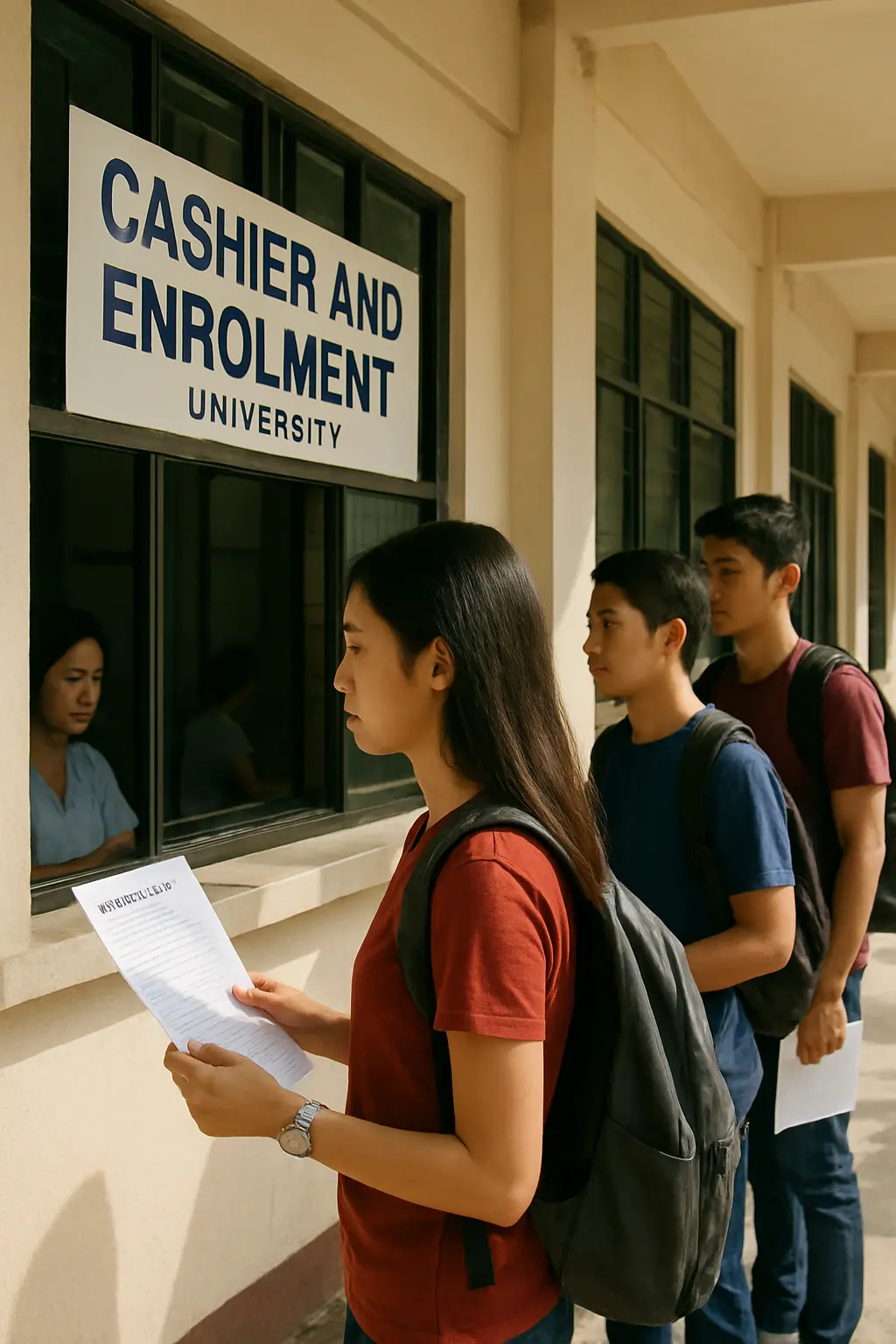
Tuition and other school fees are free for undergraduate students in state universities and colleges and in local universities and colleges under Republic Act No. 10931, the Universal Access to Quality Tertiary Education Act. But the statute names four categories of student who are ineligible, and one of them catches students who simply take too long to finish.
What the law actually says is free
Section 4 of RA 10931 exempts Filipino students pursuing a bachelor’s degree, a certificate degree or a comparable undergraduate degree in an SUC or LUC from tuition and other school fees for the units they enrol in.
Section 5 extends the same exemption to post-secondary technical-vocational education and training leading to non-degree certificate or diploma programmes offered by any state-run TVI under TESDA.
The statute also defines what it means by cost. Section 3(a) defines the “Cost of Tertiary Education” as three things: (1) tuition and other school fees, (2) educational expenses and (3) the cost of living allowance. Only the first of those is what Sections 4 and 5 make free. The other two are addressed by a separate mechanism, which is where most of the practical money actually sits.
Two conditions sit inside Section 4 and are easy to miss. The exemption applies provided the student passes the entrance examination and the other admission and retention requirements of the SUC or LUC. And every SUC and LUC must create a mechanism allowing students with the financial capacity to pay to voluntarily opt out of the subsidy or make a contribution, with those payments reported to CHED.
The four exclusions — Section 6
This is the part students most often do not know until they are told at the assessment window.
| Institution type | Who is ineligible under Section 6 |
|---|---|
| SUCs and LUCs | Students who have already attained a bachelor’s degree or comparable undergraduate degree from any HEI, public or private |
| Students who fail to comply with the admission and retention policies of the SUC or LUC | |
| Students who fail to complete their degree within a year after the period prescribed in their programme | |
| State-run TVIs | Students who hold a bachelor’s degree, or a certificate or diploma for a technical-vocational course equivalent to at least National Certificate III and above |
| Students who fail in any course enrolled in during the programme |
Source: Republic Act No. 10931, Section 6.
Students who fall into any of these categories are charged tuition and other school fees as determined by the governing board of the SUC or LUC, or by TESDA in the case of state-run TVIs.
The third exclusion is the one worth reading twice. A student who does not finish within one year after the prescribed period for their programme loses the exemption. For anyone whose graduation is being held up by an unfinished thesis, that is a financial consequence attached to a delay that is usually thought of purely in academic terms — and it is written into the statute, not into any school’s discretionary policy.
The Tertiary Education Subsidy: what it covers beyond tuition
Section 7 establishes the Tertiary Education Subsidy for Filipino students enrolled in undergraduate and post-secondary programmes of SUCs, LUCs, private HEIs and all TVIs, administered by the UniFAST Board. This is the mechanism that reaches private-school students, and it goes considerably further than tuition.
The statute lists what the TES may cover:
- Tuition and other school fees in private HEIs and private or LGU-operated TVIs, at an amount equivalent to the tuition and other school fees of the nearest SUC or state-run TVI in the area.
- An allowance for books, supplies, transportation and miscellaneous personal expenses, including a reasonable allowance for the documented rental or purchase of a personal computer or laptop and other education-related expenses.
- An allowance for room and board costs.
- For a student with a disability, an allowance for disability-related expenses including special services, personal assistance, transportation, equipment and supplies reasonably incurred.
- For a student in a programme requiring a professional licence or certification, the one-time cost of obtaining the first professional credentials — which the statute enumerates as application fees, notarial fees, review classes fees, insurance premium fees and documentation fees.
The amount of subsidy is set by UniFAST Board guidelines and by the annual budget appropriation, so the statutory list describes what may be covered rather than a guaranteed schedule of payments. Check the current UniFAST guidelines for what is funded in your academic year.
Prioritisation is defined in the statute: first, students in households included in Listahanan 2.0, ranked by estimated per-capita household income; then students not in Listahanan 2.0, ranked by estimated per-capita income based on submitted proof. That prioritisation does not apply in cities and municipalities with no SUC or LUC campus.
The laptop provision and the review-class provision are the two most under-known items on that list. The second connects directly to the licensure pathway: the same law that pays for the review class does not, of course, guarantee the outcome, and what those examinations actually return is set out in the article on board exam passing rates in the Philippines.
What the law does not do
Four things, stated plainly, because each is a common misreading.
- It does not make private university tuition free. Private HEI students are reached through the TES, which is subsidy-based, prioritised by household income and capped at the nearest SUC’s fee level — not through the Section 4 exemption.
- It does not cover graduate study. Sections 4 and 5 refer to bachelor’s, certificate and comparable undergraduate degrees. The statute defines graduate courses separately at Section 3(b) and does not extend the free-tuition exemption to them.
- It does not remove admission requirements. Section 4 is explicitly conditional on passing the entrance examination and the institution’s admission and retention requirements.
- It does not publish a national tuition figure. There is no single “cost of a Philippine degree” in the statute, because SUC and LUC fee levels are set by their own governing boards and private HEI fees are set institutionally.
Section 8 additionally establishes a student loan programme for tertiary education, Section 11 creates a prohibited act with penalties under Section 12, Section 13 expands the UniFAST Board, and Section 14 requires all SUCs, LUCs and state-run TVIs to submit reports to CHED and TESDA.
What counts as an LUC, and why the definition matters
Section 3(e) defines local universities and colleges as CHED-accredited public HEIs established by local government units through an enabling ordinance, financially supported by the LGU concerned and compliant with CHED’s policies, standards and guidelines.
That definition has a practical consequence for research: an institution founded by an LGU that is not CHED-accredited does not meet the statutory definition, and the free-tuition exemption does not attach to it. If your study samples across institution types, use the statutory definition rather than the colloquial one, and say which you used.
How to cite this correctly in a thesis
- Cite the section, not just the act. “RA 10931, Section 6” is checkable. “RA 10931” alone leaves a reader hunting through twenty-one sections.
- Quote the operative words where a distinction matters — “tuition and other school fees” is not the same as “cost of tertiary education”, and the statute defines both.
- Do not treat the statutory list as a payment schedule. Section 7 says what the TES may cover, subject to UniFAST guidelines and appropriations. Write it that way.
- Check for amendments and current implementing guidelines before you rely on any provision. A statute’s text is stable; the guidelines and budget that operationalise it are not, and a provision described from a years-old summary can be out of date in practice.
Where your background section also needs the enrolment picture these entitlements apply to, the figures and their provenance are in the guide to Philippine higher education statistics for Chapter 1, and what happens after graduation is in the tracer study data on Filipino graduates. How to state and source any figure so a panel can verify it is covered in the guide to writing Chapter 1.
Do not let an unfinished thesis cost you your exemption
Section 6 attaches a financial consequence to finishing late. Tesify helps you draft your chapters around your own topic, sources and data so the writing stops being the thing that delays your graduation. Over 9,000 students have used it to write more than 15,000 chapters, and every word is still written by you.
Frequently asked questions
Is college really free in the Philippines?
Tuition and other school fees are free for undergraduate students in SUCs and LUCs and for students in state-run TVIs under RA 10931, subject to the exclusions in Section 6. It is not free for graduate study, and private HEI students are reached through a subsidy rather than an exemption.
What exactly does “tuition and other school fees” include?
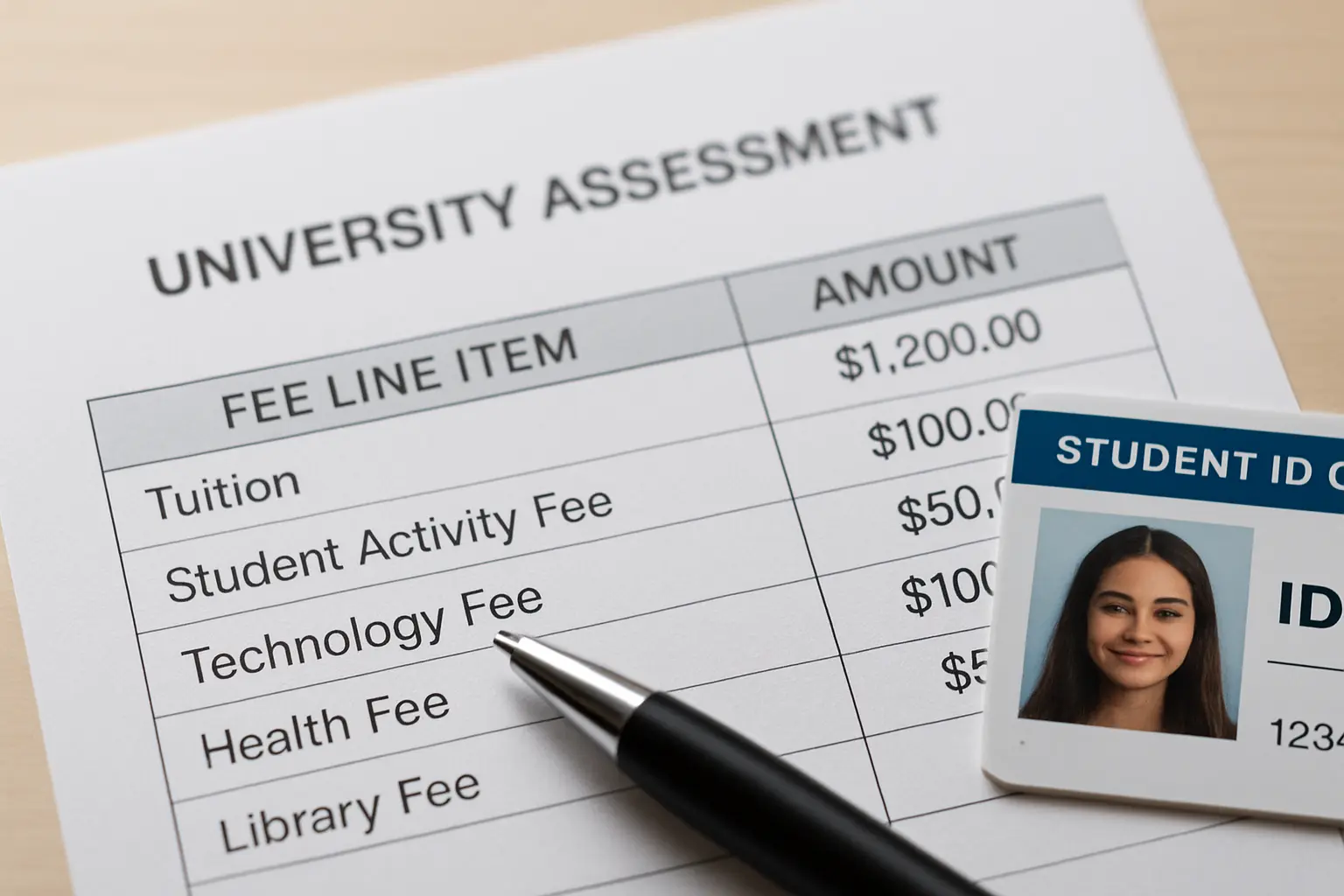
The statute uses the phrase without enumerating every fee, and institutions apply it through their own assessment schedules. Ask your cashier’s office for the current assessment breakdown rather than assuming a particular fee is covered.
Can I lose free tuition if I take too long to graduate?
Yes. Section 6 makes students ineligible if they fail to complete their degree within one year after the period prescribed for their programme.
Does it apply if I already have a degree?
No. Section 6 excludes students who have already attained a bachelor’s or comparable undergraduate degree from any HEI, public or private.
What is the TES and who gets it?
The Tertiary Education Subsidy, administered by the UniFAST Board, available to students in SUCs, LUCs, private HEIs and all TVIs, prioritised by household income with Listahanan 2.0 households ranked first.
Does the TES really cover a laptop?
Section 7 lists a reasonable allowance for the documented rental or purchase of a personal computer or laptop among the expenses the TES may cover. Whether it is funded in a given year depends on UniFAST guidelines and the appropriation, so check the current guidelines.
Does it cover board exam review classes?
Section 7 includes the one-time cost of obtaining first professional credentials, and expressly names review classes fees among the items that cost may include, for students in programmes requiring a licence or certification.
How much is tuition at a private Philippine university?
There is no national figure; private HEIs set their own fees. The TES caps its private-school coverage at the tuition and other school fees of the nearest SUC or state-run TVI, which is a useful benchmark but not a statement of what private schools charge.
Where can I read the full text of RA 10931?
From a reputable Philippine statute repository or the official gazette. Cite by section number so a reader can verify the provision directly.
Does the law apply to graduate students writing a thesis?
Not for the free-tuition exemption, which covers undergraduate and comparable degrees. Graduate courses are defined separately in Section 3(b) and are outside the Sections 4 and 5 exemptions.