
Republic Act No. 11650 (2022) did something most students researching this field have not caught up with yet: Section 4(r) of the law states that the term “Special Needs Education” replaces “Special Education (SPED)” going forward. The topics below still use “SPED” in the title because that is the term students actually search and many programs still use informally, but every topic itself is built around the current 2022 law’s actual language and structure — the terminology note below is itself worth stating explicitly in your own Chapter 1.
What RA 11650 (2022) Actually Says — the Framework Behind Every Topic Below
| Provision | What it establishes |
|---|---|
| Section 2 | States that no learner with disability shall be deprived of access to inclusive, equitable and quality education |
| Section 4(d) | Learners with disabilities should receive services with their age-appropriate peer groups and, as far as practicable, in schools or centers nearest their homes |
| Section 4(r) | The term “Special Needs Education” officially replaces “Special Education (SPED)” |
| Section 5 | Institutes a policy of inclusion in all early and basic education schools, public and private |
| Section 6 | Requires DepEd, with local government units, to establish at least one Inclusive Learning Resource Center (ILRC) per city or municipality, phased through a multi-year roadmap or as resources allow, with existing SPED centers converted into ILRCs |
28 SPED / Special Needs Education Thesis Topics, Grouped by Angle
Implementation of RA 11650 itself
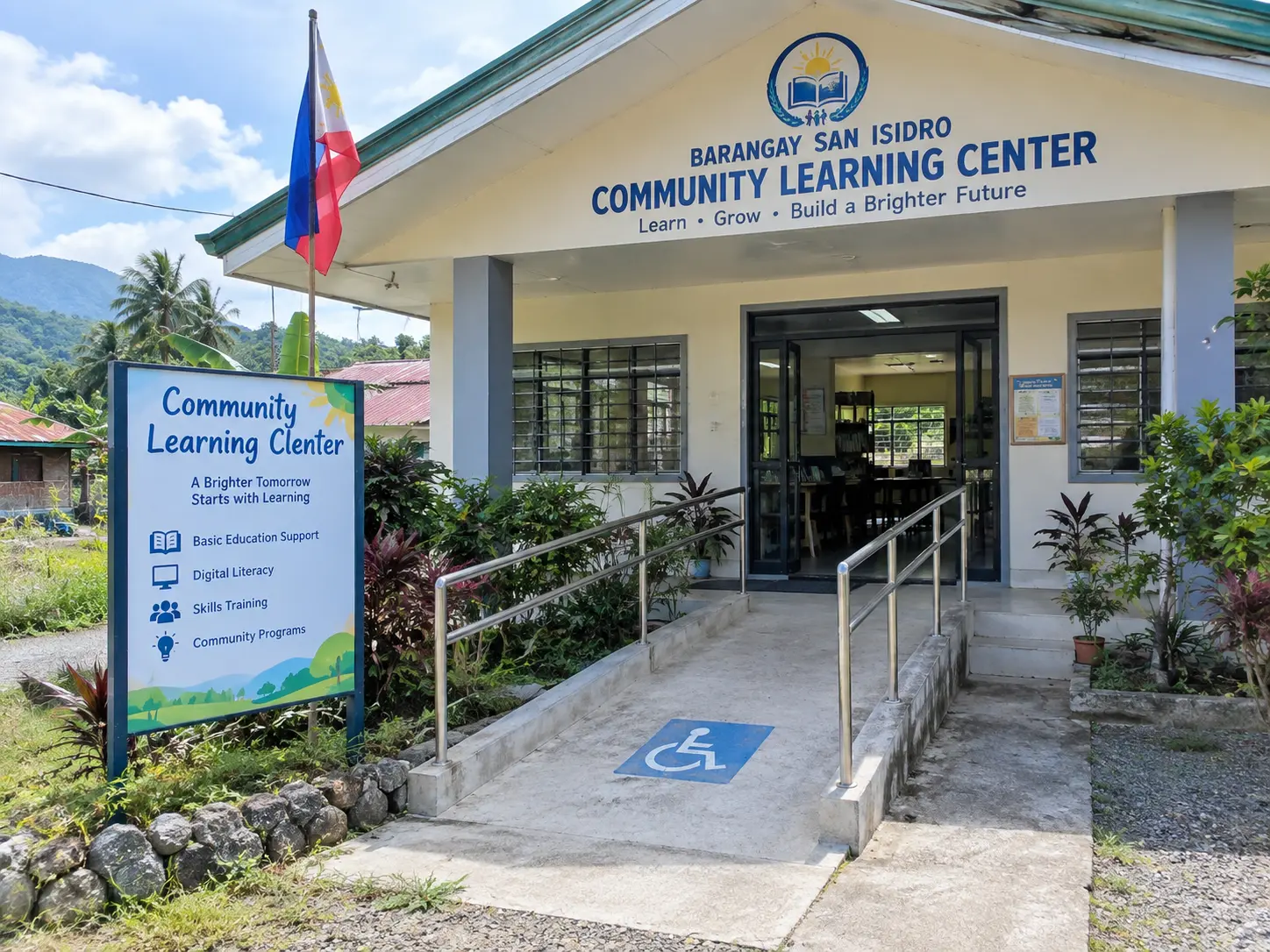
- How prepared are public elementary schools in a specific division to implement the Inclusive Learning Resource Center requirement of RA 11650 Section 6?
- What challenges do former SPED centers report in converting to Inclusive Learning Resource Centers under RA 11650?
- How has RA 11650’s shift from “Special Education” to “Special Needs Education” terminology affected how teachers and parents in a specific locality describe their own practice and experience?
- What gaps exist between RA 11650’s placement principle (age-appropriate peer groups, schools nearest home) and actual placement practice in a specific school division?
- How do private schools without an existing SPED program interpret their obligation under RA 11650’s policy of inclusion in Section 5?
Teacher preparedness and professional development
- How prepared do general-education classroom teachers feel to implement inclusive practices for learners with disabilities under RA 11650, without a Special Needs Education specialization?
- What continuing professional development needs do Special Needs Education teachers report three or more years after RA 11650’s passage?
- How does pre-service teacher training at a specific university align with RA 11650’s inclusion framework, based on the teacher education curriculum’s own stated outcomes?
- What co-teaching or team-teaching models are used between general-education and Special Needs Education teachers in an inclusive classroom, and how do teachers themselves evaluate their effectiveness?
- How do Special Needs Education teachers describe their workload and caseload management across multiple disability categories in one inclusive classroom?
Learner-specific and disability-specific angles
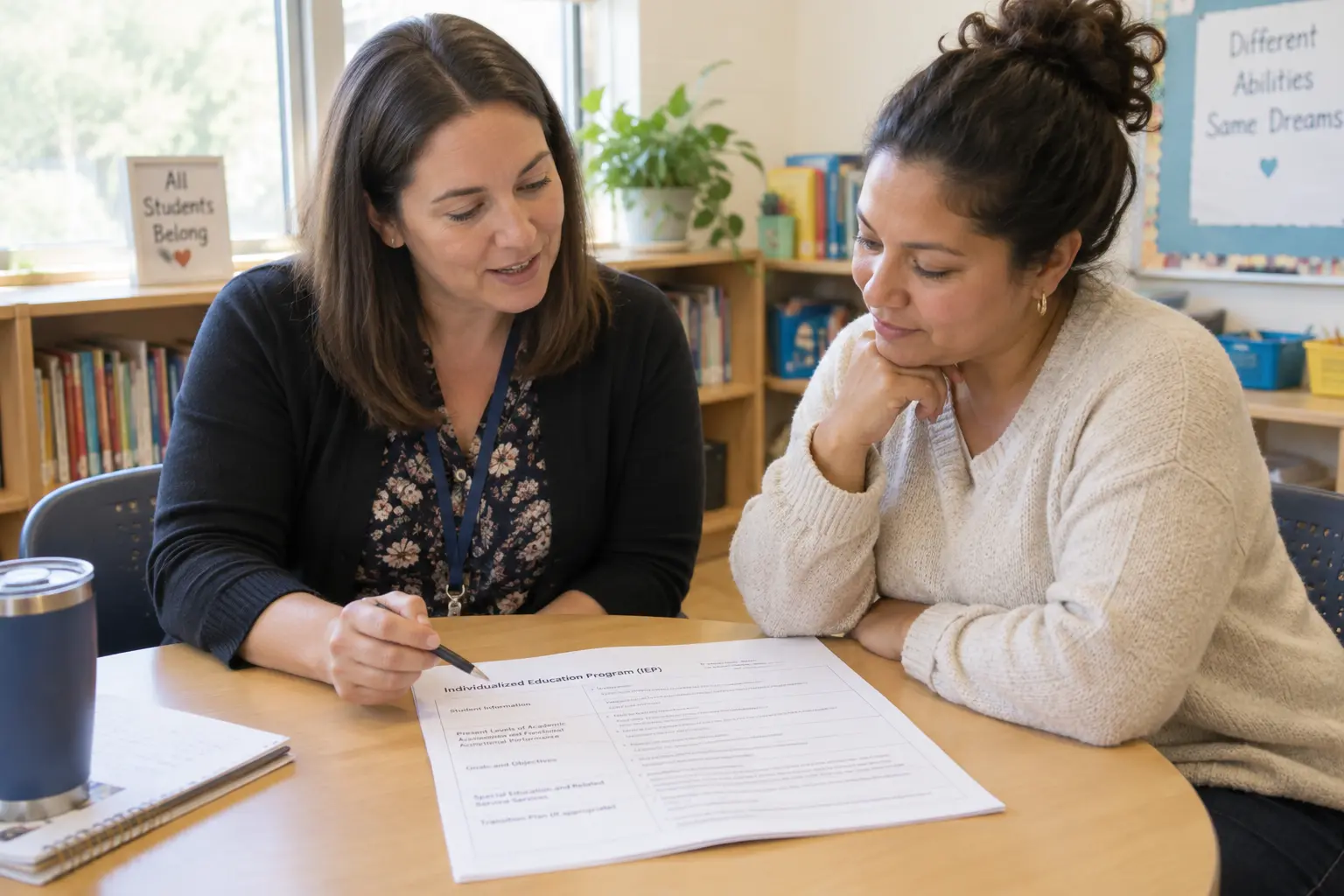
- What individualized education plan (IEP) practices are used for learners on the autism spectrum in a specific inclusive classroom, and how do teachers assess whether goals are being met?
- How do teachers adapt literacy instruction for learners with intellectual disability under an inclusive, age-appropriate-peer-group placement model?
- What assistive technology is actually available to learners with visual or hearing impairment in a specific public school, versus what RA 11650’s framework envisions?
- How are gifted and talented learners served under the Special Needs Education framework, given that giftedness is a distinct exceptionality from disability-based needs?
- What communication strategies do teachers use with non-verbal learners in an inclusive classroom setting, and how do these compare across different disability categories?
Family and community involvement
- How involved do parents of learners with disabilities report being in the development of their child’s individualized education plan?
- What barriers do families in a specific rural locality face in accessing an Inclusive Learning Resource Center under RA 11650’s one-per-municipality requirement?
- How do sibling relationships and family dynamics change after a child is diagnosed with a disability and placed in an inclusive learning setting?
- What role do parent-teacher associations play in advocating for Special Needs Education resources at the school level?
- How do families from different socioeconomic backgrounds experience access to private versus public Special Needs Education services?
Policy, transition, and systems-level questions
- How does the transition process from early intervention to formal schooling work for a learner with disability under RA 11650’s framework, and where do gaps in continuity occur?
- What transition planning exists for Special Needs Education learners moving from basic education into senior high school or technical-vocational tracks?
- How do Special Needs Education program budgets at the school level compare with the resource requirements implied by RA 11650’s ILRC mandate?
- What monitoring and evaluation mechanisms exist at the division level to track RA 11650 implementation, and how effective do school heads report them to be?
- How does inclusive education implementation differ between urban and rural school divisions in the same region?
Inclusive versus segregated models: the live debate
- How do teachers, parents and administrators in a specific school division weigh the benefits and drawbacks of full inclusion versus a resource-room pull-out model for specific disability categories?
- What academic and social outcomes are reported by learners with disabilities in a full-inclusion classroom compared to a self-contained Special Needs Education classroom in the same school?
- How do general-education classmates’ attitudes toward inclusion change over an academic year in a classroom newly implementing RA 11650’s placement principle?
Access and Sample Size: Plan This Before You Fall in Love With a Topic
Several of the topics above (11 to 15, 26 to 28) require direct classroom access — observing an inclusive classroom, interviewing a Special Needs Education teacher, or reviewing anonymized IEP goal data with school permission. Confirm this access in writing with a school head or division office before finalizing your topic, since a Special Needs Education classroom typically has fewer learners than a general classroom, and a research design assuming a large quantitative sample may simply not have enough eligible participants in one school. A case-study or multiple-case qualitative design, drawing on two or three classrooms rather than assuming a large survey sample, is often the more realistic fit for classroom-level topics in this sub-field, and stating that reasoning explicitly in Chapter 3 is stronger than forcing a quantitative design onto a population too small to support it.
Topics scoped at the policy or systems level instead (1, 2, 4, 5, 18, 23, 24) can draw on document analysis of school or division records, interviews with administrators, and RA 11650’s own published text, which sidesteps the small-classroom-population problem entirely and may suit a timeline-constrained undergraduate thesis better than a classroom-observation design.
A Note on the Terminology You Choose
Decide early and state explicitly in your Chapter 1 whether you will use “Special Education (SPED),” “Special Needs Education,” or a specific disability-category term throughout your paper, and why. RA 11650’s Section 4(r) makes “Special Needs Education” the current statutory term, but a great deal of existing academic literature, older CHED program names, and everyday usage among practitioners still uses “SPED” — a thesis that acknowledges this transition explicitly, rather than picking one term without comment, reads as more current and more carefully researched to a panel that has read the 2022 law.
What This List Deliberately Avoids
None of these topics assume access to a specific child’s confidential diagnostic records or IEP documents without proper consent and your school’s ethics review process — research involving minors with disabilities carries heightened ethical requirements, and any topic above involving direct learner data collection needs informed parental consent, assent appropriate to the learner’s own capacity, and your institution’s ethics board clearance before you proceed, not just before you submit your final manuscript.
Where This Fits With the Rest of Your Thesis
Once you have chosen a topic, the theoretical grounding many of these draw on is covered in our theoretical framework guide for an education thesis, and if your topic sits at the general BEEd/BSEd level rather than specifically in Special Needs Education, the broader education thesis topics guide backed by national data covers that wider field. The cross-course theoretical framework examples by course piece is also useful background for seeing how education-specific theories are typically presented next to other disciplines’ frameworks. And for the Chapter 1 mechanics every Philippine thesis needs regardless of topic, our guide on definition of terms, conceptual and operational shows the exact format a term like “inclusion” or “Special Needs Education” should take when you define it for your own study.
Where Tesify Fits
Once you have narrowed one of these topics and named your specific school, division, or learner population, Tesify turns your research question into a properly structured statement of the problem and significance of the study.
Turn a topic from this list into a full Chapter 1
Tesify drafts your statement of the problem, objectives, and significance of the study once you have scoped your specific Special Needs Education topic — over 9,000 students have used it to write more than 15,000 chapters, and every word is still written by you.
Frequently Asked Questions
- Is “SPED” still the correct term to use in a Philippine thesis?
- RA 11650 (2022) Section 4(r) states that “Special Needs Education” officially replaces “Special Education (SPED).” Many practitioners and older literature still use “SPED” informally, so state clearly in your Chapter 1 which term you use and why, acknowledging the 2022 terminology shift.
- What is an Inclusive Learning Resource Center (ILRC)?
- Under RA 11650 Section 6, an ILRC is a support hub — at least one required per city or municipality — that existing SPED centers are meant to convert into, serving as a resource for inclusive education rather than a segregated setting.
- Can I still study a self-contained or pull-out SPED classroom model given RA 11650’s inclusion focus?
- Yes. RA 11650 sets a policy direction toward inclusion, but actual implementation varies by school and locality, and studying how a specific school balances inclusion with a resource-room or pull-out model is itself a legitimate and current research question (see topics 26 to 28 above).
- Do I need special ethics clearance to research learners with disabilities?
- Yes, typically heightened ethics review applies to research involving minors, and even more so when a disability affects a learner’s capacity to give assent. Confirm your specific institution’s ethics board requirements before collecting any learner-level data.
- Is giftedness covered under RA 11650’s Special Needs Education framework?
- Giftedness is generally treated as a distinct exceptionality from disability-based needs in Philippine education policy discussions; confirm how your specific program and adviser classify it before framing a topic around gifted learners under the same umbrella as disability-focused Special Needs Education.
- How is this list different from the site’s general education thesis topics guide?
- The general guide covers BEEd/BSEd topics broadly across curriculum, assessment, and pedagogy. This list is scoped specifically to Special Needs Education and RA 11650’s inclusive-education framework, a distinct sub-field with its own current law, terminology, and research questions.
- What sample size is realistic for a topic involving a Special Needs Education classroom?
- There is no fixed formula. Because eligible classrooms and learners are naturally fewer than in general education, a purposive sample of a small number of classrooms, teachers or families, clearly justified in Chapter 3, is more realistic than assuming a large probability sample.
- Can I compare public and private school implementation of RA 11650 in one thesis?
- Yes, and it is a legitimate comparative angle not explicitly listed above — frame it as its own research question naming the specific public and private schools or divisions you have access to, since implementation resources and obligations can differ meaningfully between sectors.