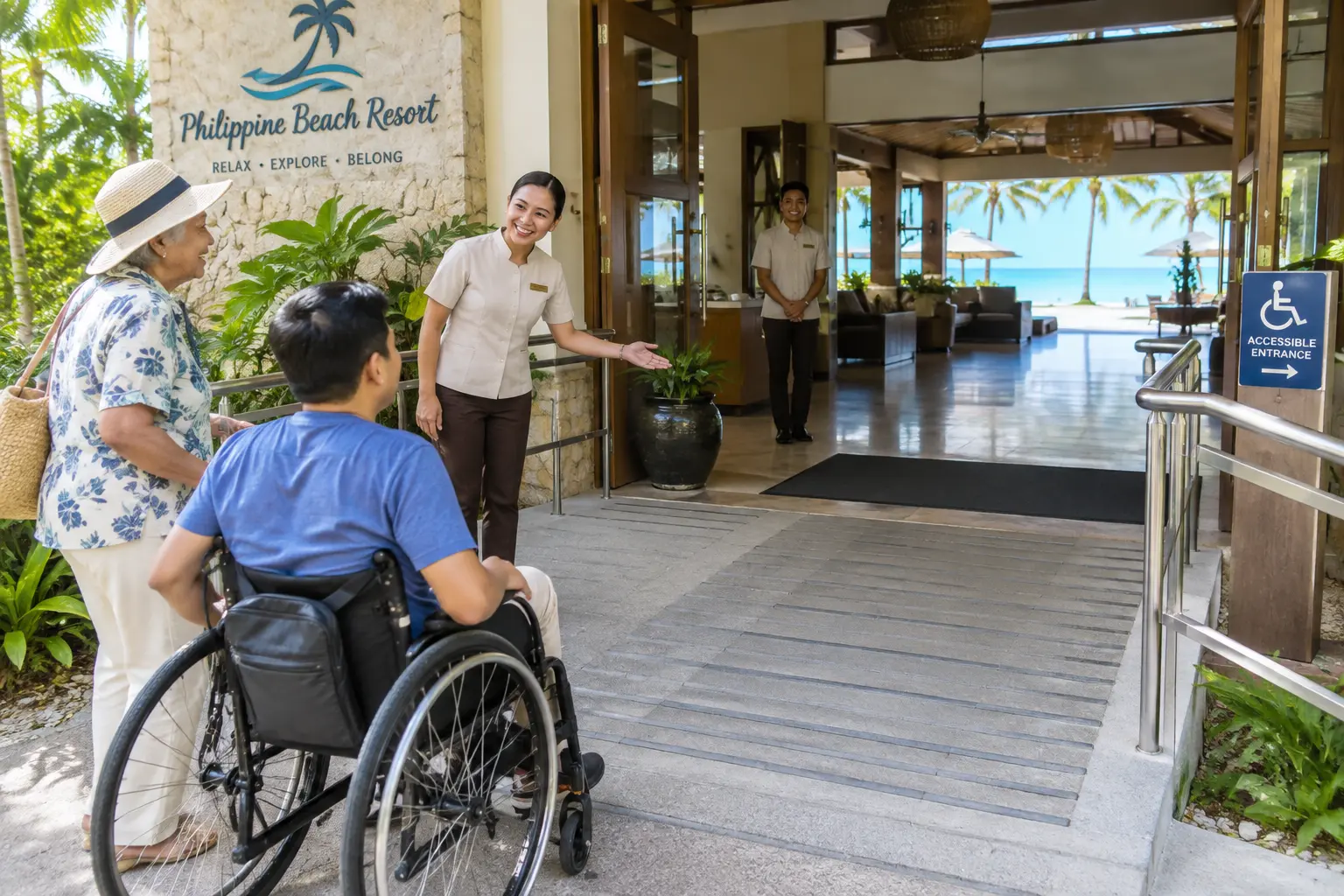
A BS Tourism thesis on “sustainable tourism” or “tourism marketing” competes with dozens of past titles on the same shelf. A thesis scoped to accessible tourism for senior citizens and persons with disability (PWD) is narrower, has a real regulatory backbone in Republic Act 9994 and Republic Act 10754, and gives your panel a respondent group and a data source you can actually name in Chapter 1. Here is how to frame it, step by step.
Step 1: Define the population before the topic
“Accessible tourism” is not one population. Republic Act 9994, the Expanded Senior Citizens Act of 2010, defines a senior citizen in Section 2 as “any resident citizen of the Philippines at least sixty (60) years old.” Republic Act 10754 expands the discount and accessibility privileges under the Magna Carta for Persons with Disability. A thesis that names one of these two groups, not both loosely, gives the panel a respondent group it can picture: a senior citizen tour group booking a resort in Batangas, or a wheelchair user checking whether a heritage site in Vigan has a ramp.
Expected output of this step: one sentence naming the population (senior citizens, PWD, or a specific PWD sub-group such as wheelchair users or persons with visual impairment) and the destination type (urban heritage site, beach resort, eco-tourism park, transport hub).
Step 2: Anchor the legal basis in Chapter 1
Both statutes give you citable, non-negotiable obligations, not just background color:
- RA 9994 Section 4(a) grants senior citizens a 20% discount and VAT exemption on, among others, “in actual fare for land transportation travel in public utility buses (PUBs), public utility jeepneys (PUJs), taxis,” domestic air and sea transport fare, and “on the utilization of services in hotels and similar lodging establishments, restaurants and recreation centers.”
- RA 10754 extends the same 20% discount and VAT exemption structure to persons with disability, naming “fees and charges relative to the utilization of all services in hotels and similar lodging establishments; restaurants and recreation centers” and fare “for domestic air and sea travel” and land transportation including LRT, MRT and PNR.
Your statement of the problem can ask, concretely: does a named establishment or destination actually apply the discount correctly, and does its physical layout let the traveler use the service at all? The first question is about compliance; the second is about accessibility in the literal, physical sense — a ramp, a grab bar, a Braille menu, a tour guide who can sign. Most accessible-tourism theses collapse these two into one vague question. Keep them separate; they need different instruments (Step 4).
Step 3: Choose a design that fits a semester timeline
Three designs are realistic for an undergraduate accessible-tourism thesis:
- Descriptive-evaluative survey — senior citizen or PWD tourists rate a named destination or establishment on an accessibility checklist and a service-quality scale. Fastest to run; needs 100 or more respondents for reliable percentages.
- Case study of one establishment or destination — an accessibility audit (physical layout, staff training, signage) cross-checked against a small set of tourist interviews. Works well when respondents are hard to reach in volume.
- Mixed-methods — the audit plus the survey, triangulated. Strongest thesis, heaviest workload; only choose this if your group has more than one semester or a light course load elsewhere.
Expected output of this step: a one-paragraph justification naming the design, the respondent group size, and why that design fits your timeline — this becomes the first paragraph of Chapter 3.
Step 4: Build the two instruments you actually need
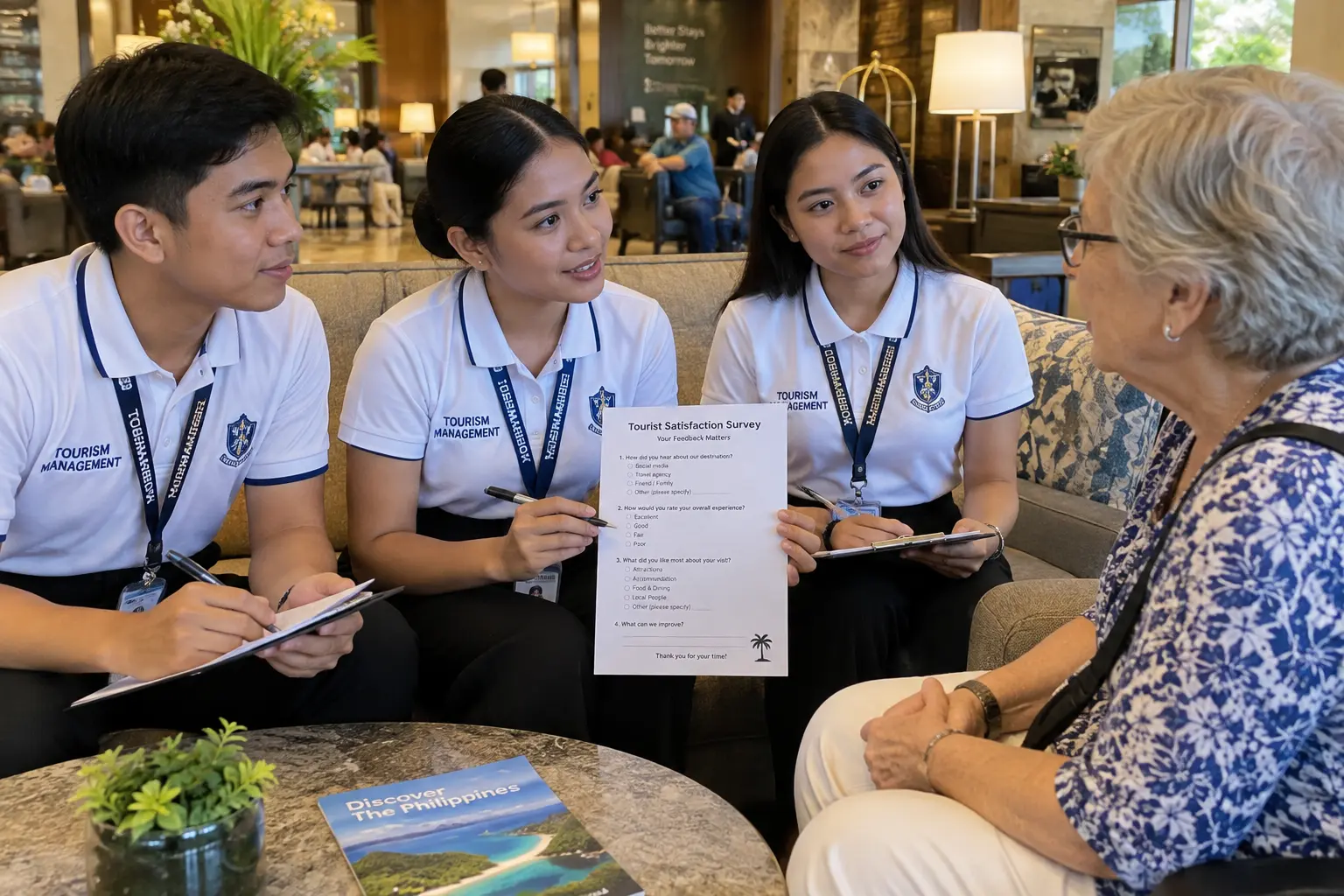
An accessibility checklist and a service-quality scale answer different questions and should not be merged into one form:
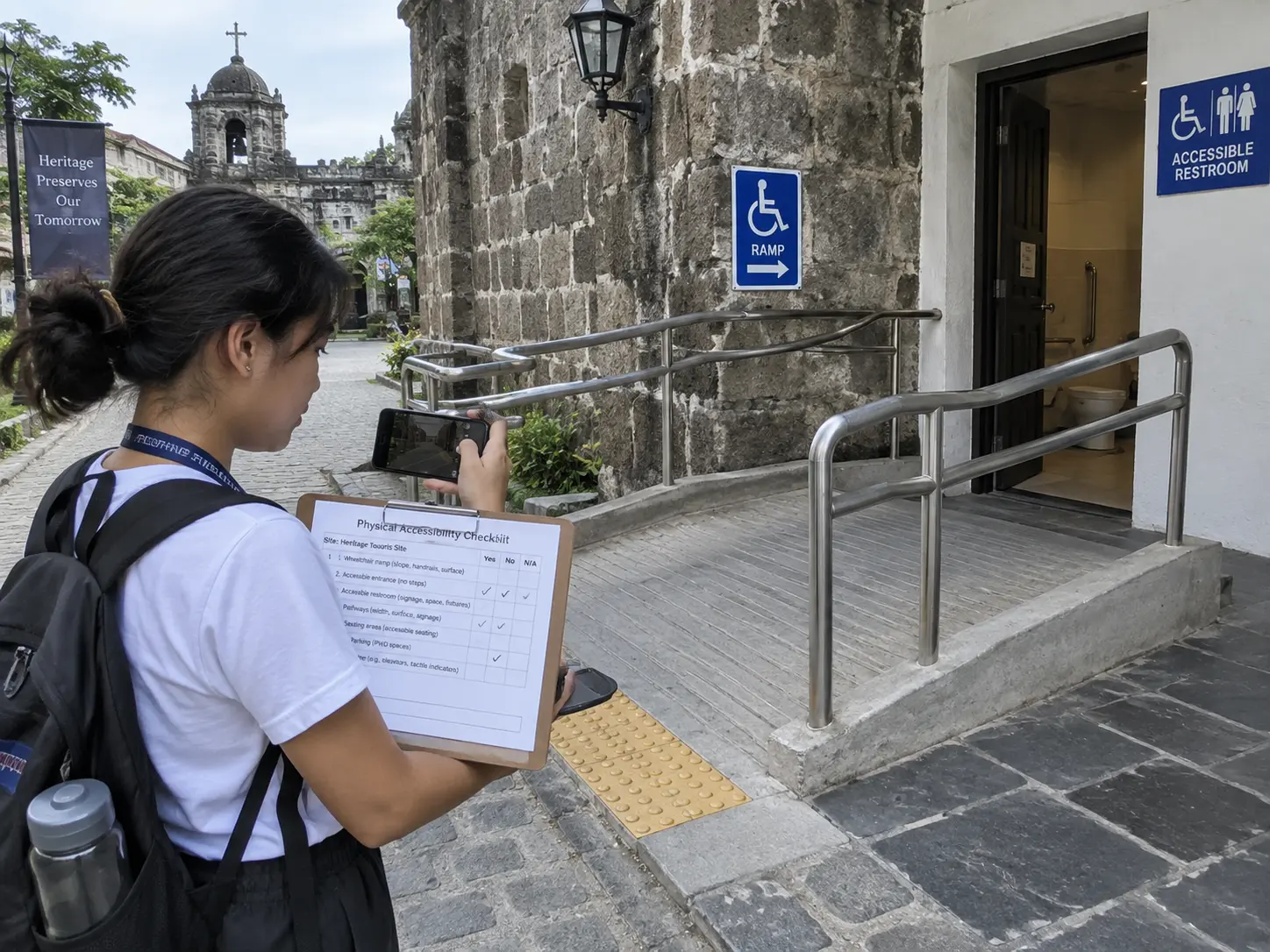
- Physical accessibility checklist — built from the establishment’s own compliance obligations under RA 10754 and Batas Pambansa 344 (the Accessibility Law, which sets architectural accessibility standards such as ramps and accessible comfort rooms): ramp gradient, doorway width, accessible restroom, signage, priority lanes, staff disability-awareness training. Score each item present/absent, not on a Likert scale — this is a compliance instrument, not an opinion instrument.
- Traveler experience scale — a short 5-point Likert instrument (5–7 items) on ease of booking, staff helpfulness, discount application at point of sale, and willingness to return. Adapt, do not invent: a locally validated tourism service-quality scale is the standard starting point — see which survey instrument a tourism thesis should use for how SERVQUAL compares to a destination-image scale — then trim the chosen instrument to the items relevant to accessibility rather than writing new items from scratch.
Step 5: Write the worked statement of the problem (APA 7th)
A filled-in example you can adapt:
General problem: This study assessed the physical accessibility and service quality experienced by senior citizen tourists at [Destination Name], Batangas, as a basis for an accessibility improvement plan.
Specific questions:
1. What is the physical accessibility level of [Destination Name] based on RA 10754 and BP 344 compliance items?
2. What is the service quality level experienced by senior citizen tourists in terms of booking, staff assistance and discount application?
3. Is there a significant relationship between the destination’s physical accessibility score and tourists’ service quality rating?
In-text citation of the statute in APA 7th style reads: (Republic Act No. 9994, 2010) on first mention, with the full title in the reference list entry: Republic Act No. 9994 (2010). Expanded Senior Citizens Act of 2010. Official Gazette of the Republic of the Philippines. Do the same for RA 10754, citing 2016, its approval year. For how the rest of Chapter 1 should be built around this statement of the problem, see how to write Chapter 1 of a thesis section by section and eight worked statement-of-the-problem examples by course for the alignment-grid habit that keeps your specific questions, instrument and statistical test in sync.
Step 6: Pressure-test the topic before your title defense
Two failure modes sink this topic more than any other:
- The topic becomes an accessibility audit with no tourist voice — a checklist alone is a facilities-management study, not a tourism thesis. Your panel will ask where the traveler’s perspective is. Keep the traveler survey even if it is small.
- “Accessible tourism” stays undefined for 60 pages — panels reject titles that never say which population or which specific accessibility dimension (physical, sensory, communication) the study covers. Name it in the title itself, not just in the definition of terms.
Five narrowed titles you can defend
A title that names the population, the accessibility dimension and the destination survives a title defense far more often than a generic “accessible tourism” label. Five workable starting points, each ready to swap in your own destination:
- Physical Accessibility and Service Quality of [Destination] as Perceived by Senior Citizen Tourists: Basis for an Accessibility Improvement Plan
- Compliance of [City]’s Heritage Sites to RA 10754 Accessibility Standards: An Audit and Improvement Proposal
- Wheelchair Accessibility of Beach Resorts in [Province]: A Comparative Case Study of Three Establishments
- Senior Citizen Discount Compliance and Traveler Satisfaction in [City]’s Budget Hotels
- Sensory-Friendly Tourism for Visually Impaired Travelers: An Accessibility Assessment of [Destination]’s Signage and Wayfinding
Notice each one names a population (senior citizens, wheelchair users, visually impaired travelers), a dimension (physical, sensory, discount compliance) and a place. Swap the bracketed elements for your own group’s destination and the title is ready to bring to your adviser — and if a version of this title has already come back from a panel once, the four fixable faults behind most rejections are diagnosed in how to get a rejected thesis title approved this week.
A fuller physical accessibility checklist
The RA 10754/BP 344 checklist in Step 4 should go beyond ramps. A working item bank most undergraduate audits can complete in one site visit:
| Category | Item | Compliant / Partially / Non-compliant |
|---|---|---|
| Entry | Ramp present, gradient walkable without assistance | |
| Entry | Door width accommodates a standard wheelchair | |
| Parking | Designated PWD/senior parking slot near entrance | |
| Comfort room | Accessible cubicle with grab bars | |
| Signage | Directional signage in large print or tactile format | |
| Service | Staff trained to assist a senior citizen or PWD guest | |
| Payment | Discount and VAT exemption applied correctly at point of sale | |
| Circulation | Clear, obstruction-free path between key areas (lobby, dining, restroom) |
Score each row per Step 4’s rule (present/absent or the three-level compliance scale), then aggregate into a single accessibility index per establishment — this index is what you correlate against the traveler experience scale in Step 5’s third specific question.
Consent when your respondents are elderly or have a disability
A senior citizen respondent can consent for themselves in almost every case — RA 9994 does not restrict legal capacity by age alone. For a PWD respondent, capacity depends on the nature of the disability, not the label “PWD” itself: a wheelchair user with no cognitive impairment consents exactly as any adult would; a respondent with an intellectual or communication disability may need a support person present during the interview or survey administration, noted in your methodology as an accommodation, not as a proxy consent. Whichever accommodation you use, describe it in Chapter 3 rather than leaving the reader to assume standard survey conditions applied.
Where the destination and traveler data come from
The Department of Tourism (DOT) publishes domestic and foreign visitor arrival statistics — the wider set of national tourism datasets, and the trap in each one, is mapped in where tourism and hospitality students find data for a Philippine thesis. The National Council on Disability Affairs (NCDA), which RA 10754 tasks with promulgating the rules for the Act’s implementation, is the national disability-affairs body and publishes accessibility guidance separate from DOT’s tourism figures — cite each body for what it actually covers, and do not attribute a DOT visitor count to NCDA or vice versa.
Where Tesify fits, and where your own group’s data comes in
Tesify helps you structure the Chapter 1 framing, the RA 9994/RA 10754 legal-basis section and the accessibility checklist around your own inputs, and it is used by more than 9,000 students across over 15,000 chapters — the thesis stays 100% written by you, and your accessibility scores and traveler survey responses have to come from a destination your group actually visited. Start your Chapter 1 with Tesify once you have picked the destination and the population.
Frequently Asked Questions
- Can I study both senior citizens and PWD in the same thesis?
- You can, but treat them as two respondent groups with separate findings, not one merged sample — their accessibility needs and the statutes that apply differ enough that averaging them together hides the more useful finding.
- Do I need NCDA or DOT permission to survey tourists at a destination?
- You need the destination or establishment’s own permission to survey guests on their property; NCDA and DOT are data sources for background statistics, not gatekeepers for your fieldwork, unless the site itself is a government-run facility that requires a research clearance.
- What if the destination I want to study has no PWD or senior facilities at all?
- That is a valid finding, not a dead end — a zero-compliance audit paired with a small set of traveler complaints or refusals to book is still a complete study; reframe the recommendation section around what the establishment needs to build, not what it already has.
- Is a hotel or a tourist spot the better unit of analysis?
- A single named establishment is easier to defend than “tourist spots in [city]” generally, because your accessibility checklist needs one physical layout to audit — pick one property and, if your adviser wants scale, add two or three more as a comparative case study rather than surveying a whole area at once.
- How many respondents does the traveler survey need?
- For a descriptive-evaluative design at one destination, 100 respondents is a common floor for stable percentages; if senior citizen or PWD visitors are genuinely scarce at your site, a purposive sample of 30 to 50 with a clearly stated limitation is defensible — state the constraint rather than inflating the number.
- Should the accessibility checklist use a rating scale instead of present/absent?
- Keep it present/absent or a simple compliant/partially compliant/non-compliant scale — a Likert scale on a physical feature like ramp gradient invites subjective disagreement between coders, while a compliance checklist gives you a defensible, repeatable score.
- Can I use RA 10754 provisions that were later amended?
- Check the current, in-force text of RA 10754 and any implementing rules from NCDA before you finalize your citation — statutes on discounts and accessibility standards are periodically clarified by implementing rules, and your Chapter 1 should cite the version in force at the time you write, not an older draft you found first.
- Does this topic work for a capstone project instead of a thesis?
- Yes — reframe the deliverable as an accessibility improvement plan or a proposed accessible-tourism package for the destination rather than a pure research report, and the same instruments and legal basis carry over.