The pest outbreak hit your rice plots in week six. Half your replicates are gone, your remaining data is lopsided, and the panel wants your limitations section by Friday. You know the study did not go as planned — what you do not know is how to write that down without sounding like the whole thesis fell apart. It did not. A single-season field trial with a pest incident is one of the most common outcomes in Philippine agriculture theses, and there is a standard, defensible way to write it up that panels accept every semester.
This is the section that turns “things went wrong” into “here is exactly what the study can and cannot claim” — the difference between a limitation a panel respects and a weakness that gets your defense extended.
What is the difference between a limitation and a delimitation?
Both sections sit at the end of Chapter 1 or the start of Chapter 5 depending on your school’s manual, and both exist because no undergraduate thesis is a perfect, unconstrained experiment — a panel does not expect one. What they expect is a clear-eyed account of exactly where this study’s boundaries are, which is a different skill from the methodology-writing covered in how to write Chapter 3 research methodology: methodology describes what you planned to do, and limitations describe what actually happened when the plan met a real growing season.
A limitation is something outside your control that constrained the study — the pest outbreak, one growing season instead of two, weather that did not cooperate, a farmer cooperator who withdrew mid-trial. A delimitation is something you chose to exclude on purpose — one variety instead of testing five, one municipality instead of a whole province, one growing season by design rather than by accident. Panels expect both sections, and mixing them up is one of the fastest ways to get sent back: writing “the study was delimited to one season due to the pest outbreak” claims a choice you did not actually make, and a panel member who was there for your proposal defense will catch it immediately.
How do you write the limitations section after a field trial goes wrong?
State exactly what happened, exactly when, and exactly what it changed about your data — not a vague admission, a precise account a panel can evaluate. A worked example for a pest-outbreak scenario:
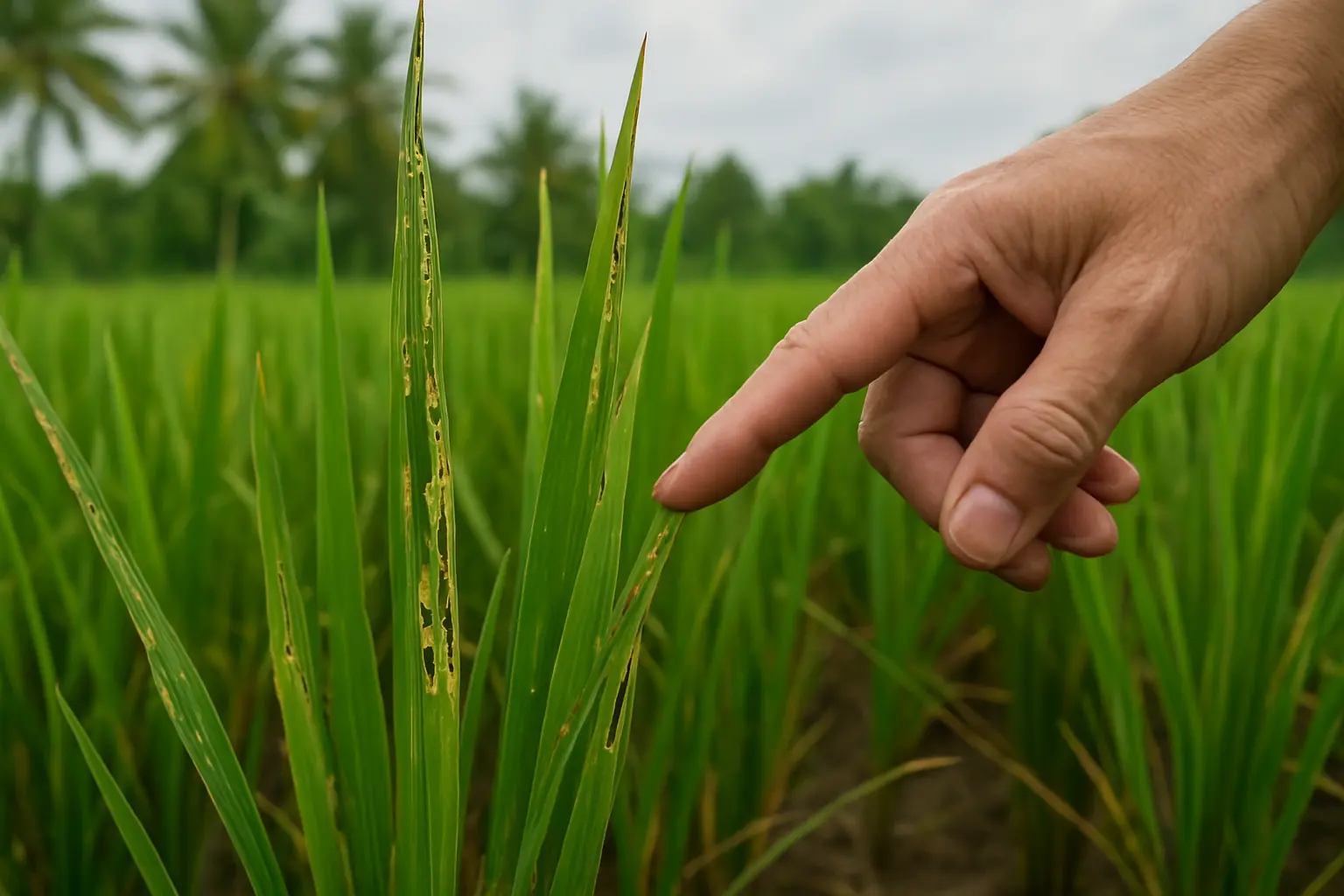
“This study experienced a significant infestation of [named pest] beginning in week six of the growing season, which reduced the viable sample from six replicates to four per treatment for the affected block. The infestation was managed following standard integrated pest management practice once identified, but yield data from the affected block should be interpreted with this reduced replication in mind. This limitation affects the statistical power available to detect smaller treatment differences in that block specifically, though the unaffected blocks retained the full replication planned in Chapter 3.”
Notice the shape: what happened, when, exactly how the sample changed, and what that means for how the results should be read. That last part — telling the reader what to be cautious about — is what separates a limitation section that reads as scientific honesty from one that reads as an excuse.
What limitations are specific to agriculture and agronomy theses?
Single-season and single-location trials are the most common limitation in Philippine agriculture theses, because most BS Agriculture and BS Agribusiness programs run on a semester calendar that fits one growing season, not the two-to-three-season data a fully robust field trial would ideally have. State this plainly: the results reflect one season’s weather and pest pressure at one site, and a different season or a different soil type could produce different results. Uncontrolled weather variability — an unusually wet or dry season, an early or late typhoon — is a second common limitation, and Philippine agriculture theses should name the specific weather pattern observed during the trial period rather than a generic “weather was a factor” line.
Non-random farmer sampling is common in studies working with cooperator-farmers rather than a controlled experiment station: farmers who agree to host a trial or answer a survey are not a random sample of all farmers in the area, and this self-selection should be named directly rather than implied. Where livestock or aquaculture is the subject rather than crops, similar limitations apply in a different shape — a single production cycle, a small number of pens or ponds available for the study, seasonal disease pressure specific to the observed period. And where the study relies on farmers’ self-reported yield or input-cost data rather than measured figures, the reliability of self-report — recall error, rounding, and in some cases reluctance to report actual income accurately — belongs in the limitations section as its own named constraint.
A lack of laboratory access for soil or tissue analysis is another limitation worth naming specifically rather than glossing over: if a planned nutrient analysis had to be dropped or scaled back because the nearest testing laboratory was too far, too slow, or too expensive for an undergraduate budget, say so, and note what proxy measurement (visual assessment, a simpler field test) was used instead. This is exactly the kind of practical, resource-driven constraint panels have seen many times before and do not penalise when it is stated plainly rather than hidden inside a results table that quietly skips the missing variable.

How do you write the delimitations section?
List what you deliberately excluded and briefly say why, framed as a scoping choice rather than a shortfall: “This study was delimited to [one variety / one municipality / one growing season] because [the resource, time, or access constraint that made this the feasible scope for an undergraduate thesis].” A delimitation is not something to apologise for — it is the honest boundary of what the study set out to do, and stating it clearly actually protects the thesis from being asked to explain findings outside that boundary at defense.
How do you handle a limitations section when the defense is days away?
Write the “what happened” sentence first, factually, before anything else — the exact pest, the exact week, the exact change in sample size or data quality. Then write one sentence on what it means for interpreting the results. Then move to the next limitation and repeat the same two-sentence pattern. A limitations section built this way, one constraint at a time, comes together faster than trying to write a single flowing narrative, and it gives the panel exactly the information they are checking for: does the student understand what the data can and cannot support.
If Chapter 4’s results and discussion still need to be reconciled with the reduced sample before the defense, the same kind of triage — stating what changed, then writing what can honestly still be concluded — applies there too, following the pattern used when a discussion chapter is behind schedule generally, covered in what to do when a thesis has the tables but no discussion yet. And the statistical test itself may need to change once the actual sample is smaller than planned — a smaller sample sometimes rules out a test that assumed normal distribution, a situation covered directly in what to do if your thesis data is not normally distributed.
How do you rebuild Chapter 5’s recommendations around what actually happened?
Chapter 5’s recommendations should follow from what the limited data actually showed, not from what the original full-scale trial was supposed to prove. Where the pest outbreak or reduced replication genuinely limits how far the findings can generalise, say so directly in the recommendations — “future studies should replicate this trial across at least two growing seasons and multiple sites to confirm whether the pattern observed here holds under different pest and weather conditions” is a stronger, more defensible recommendation than overstating what a single constrained season can support. Panels read the recommendations section as a check on whether the student actually understood the limitations just written, so keeping the two sections consistent with each other matters as much as either one alone.
Write the limitations section tonight, not the night before defense
Tesify drafts a limitations and delimitations section from what actually happened in your field trial — the pest outbreak, the reduced replication, the single-season scope — in the precise, defensible language Philippine agriculture panels expect, and flags where a claim needs a caveat before the panel does. It costs a fraction of paying someone to rewrite your chapters, includes a free tier so you can try it on this exact section tonight, and every word stays yours to edit and defend. It supports honest thesis writing, not a replacement for your own research.
Frequently asked questions
Will a panel fail my thesis because of a pest outbreak or bad weather?
No, provided the limitation is stated honestly, its effect on the data is explained, and the conclusions in Chapter 5 are scoped to what the remaining data can actually support. Panels penalise unstated or minimised problems far more than they penalise an honestly reported one.
How many limitations should an agriculture thesis have?
As many as genuinely apply — typically three to six for an undergraduate field-trial thesis — but each one should be specific and explained, not a padded list of generic caveats copied from another thesis.
Should I redo my statistical analysis if my sample size changed mid-trial?
Yes, run the analysis on the actual final sample size, and report that adjusted number in both Chapter 3 (as an update to the sampling plan) and the limitations section, not just in the results table.
Is Tesify allowed under my school’s academic integrity policy?
Tesify drafts structure and language from your own data and observations — it does not fabricate results or write conclusions you have not reached yourself. Most Philippine schools’ AI policies distinguish between using a tool to draft and edit your own work and having someone else produce it; check your specific school’s policy, and disclose AI assistance where your manual requires it.
How much does Tesify cost?
Tesify has a free tier for students to try before committing to a paid plan; check the current pricing in pesos on the Tesify site, since it is adjusted periodically and this article does not repeat a figure that could go stale.
Can I still pass my defense with a reduced sample size?
Yes, in the large majority of cases, as long as the analysis correctly reflects the actual sample used and the limitations and conclusions are scoped honestly to what that sample supports — panels evaluate the honesty and rigor of the writeup, not whether every plan survived the season intact.
What if more than one thing went wrong during my field trial?
List each one separately with its own “what happened, what it changed” pair rather than combining them into one vague paragraph — a panel can evaluate three clearly stated limitations far more easily than one blurred account of everything that happened.