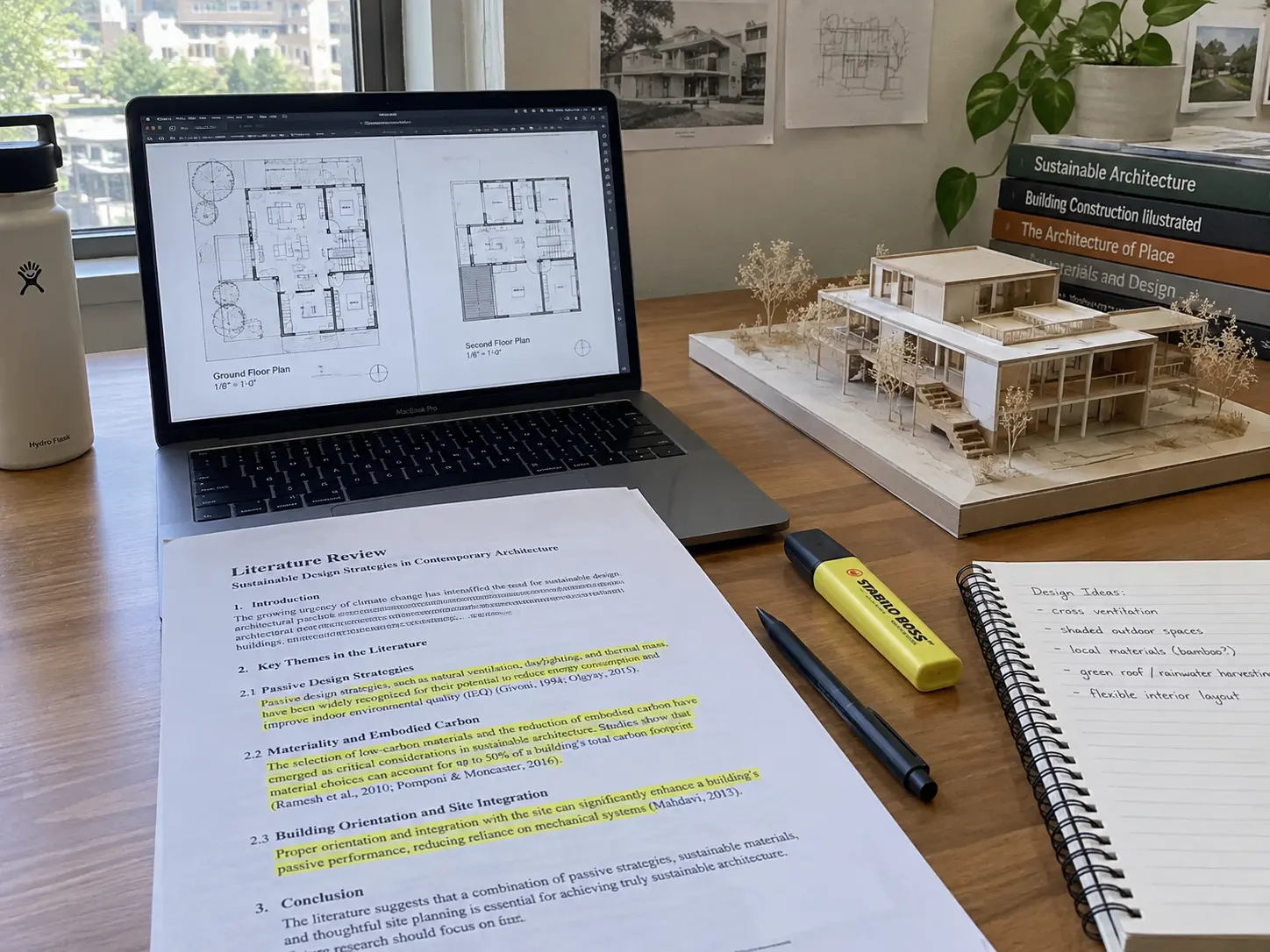
A research gap in an architecture thesis is a specific, named absence in existing design knowledge or built-environment data that your study is positioned to fill — not simply “not enough studies exist,” but a precise statement of what is missing and why it matters for a real design decision. This article works through what a gap actually looks like across five architecture design tracks, with illustrative, labeled examples for each.
What Counts as a Research Gap in an Architecture Thesis?
An architecture thesis’s research gap usually falls into one of four types: an evidence gap (a design approach is used in practice but its actual performance has not been measured locally), a context gap (a well-studied design principle from another climate, culture or building-code context has not been tested in a Philippine setting), a methodological gap (existing local studies exist but used a design or evaluation method too limited to answer your specific question), or a population/typology gap (a building type, user group, or site condition has not been the subject of dedicated study). Naming which type your gap is, explicitly, is itself something a panel increasingly expects in Chapter 1 or Chapter 2, rather than leaving the reader to infer it.
What Does a Research Gap Look Like for a Residential Design Thesis?
Illustrative example: “Post-occupancy studies of Philippine socialized housing units have measured floor-area adequacy and structural compliance, but few have measured how residents modify their units’ interior layout after occupancy, and whether those modifications indicate a design gap in the original unit plan.” This is a context/evidence gap: the general topic (small-unit housing) is studied, but the specific angle (post-occupancy user modification as a design-feedback signal) is not.
What Does a Research Gap Look Like for an Urban Design Thesis?
Illustrative example: “Walkability audits exist for several Philippine central business districts, but few extend the same audit instrument to informal or mixed-use barangay commercial strips, where the built environment differs structurally from planned CBDs.” This is a population/typology gap: an established method (walkability audit) has not been applied to a distinct, common urban typology.
What Does a Research Gap Look Like for an Interior Architecture Thesis?
Illustrative example: “Sensory-friendly interior design principles for learners on the autism spectrum are documented in international literature, but few published studies have adapted these principles to a typical Philippine public elementary school classroom’s spatial and budget constraints.” This is a context gap: the principle exists elsewhere, but its local applicability has not been tested. Before you write a sentence like this for real, run the repository search described below — the example shows the shape of a gap statement, not a verified finding.

What Does a Research Gap Look Like for a Sustainable or Green Building Thesis?
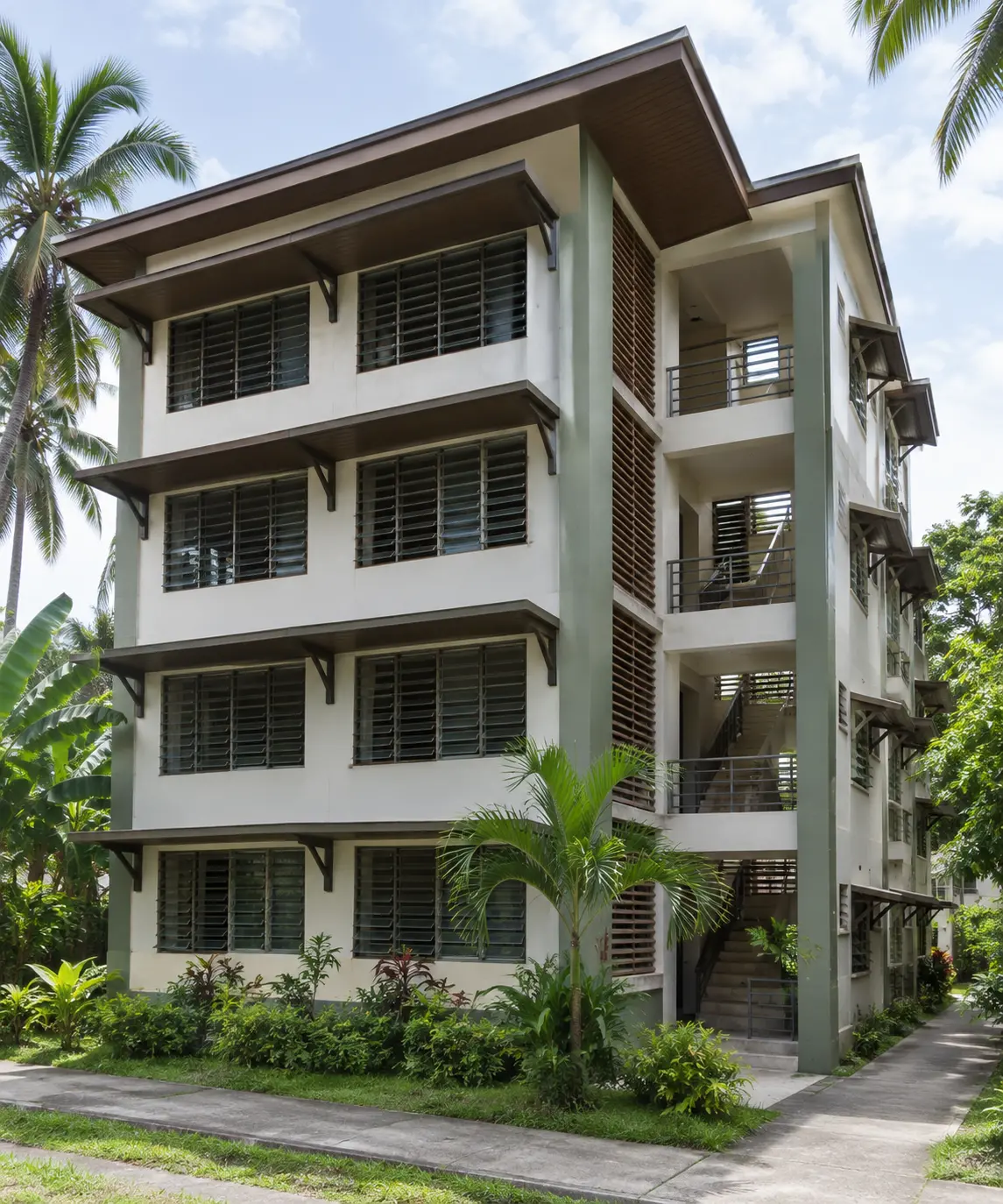
Illustrative example: “Passive cooling strategies (cross-ventilation, shading devices, building orientation) are well documented for tropical climates generally, but few studies quantify their actual thermal-comfort effect in a specific Philippine building typology, such as a mid-rise walk-up residential building, under current material and construction cost constraints.” This is a methodological/evidence gap: the principle is known, but locally quantified performance data is thin.
What Does a Research Gap Look Like for a Heritage Conservation Thesis?
Illustrative example: “Heritage conservation guidelines for Spanish colonial-era structures are well documented, but adaptive-reuse case studies for mid-20th-century modernist buildings — a distinct heritage category increasingly at demolition risk — remain comparatively rare in Philippine architecture literature.” This is a population/typology gap within heritage studies: one heritage era is well studied, an adjacent one is not.
How Do I Know My Gap Is Real and Not Just an Untested Assumption?
Search the specific angle, not just the general topic, before claiming a gap. A thesis claiming “no study has examined X” after searching only the general topic term, rather than the specific angle, risks a panel member producing the exact study the student missed. Search using the specific population, method, and location together (not just “green building Philippines,” but “passive cooling mid-rise residential thermal comfort Philippines”), check your own university’s thesis repository and at least one other major Philippine architecture program’s repository (UP Diliman, UST, or a school with a strong architecture program in your region), and ask your adviser about recent professional-body and conference outputs, such as those of the United Architects of the Philippines (UAP), since practice-oriented architecture research often circulates there before it reaches a formal journal.
Where Does the Research Gap Belong in My Thesis Structure?
Most Philippine architecture programs expect the gap to appear at the end of your review of related literature in Chapter 2, immediately before your statement of the problem in Chapter 1 is restated or your conceptual framework is introduced — the gap is the bridge between “here is what is known” and “here is what my study specifically contributes.” A gap statement that appears only once, in a single sentence buried mid-chapter, is weaker than one that is echoed briefly in your introduction, developed in your literature review, and referenced again in your significance of the study.
Can My Research Gap Be Practice-Based Rather Than Purely Academic?
Yes, and in architecture this is common and legitimate. A gap can be framed as a practice gap — “architects in this region report using this approach informally, but no documented design guideline exists for it” — supported by informal interviews with practicing architects or your own OJT observations, rather than only a literature-based academic gap. State clearly which kind of gap you are claiming (literature-based, practice-based, or both) so your panel evaluates your evidence against the right standard.
What Is the Difference Between a Research Gap and a Design Problem?
A design problem is the specific site or client challenge your thesis design project responds to (a school needs more classroom space; a barangay lacks a covered market). A research gap is the knowledge deficiency your investigation — the research component that supports and justifies your design decisions — is meant to fill. Many architecture theses need both: a design problem that frames the project, and a research gap that justifies why your particular design approach, informed by your literature review, is the right one to test.
How Long Should My Research Gap Statement Be?
One clear paragraph is usually sufficient at the point where you state it directly — typically three to six sentences naming what is known, what is specifically missing, and why the missing piece matters for your design decisions or your field’s practice. A gap statement that runs a full page is usually restating your entire literature review rather than isolating the actual absence; a gap statement that is a single unsupported sentence has not been earned by the review preceding it.
Does the Type of Design Studio (Thesis Track) Change How I Word My Gap?
Yes. A design-based thesis (where the deliverable is a building design responding to a program and site) usually frames the gap as justification for a design decision or design guideline — why this approach, for this typology, in this context, has not been adequately tested. A research-based architecture thesis (where the deliverable is closer to a conventional academic study, sometimes without a full design output) frames the gap more like other social-science theses, closer to a pure knowledge gap. Confirm with your adviser which track your program expects, since the two call for differently weighted gap statements even when the underlying topic is the same.
A Reviewer’s Checklist Before You Finalize Your Gap Statement
Before submitting your proposal, check your gap statement against four questions: does it name a specific population, typology, method, or context rather than a vague topic area; does it explain in one sentence why the missing piece actually matters to design decisions or practice, not just that it is interesting; does it connect visibly to the literature review that precedes it, rather than appearing as an unsupported final-paragraph claim; and have you searched the specific angle, not just the general topic, in at least two thesis repositories before asserting the gap exists. A gap statement that passes all four is far less likely to draw a challenge at your proposal defense than one written to sound confident without having been stress-tested against these questions first.
Where This Fits With the Rest of Your Thesis
Once your research gap is stated, it should connect directly to your statement of the problem and eventually your significance of the study — both covered in general terms in those site guides, which this piece deliberately does not repeat. For the overall chapter-by-chapter structure a Philippine architecture thesis follows, from Chapters 1 to 5 through to the design output itself, see our architecture thesis structure guide. And if your research angle grew out of your OJT or practicum experience rather than a pure literature gap, our guide on turning an OJT or practicum report into an architecture thesis covers exactly that transition, including the practice-based gap framing discussed above.
Where Tesify Fits
Once you have identified and worded your specific gap, Tesify turns it into a properly structured statement of the problem and significance of the study section that connects cleanly to your literature review.
Turn your research gap into a written Chapter 1
Tesify drafts your statement of the problem and significance of the study once you have identified your specific research gap — over 9,000 students have used it to write more than 15,000 chapters, and every word is still written by you.
Frequently Asked Questions
- Can my architecture thesis have more than one research gap?
- It is possible, but most undergraduate theses are stronger with one clearly developed gap than several thinly supported ones. If your topic genuinely spans two gap types (for example, a context gap and a methodological gap), state both explicitly and show how they relate rather than listing them as separate, unconnected claims.
- Is “there is limited literature on this topic in the Philippines” a strong enough gap statement?
- On its own, no. That phrasing describes an absence of literature but does not explain why the absence matters or what specific angle is missing. Strengthen it by naming the specific population, typology, method, or condition that has not been studied, and why that specific piece matters to design practice or theory.
- Do I need to review international literature, or only Philippine studies, to establish my gap?
- Both, usually. International literature often establishes that a principle or method exists and works elsewhere; Philippine-specific literature (or its absence) is what establishes the context gap. A gap statement built only on international sources without checking the local literature risks missing an existing Philippine study on the same angle.
- How is a research gap different from a limitation?
- A research gap is identified before your study, in the existing literature, and justifies why your study is needed. A limitation is identified after or during your study, describing a constraint on your own methodology or scope. They are related but occupy different places in your thesis — the gap in Chapters 1 to 2, limitations typically in Chapter 5.
- Can a practicing architect’s opinion count as evidence of a research gap?
- It can support a practice-based gap claim, especially when documented through a formal interview or survey rather than an informal conversation, but it should be paired with a literature search confirming the same absence in published, academic or professional-body sources where possible.
- Should I state my research gap before or after my conceptual framework?
- Most Philippine architecture programs expect the gap to be established in the literature review, before the conceptual framework is introduced, since the framework is often presented as the study’s response to the identified gap. Confirm your own program’s expected sequence with your adviser.
- Does a design-based thesis need a research gap, or only a design problem?
- Most Philippine architecture programs still expect a research gap even in a design-based thesis, since the gap is what justifies why your specific design approach, and not another, is the right response to the design problem. Confirm your own program’s exact expectation, since emphasis varies by school.