A communication or journalism thesis needs three kinds of tools a general research-methods course rarely covers: a content-analysis coding sheet, an interview transcription tool, and a media-monitoring tool — none of which is the same job as the general qualitative-coding software most thesis guides describe. The comparison below ranks what actually fits each stage, what is free, and where a Philippine communication panel expects to see intercoder reliability reported.
| Tool | Best for | Free tier | Works offline | Verdict |
|---|---|---|---|---|
| Google Sheets / Excel coding sheet | Simple frequency content analysis (topic counts, source counts, tone tags) | Yes, fully free | Excel yes, Sheets needs internet | Best default for most undergraduate content-analysis theses |
| QualCoder | Interpretive coding (framing, discourse categories) with a visible codebook | Yes, open-source, fully free | Yes | Best free option once coding needs real qualitative judgment |
| Taguette | Fast open-coding of interview transcripts or opinion pieces | Yes, open-source, fully free | Yes (self-hosted) or free cloud version | Good for a first coding pass before building formal categories |
| NVivo | Large mixed-method studies combining text, audio and survey data | No, paid named-user licence | Yes | Only worth the cost for a graduate-level or multi-source study |
| Otter.ai / similar cloud transcription | Turning a recorded interview into a searchable transcript quickly | Limited free minutes per month | No, cloud-based | Fast, but check the data-handling policy before uploading sensitive interviews |
| Google Alerts + manual log | Tracking ongoing coverage of a topic across news sites for free | Yes, fully free | No, needs internet | The realistic free substitute for paid media-monitoring platforms |
Why This Is a Different Comparison From the Site’s General Software Guide
The site’s existing qualitative data analysis software guide compares NVivo, Taguette and QualCoder as general-purpose interview-coding tools, useful across psychology, education or social work. A communication or journalism thesis usually needs two things that guide does not cover at all: a content-analysis coding sheet built around media units (articles, posts, broadcast segments) rather than interview transcripts, and a media-monitoring layer that tracks coverage volume over time. This piece stays inside that gap rather than repeating the general coding-software comparison, and adds the source-confidentiality question a communication or journalism thesis has to answer that a psychology or education thesis usually does not.
Content-Analysis Coding: Spreadsheet First, QualCoder or Taguette Second
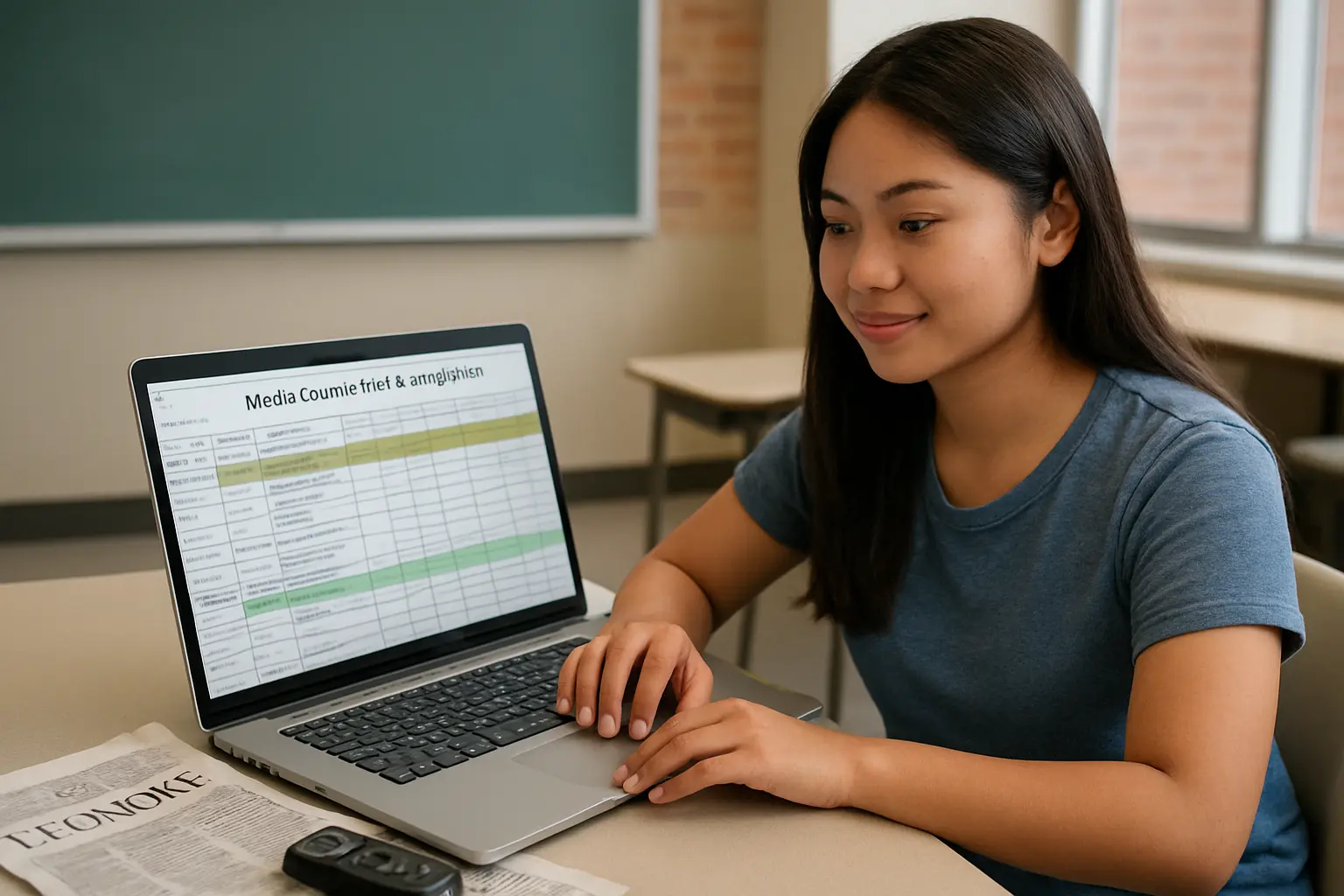
Most undergraduate content-analysis theses — counting how often a topic, source type or frame appears across a sample of articles or posts — are genuinely well served by a spreadsheet coding sheet: one row per media unit, one column per coding category, and a data-validation dropdown to keep category labels consistent across coders. This is free, familiar, and exports directly into the frequency tables a Chapter 4 needs. Build the coding sheet with a fixed codebook tab alongside the data tab — each category defined in one sentence with a worked example — so a second coder can apply it without guessing what a borderline case should be tagged.
The moment the coding scheme becomes interpretive rather than factual — coding for a frame, a tone, or a rhetorical device rather than a simple presence-or-absence count — QualCoder or Taguette earn their place: both let a coder highlight a passage and tag it against a visible codebook, and both export a coding log a methodology section can describe precisely. Taguette is the faster tool for a first open-coding pass, where categories are still emerging from the material itself; QualCoder better suits a second, confirmatory pass once the codebook is fixed and a formal frequency count of each code is needed for Chapter 4. Neither requires an account or a subscription, and both run from a downloaded installer with no internet connection needed once installed.
Why NVivo Is Rarely the Right First Choice for an Undergraduate Thesis
NVivo is a genuinely capable tool for a study combining text, audio, video and survey data in one project, with mature query, intercoder-comparison and visualization features (QualCoder also produces coder-comparison reports; Taguette does not). Its cost is the practical barrier: it sells a named-user licence rather than a one-time purchase, and Philippine undergraduate communication programs rarely provide a shared institutional licence a thesis group can use for free. Unless the school’s own communication or mass communication department already has an active licence students can access, or the study genuinely needs to combine several data types NVivo’s project structure is built for, the free alternatives above cover the same coding fundamentals a Chapter 3 methodology section needs to describe. A group that does have institutional access should still confirm the licence covers the thesis timeline, not just a single semester’s coursework, since a licence that lapses mid-coding is a real and avoidable risk to the schedule.
Intercoder Reliability: the Step a Content-Analysis Thesis Cannot Skip
Where the coding scheme involves any interpretive judgment, a Philippine communication panel expects a second coder to independently code a subset of the sample and an intercoder reliability figure reported — commonly Cohen’s kappa for two coders. This is not optional once the scheme is interpretive: a single coder’s own consistent judgment does not demonstrate that another trained coder would categorize the same content the same way, and a panel will ask how agreement was checked. Build the second-coder pass into the timeline from the proposal stage, not as an afterthought once coding is already finished — recoding a full sample after the fact is the single most common reason a content-analysis thesis misses its deadline.
Interview Transcription: Speed Versus Source Confidentiality
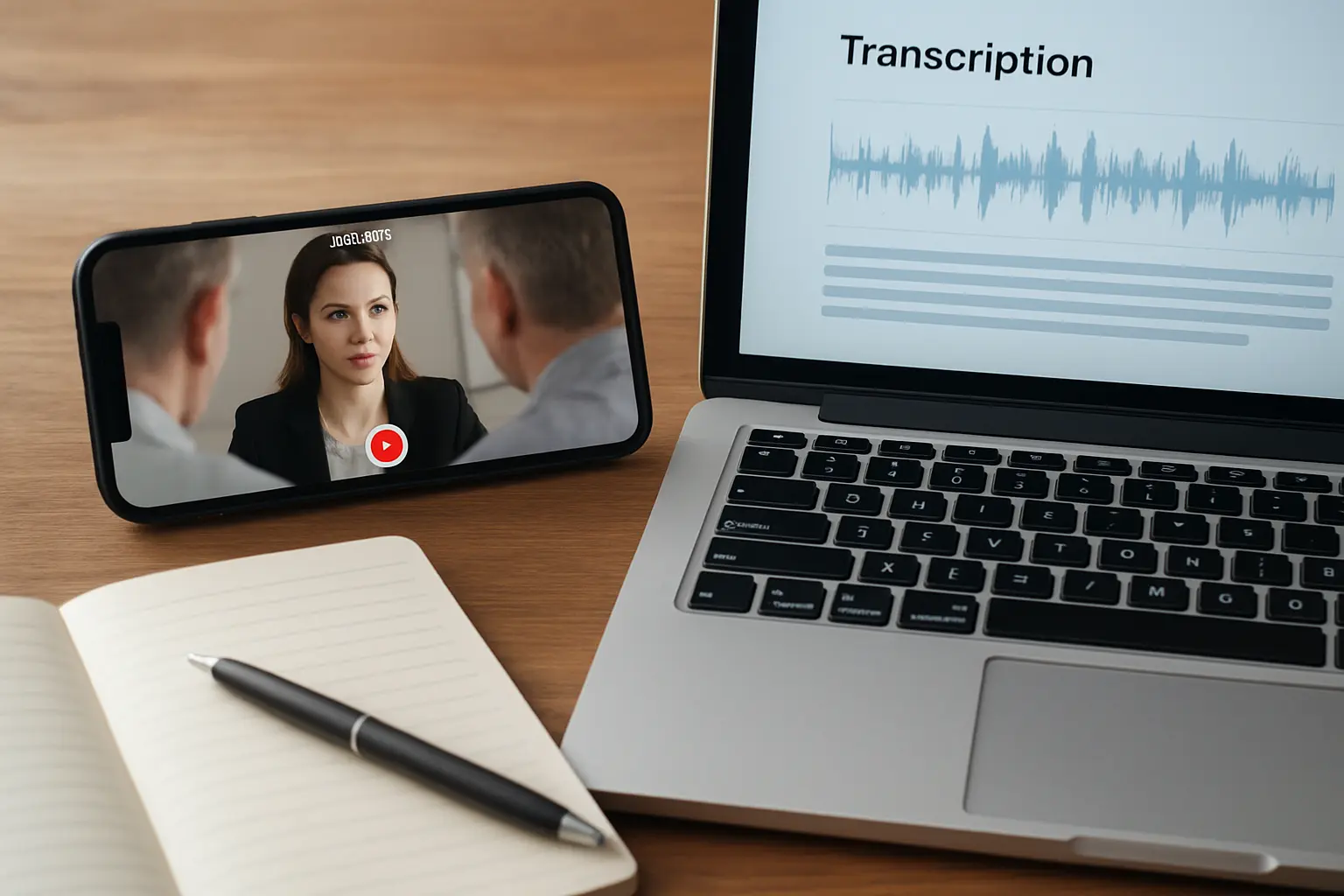
Cloud transcription tools such as Otter.ai turn a recorded interview into a searchable, timestamped transcript in a fraction of the time manual transcription takes, and most offer a limited free tier sufficient for a handful of thesis interviews. The trade-off communication and journalism theses specifically have to weigh, more than most disciplines: many interviews are with named or semi-identifiable sources — officials, media practitioners, or ordinary citizens speaking on a sensitive topic — and a cloud tool processes that audio on its own servers under its own retention policy. Where a source was promised confidentiality or the topic is sensitive, manual transcription or a locally-run transcription tool is the safer default, even at the cost of speed; where the source has agreed to be named and the topic is not sensitive, a cloud tool is a reasonable time-saver. Either way, the consent form given to the source should say explicitly whether the recording will pass through a third-party transcription service, since that is a data-handling fact the source is entitled to know before agreeing to be recorded.
Media Monitoring: the Free Substitute for a Paid Platform
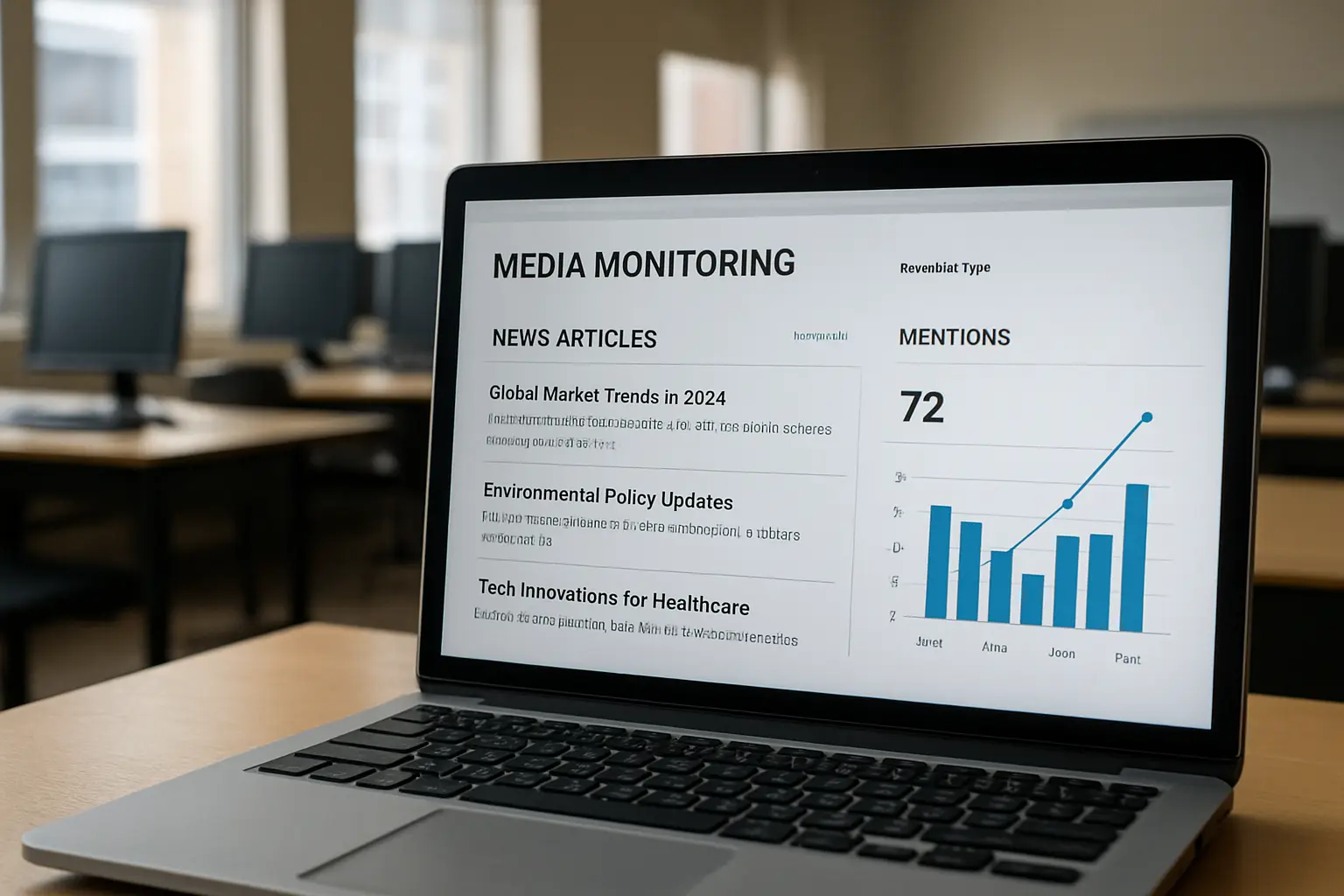
Professional media-monitoring platforms track coverage volume, sentiment and reach across thousands of outlets automatically, but their pricing is built for newsrooms and PR agencies, not thesis budgets. Google Alerts, set up for the specific topic, name or hashtag under study, combined with a manually maintained log (date, outlet, headline, a coded tone or frame tag), reproduces the core function — a running, dated, citable record of coverage — at zero cost. The trade-off is coverage completeness: Google Alerts misses paywalled content and some broadcast coverage, so the methodology section should state this limitation explicitly rather than implying the log is exhaustive. For social-media coverage specifically, the native search and filter functions on the platform itself (advanced search by date range and keyword) can extend the same manual-log approach at no cost, though results should be screenshotted and dated at the time of collection, since posts can be deleted or edited later.
Where These Tools Fit in Your Chapter 3
Name the exact tool and version in the instrumentation section, not just the tool category — “content was coded using QualCoder 3.8” is a defensible methodology sentence; “qualitative software was used” is not. State the intercoder reliability procedure and the figure achieved in the same section, and note any data-handling decision made for source confidentiality in the ethics portion of Chapter 3. Where the sample itself is small and interview-based rather than a large media corpus, the sampling logic follows the same reasoning covered in the site’s qualitative sample-size guide, and where the study needs citable national media-use or press-freedom data to justify the topic in the first place, the site’s own communication data-sources guide covers where that comes from.
Coding Broadcast Content: the Extra Step a Text-Only Codebook Misses
The comparison above is scoped to print, online and social-media content, and none of the six tools handle broadcast material out of the box. A thesis analysing TV or radio segments needs one extra step before any of the coding tools become useful: a verbatim or close-paraphrase transcript of each segment, produced by manual transcription or the same cloud transcription tools discussed above, subject to the same source-confidentiality check where a broadcast source spoke on the record but expects limited further distribution. Once a transcript exists, the spreadsheet-or-QualCoder workflow above applies directly to the transcript text. What it will not capture on its own is the non-verbal layer specific to broadcast — visual framing, camera angle, on-screen graphics, or air time allotted per topic or speaker — which needs its own coding scheme built separately from the spoken-word codebook, timestamped against the recording rather than the transcript alone. A methodology section that treats a broadcast segment as if it were a print article, coding only the spoken words, is a common and avoidable gap a communication panel will ask about at defense.
Draft your methodology section around the tools you actually used
Tesify drafts the instrumentation and data-analysis sections of Chapter 3 from the specific coding scheme, transcription approach and monitoring method your communication or journalism thesis uses, worded the way a panel expects to read them. Over 9,000 students have used it to write more than 15,000 chapters, and every word is still written by you.
Frequently Asked Questions
Is this the same as the site’s general qualitative data analysis software guide?
No. The general guide compares NVivo, Taguette and QualCoder for qualitative coding across any discipline. This piece is scoped to what a communication or journalism thesis specifically needs beyond that: content-analysis coding sheets, interview transcription and media-monitoring tools, which the general guide does not cover.
Do I need paid software to do a content analysis thesis?
No. A well-built spreadsheet coding sheet in Google Sheets or Excel handles most undergraduate content-analysis sample sizes; QualCoder and Taguette add qualitative-coding features free of charge if your categories are more interpretive than a simple frequency count.
Can I use an AI transcription tool for interviews with sensitive sources?
Check the tool’s data-handling policy before uploading any recording that identifies a vulnerable or confidential source; most cloud transcription services process audio on their own servers, which may not satisfy a journalism ethics board or an interviewee’s expectation of confidentiality.
Is intercoder reliability required for a content analysis thesis?
Most Philippine communication programs expect it when the coding scheme involves any interpretive judgment, such as framing or tone; a purely factual count, such as the number of articles mentioning a topic, is judged less strictly but a reported agreement figure still strengthens the methodology section.
What sample size is typical for a content analysis of news articles?
It varies by scope and time period rather than following a fixed formula like Slovin’s; a defined, dated collection window (for example, all articles on a named topic across two or three major outlets over a stated number of months) with a stated inclusion and exclusion rule is what a panel checks, not a specific target count.
Should I mention the AI features some transcription tools now offer, such as automatic summarization?
Use them for your own note-taking convenience, but do not let an AI-generated summary substitute for reading the full transcript when coding; a summary can miss the exact wording a framing or discourse analysis depends on, and a panel expects the coding to be traceable to the verbatim transcript, not to a machine-generated abridgment of it.
Does this comparison cover broadcast content such as TV or radio segments?
Not directly — the six tools above are scoped to print, online and social-media content. A broadcast content-analysis thesis needs a verbatim transcript of each segment first (manual or cloud transcription, with the same confidentiality check as any interview), after which the same spreadsheet or QualCoder coding approach applies to the transcript text; the visual and on-air elements still need a separate, timestamped coding scheme of their own, since a text-only codebook will miss them.