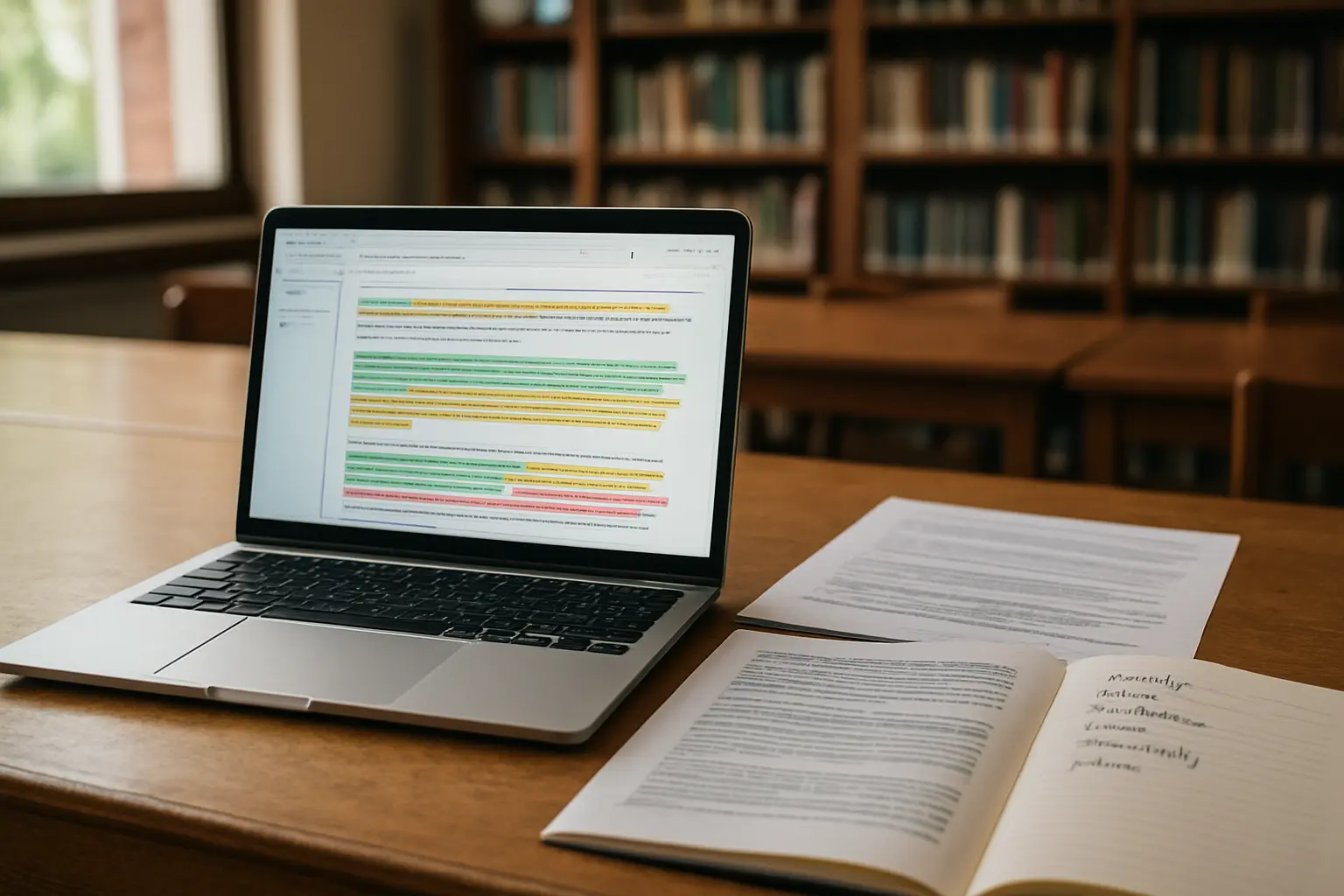
For an undergraduate thesis in the Philippines the answer is Taguette if your data is text, and QualCoder if you also have audio or video you do not want to transcribe first. Both are free, open-source, and run on your own laptop with no connection. NVivo is the tool your literature will mention, and it is the one you are least likely to be able to buy.
The comparison, before anything else
| Tool | Cost | Runs offline | Group of four can share it | What it can import | Codebook export |
|---|---|---|---|---|---|
| Taguette (installed on your laptop) | Free, BSD licence | Yes — your data never leaves the machine | No, one machine at a time | DOCX, ODT, PDF, TXT, HTML, EPUB, MOBI, AZW | Yes — project, codebook, all quotes, quotes for one tag, highlighted documents |
| Taguette (app.taguette.org) | Free | No, it is a website | Yes — that is the reason to use it | Same formats | Same exports |
| QualCoder | Free, open source | Yes | Not simultaneously, but it compares two coders inside one project file | TXT, ODT, DOCX, HTML, MD, EPUB, RTF, PDF — plus images, audio and video | Yes — coding frequencies, coder comparison, visual coding graphs |
| NVivo | Paid. Student licence = 12 months, one named user. No price readable on the product page. | Yes, desktop application | Only with additional licences | Text, audio, video, images, survey data | Yes |
| Word plus Excel | Free if your school already licenses Office | Yes | Yes, via a shared file | Anything you can paste | Only what you build by hand |
Why this decision is not about analytic power
Every tool in that table does the same core operation: you select a passage, you attach a label, and later you pull every passage carrying that label back out together. None of them decides what the labels mean, and none of them writes your themes. A student who codes forty pages of transcript carefully in Microsoft Word will produce a better Chapter 4 than a student who codes them carelessly in NVivo.
What actually differs between them, for a Philippine undergraduate group, is four things: whether it costs money you do not have, whether it works when the connection drops, whether four groupmates can touch the same project, and whether it can hand you a codebook you can print as an appendix. That last one is the one students discover too late.
1. Taguette — the default recommendation for a text-only study
Taguette is free and open source under the BSD licence, and its own FAQ states the position plainly: it costs nothing, either to use on your own machine or to install on a server. It exists specifically because searching for free qualitative software used to return nothing that would let you tag your materials.
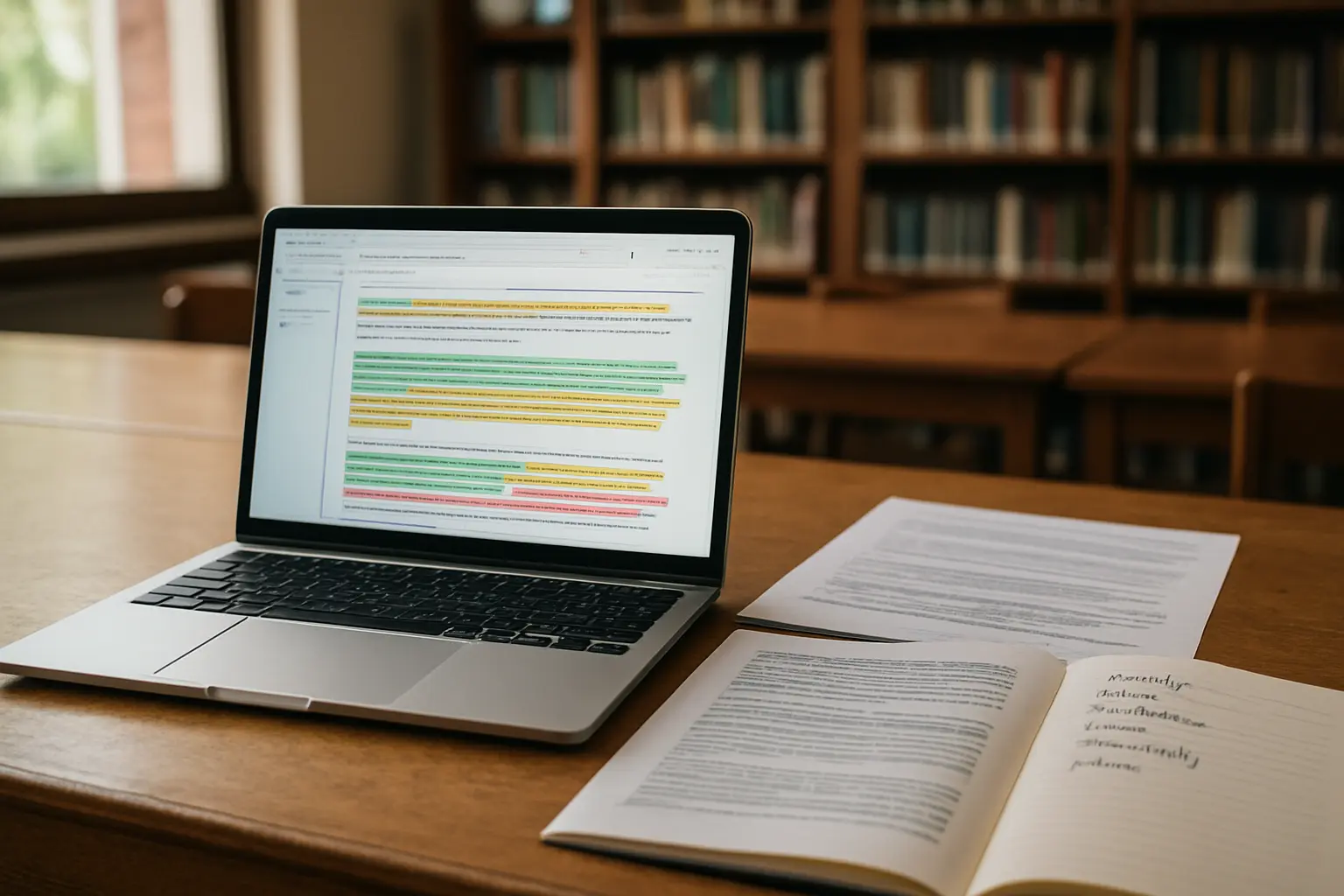
What it does. You import your transcripts, highlight passages, and attach tags — the project describes it as using different colour highlighters on printed paper, which is exactly the right mental model. When you are finished you can export your whole project, your codebook, every highlighted quote, the quotes for one specific tag, or the highlighted documents themselves.
Formats. Taguette converts documents through Calibre, so it accepts DOCX, ODT, PDF, plain text, HTML and the ebook formats. If your transcripts are in Word, they will open.
The trade-off you have to choose. The Taguette project makes it explicit: running it on your own computer means you can work offline and by yourself; using their server, or one you host, means you can collaborate with others. You cannot have both from a single installation. For a group of four on metered mobile data, the honest answer is usually that one person owns the project file and the others send tagged passages to be merged — clumsy, but free and offline.
If you cite it. The project asks to be cited as Rampin et al. (2021), Taguette: open-source qualitative data analysis, Journal of Open Source Software, 6(68), 3522. That is a real peer-reviewed software paper, which means your methodology section can cite the tool properly rather than dropping a URL in a footnote.
2. QualCoder — the one to pick if you have recordings
QualCoder is also free and open source, written in Python, and it does something Taguette does not: it imports images, video and audio and lets you code selections inside them directly. For a thesis built on recorded interviews or focus group discussions, that removes the step most groups underestimate.
What it adds. Codes can be grouped into categories in a hierarchy, which matters once you have more than about twenty tags and need them organised into themes. Its reports include coding frequencies, visual coding graphs and — the useful one for a group — a coder comparison, so two members can code the same transcript and you can show the panel how closely they agreed.
What to expect installing it. The documentation is candid that on Windows you may get an “unknown publisher” warning, because a trusted publisher certificate is expensive and the project has not bought one. It also notes the software has been used on macOS and various Linux distributions. Audio and video coding wants VLC installed, and waveform images want ffmpeg. Budget an afternoon for setup, not five minutes.
One caution. QualCoder can connect to external AI models to explore your data. Before you enable that, check what your school’s rules say about sending research material to a third-party service — the same question that governs every other AI tool in a thesis workflow. Coding is also precisely the stage where an unexamined machine suggestion becomes a finding you cannot defend.
3. NVivo — the name in the literature, and what it actually costs
NVivo is the tool most published qualitative studies name in their methods section, which is why students assume they need it. Lumivero, which publishes it, states that student licences provide twelve months of unrestricted access for one named user, while individual licences are designed for a single researcher.
On price, we decline to quote a figure. The pricing pages for NVivo and for ATLAS.ti did not resolve at the addresses their own sites point to when we checked in August 2026, and no price appears on the NVivo product page itself. Any peso figure you see quoted in a blog post is somebody’s estimate or an out-of-date regional reseller quote. What you should do instead takes five minutes: ask your college librarian or your research office whether the institution already holds a site licence. Several Philippine universities do, and a licence you already have access to is free to you.
If there is no institutional licence, a twelve-month student licence for a thesis you will finish in one semester is poor value against two free tools that do the same core job.
4. Word and Excel — genuinely viable below about ten transcripts
Manual coding is not a fallback for people who could not install anything. For a small study it is often faster than learning a new interface.
- Put each transcript in Word with line numbers on.
- Use comments as codes. One comment per coded passage, and keep the comment text to the tag name alone so it stays searchable.
- Build one Excel sheet with four columns: tag, participant, line number, verbatim quote. Every coded passage becomes a row.
- Sort or filter by tag. Every quote for a theme is now together, which is exactly what a coding tool would have given you.
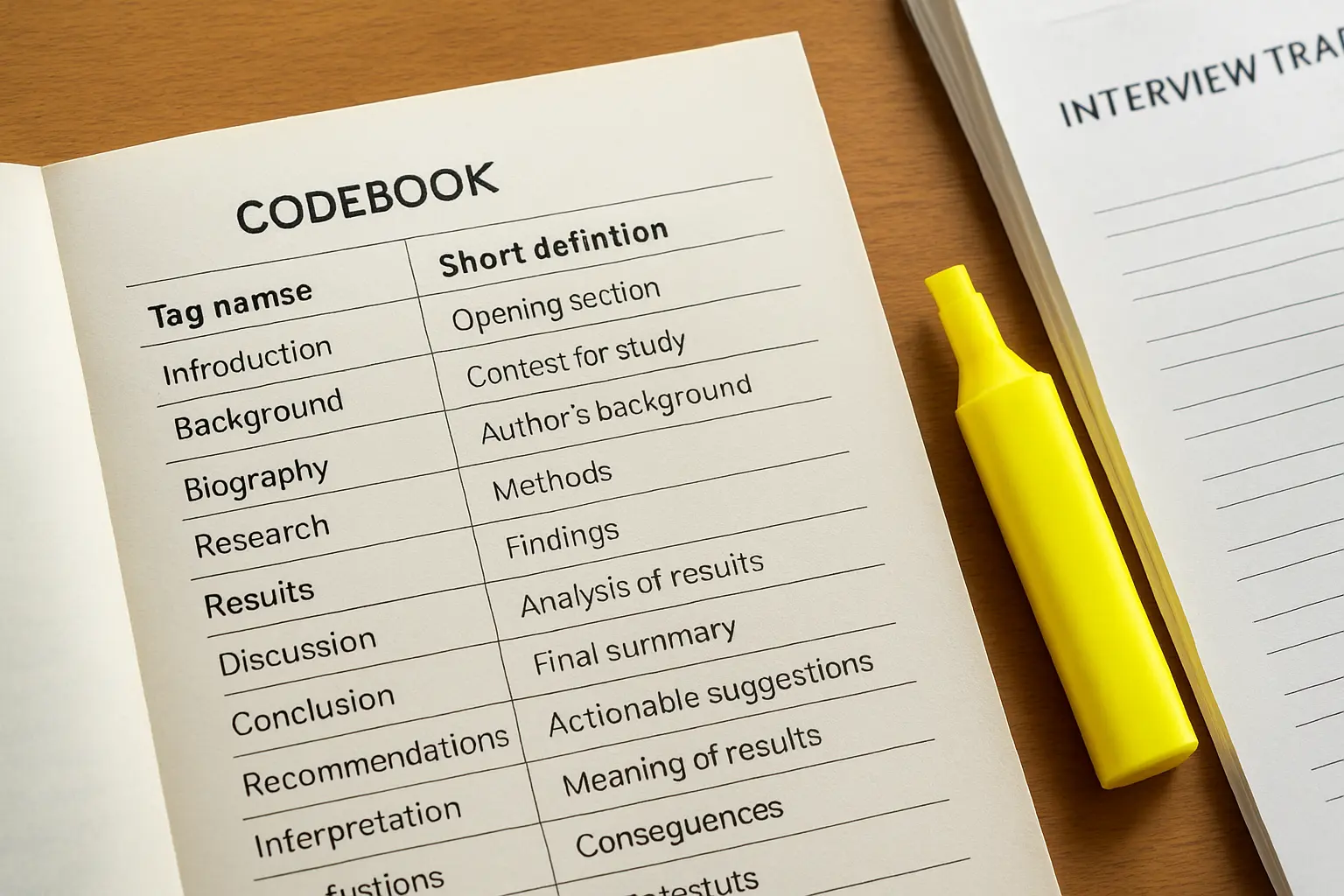
- Your codebook is a second sheet: tag, definition, an example quote, and when to use it rather than a neighbouring tag.
The cost is discipline. Nothing stops you typing the same tag two different ways, and nothing warns you when you do. Above roughly ten transcripts the bookkeeping starts to consume the time the software would have saved.
The recommendation
Install Taguette locally. It is free, it works with no connection, it takes your Word transcripts as they are, and it exports the codebook your appendix needs. Move to QualCoder only if you have audio or video you want to code directly, or if you need to show coder agreement between two group members. Consider NVivo only if your school already pays for it. Code by hand in Word and Excel if you have fewer than ten transcripts and less than a week.
Whichever you choose, decide before you start coding. Migrating a half-coded project between tools is a manual retyping job — none of these formats read each other.
What the software does not do for you
Three things remain yours, and panels ask about all three.
Deciding how many participants was enough. No tool tells you when to stop interviewing; that judgement, and how to evidence it in Chapter 3, is set out in the guide to how many respondents a qualitative thesis needs.
Turning tags into themes. A tag is a label on a passage. A theme is a claim about your data supported by several tags. Software gives you a frequency count; it does not tell you which count means something.
Writing the analysis section of Chapter 3. A qualitative study still needs a data analysis section naming the approach, the coding procedure and how the themes were validated — the same section a quantitative study fills with the statistical treatment of data. Name the software there too, with its version.
The coding is yours. The chapter around it does not have to be.
Tesify keeps your methodology, your themes and your conclusions in one connected document, so the codebook you exported has somewhere to land and your Chapter 3 already names the procedure you actually followed. Over 9,000 students have written more than 15,000 chapters with it, and every word is still written by you.
Frequently asked questions
What is the best free qualitative data analysis software for a thesis?
Taguette for text-only studies and QualCoder if you also have audio, video or images to code. Both are free, open source, and run offline on Windows, macOS and Linux.
Is there a free alternative to NVivo?
Yes. Taguette and QualCoder both perform the core operation NVivo performs — tagging passages and retrieving them by tag — at no cost. What you give up is polish, support and some reporting features, not the ability to run a defensible thematic analysis.
Does Taguette work offline?
Yes, when installed on your own computer, and the project states that your data is then as secure as your computer. The hosted version at app.taguette.org needs a connection but allows collaboration; you choose one or the other.
Can my whole thesis group code the same project?
Only on a server-based setup. Locally installed Taguette and QualCoder are single-machine tools. Most groups nominate one custodian of the project file, which also prevents the merge conflicts that eat a weekend.
Can these tools code an audio recording without a transcript?
QualCoder can — it imports audio and video and lets you code selections within them. Taguette works on documents only, so recordings must be transcribed first.
What file formats can I import?
Taguette converts through Calibre, so DOCX, ODT, PDF, TXT, HTML and ebook formats all work. QualCoder additionally reads RTF and Markdown, plus images, audio and video.
Do I have to cite the software in my thesis?
Name it in your data analysis section with its version, in the same way you would name SPSS. Taguette asks specifically to be cited as Rampin et al. (2021) in the Journal of Open Source Software, which gives you a proper reference rather than a bare URL.
Will using free software weaken my defence?
No. Panels ask what your coding procedure was and how your themes were validated, not which brand of software produced them. A clear codebook exported as an appendix answers the question better than a tool name does.
Is qualitative analysis easier than statistics?
It is not. Coding is slower and less structured than running a test, which is one of the reasons the choice between the two designs should be made from your research questions rather than your comfort with numbers — see quantitative vs qualitative research for a thesis.
Where does the coding software go in Chapter 3?
In the data analysis section, alongside the coding approach and the validation procedure, in the same place a quantitative study names its statistical tools — see the section-by-section guide to writing Chapter 3.
Can I use SPSS for qualitative data?
No. SPSS is a statistical package and qualitative analysis is thematic, not statistical; the comparison of the statistical packages a thesis might use stops where this article starts.
How do the themes get into my final chapter?
The themes you build here become the findings you summarise and the conclusions you draw, one per research question — the structure is in the guide to writing Chapter 5.