
Philippine criminology theses that pass panel review anchor their topic to two things at once: a category the PNP itself uses to classify crime, and a dataset a researcher can actually reach without needing a regulator’s internal case file. The PNP has long organized reported crime into index crimes (crimes against persons — murder, homicide, physical injury, rape — and crimes against property — theft, robbery, carnapping) and non-index crimes (everything else the Revised Penal Code and special laws cover), a classification every Philippine criminology curriculum teaches before Chapter 1 is ever drafted. Twenty-four topics below use that classification, plus the special-law agencies criminology theses already cite on this site — PDEA, BJMP, BuCor, PPA — as the organizing structure, each paired with a locally reachable respondent group rather than a national statistic this course cannot verify from an undergraduate seat.
Index Crimes Against Persons
| # | Topic | Anchor |
|---|---|---|
| 1 | Investigative challenges in homicide cases as reported by PNP Criminal Investigation and Detection Group (CIDG) personnel in one city | PNP index-crime classification; CIDG as the investigating unit |
| 2 | Barriers to filing among rape survivors interacting with the Women and Children Protection Desk | PNP Women and Children Protection Desk; RA 8353 (Anti-Rape Law of 1997) |
| 3 | Physical-injury case documentation practices at the barangay and police-station level | PNP index-crime classification; barangay blotter procedure |
| 4 | Community perceptions of police response time for crimes against persons in one barangay | PNP index-crime classification; local government crime-watch program |
Index Crimes Against Property
| # | Topic | Anchor |
|---|---|---|
| 5 | Carnapping recovery-rate perceptions among vehicle owners in one city | RA 10883 (2016), New Anti-Carnapping Act |
| 6 | Small-business owner experience reporting theft and robbery to local police | PNP index-crime classification; business-sector victimization |
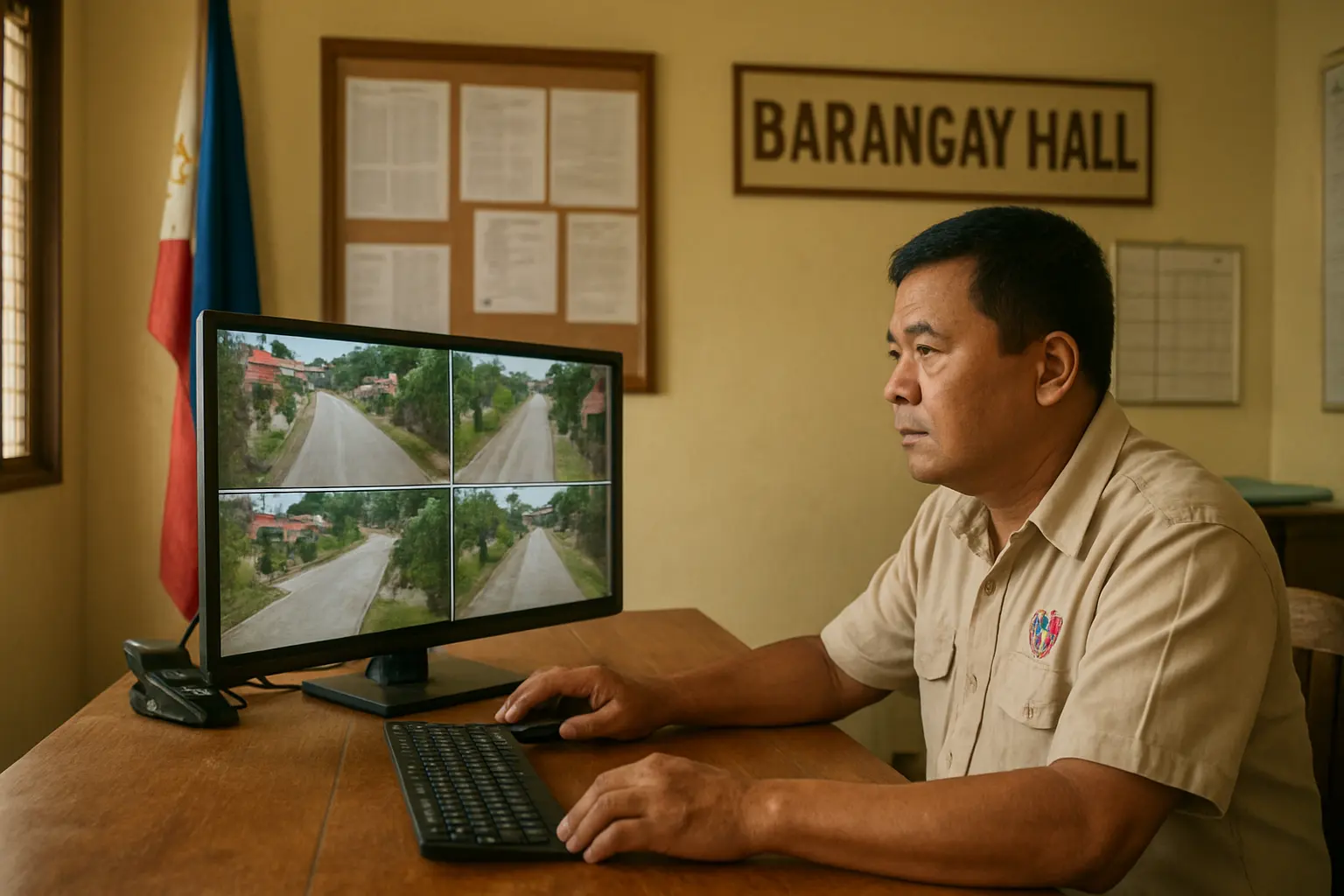
| 7 | Effectiveness of barangay CCTV programs in property-crime deterrence, as perceived by residents | Local government CCTV ordinance; PNP index-crime classification |
| 8 | Insurance-claim experience among property-crime victims in one locale | PNP index-crime classification; insurer claims-process comparison |
Drug-Related Offenses
| # | Topic | Anchor |
|---|---|---|
| 9 | Barangay-level implementation of community-based drug rehabilitation programs | RA 9165 (2002), Comprehensive Dangerous Drugs Act; PDEA community-based program |
| 10 | Law-enforcement perceptions of chain-of-custody compliance in drug-case evidence handling | RA 9165, Section 21 chain-of-custody rule |
| 11 | Reintegration outcomes reported by surrenderers of a local anti-drug campaign | PDEA community-based rehabilitation framework |
| 12 | School-based drug-prevention program awareness among senior high school students | RA 9165; DepEd drug-education mandate |
Cybercrime and Digital Evidence
| # | Topic | Anchor |
|---|---|---|
| 13 | Local police readiness to investigate online scams reported by residents | RA 10175 (2012), Cybercrime Prevention Act |
| 14 | Digital-evidence handling training gaps among municipal police investigators | RA 10175; PNP Anti-Cybercrime Group |
| 15 | Reporting behavior of online-harassment victims under the Safe Spaces Act | RA 11313 (2019), Safe Spaces Act, online-harassment provisions |
| 16 | Awareness of cyber-libel provisions among local social-media users | RA 10175, cyber-libel provision |
Gender-Based and Vulnerable-Sector Crime
| # | Topic | Anchor |
|---|---|---|
| 17 | Barangay VAWC-desk officer readiness to process protection-order requests | RA 9262 (2004), Anti-Violence Against Women and Their Children Act |
| 18 | Diversion-program outcomes for children in conflict with the law in one locale | RA 9344 (2006) as amended by RA 10630 (2013), Juvenile Justice and Welfare Act |
| 19 | Frontline-officer training gaps in identifying trafficking indicators at transport hubs | RA 9208 (2003) as amended by RA 10364 (2012), Anti-Trafficking in Persons Act |
| 20 | Community shelter capacity and referral pathways for abuse survivors | RA 9262; DSWD-accredited shelter network |
Corrections and Community-Based Rehabilitation
| # | Topic | Anchor |
|---|---|---|
| 21 | Jail-officer perceptions of decongestion under recognizance-release procedures | RA 10389 (2012), Recognizance Act; BJMP jail population management |
| 22 | Community-service program implementation as an alternative to short-term detention | RA 11362 (2019), Community Service Act |
| 23 | Parole and probation officer caseload management practices in one province | Parole and Probation Administration (PPA) mandate |
| 24 | Reintegration-program effectiveness as perceived by released persons deprived of liberty | Bureau of Corrections (BuCor) reintegration mandate |
Why Index-Crime Classification Anchors a Topic Better Than a National Statistic
A topic that opens with an unverified national crime rate is one of the fastest ways to draw a panel correction, since the researcher rarely has the standing PNP or PSA dataset open in front of them at the defense to defend the number. Anchoring instead to the classification itself — index versus non-index, the specific unit that handles a case type, the specific special law that creates the offense — lets the significance of the study rest on something the researcher can actually verify and explain without quoting a figure nobody in the room can check. Where a genuine national or regional figure is needed for Chapter 1’s background, it should come from a PNP or Philippine Statistics Authority (PSA) publication the researcher has personally opened that week, cited with its own publication date — never restated from a previous thesis or a general impression of “rising crime,” which a panel reads as an unverified claim regardless of how commonly it is repeated.
How This List Differs From the Existing Criminology Content on This Site
This site already covers criminology research design choice, defense and panel questions, and thesis timeline, budget and ethics-clearance planning. What none of those pieces provide is a topic bank scoped to a real classification system — the gap this list fills, in the same spirit as the Political Science topics list already on this site, but built around PNP’s crime categories and the special-law agencies (PDEA, BJMP, BuCor, PPA) rather than governance instruments. Once a topic is chosen from the table above, the research-design piece is the next stop: it walks through which design — descriptive-correlational, descriptive-comparative or something else — fits which kind of sub-problem, using the same PNP- and BJMP-access constraints this list was built around.
Checking a Statute’s Current Version Before Citing It
Several of the special laws above have been amended at least once, and citing the superseded version is one of the most common corrections a criminology panel makes: the Juvenile Justice and Welfare Act (RA 9344, 2006) was significantly amended by RA 10630 in 2013, lowering neither the minimum age of criminal responsibility nor removing diversion but changing how Bahay Pag-asa facilities and intervention programs are structured; the Anti-Trafficking in Persons Act (RA 9208, 2003) was expanded by RA 10364 in 2012 to add stronger provisions on attempted trafficking and qualified trafficking. A thesis citing only the original year without checking whether a later amendment changed the specific provision being discussed is exactly the kind of superseded-citation error that costs a rewrite after the proposal has already been approved — five minutes on lawphil.net before Chapter 1 is finalized avoids it entirely.
Choosing a Respondent Group That Does Not Require an Internal PNP Request
Every topic above was deliberately built around a respondent group an undergraduate group can reach directly: barangay officials, residents, business owners, school staff, or personnel answering about their own perceptions and day-to-day practices rather than requesting case-level data from a PNP, BJMP or PDEA records office. That distinction matters because a records request to a Philippine law-enforcement agency routinely takes weeks to months to clear, well past what a single semester allows — the ethics-clearance timeline covered in this site’s timeline-and-budget guide already builds in lead time for PNP or BJMP coordination, and choosing a topic from this list keeps that lead time to an individual-consent conversation rather than an institutional records request.
How to Narrow One of These Into a Full Topic
Each row above is a topic area, not a finished title. Narrowing it into a Chapter 1 statement of the problem takes the same three decisions this site’s other topic-list guides walk through: the specific locale, the specific respondent group, and the research design that fits the sub-problem being asked — a perception question (how residents rate police response time, for example) fits a descriptive-survey design, while a practice or process question (how a jail officer handles a recognizance release) often fits a descriptive-qualitative or case-study design better. This site’s research-design guide, linked above, covers exactly which design fits which kind of sub-problem in more depth than a topic list can.
Verifying a Local Ordinance Before Citing It in a Barangay-Level Topic
Two of the topics above — barangay CCTV programs (7) and barangay VAWC-desk readiness (17) — anchor partly to a local government ordinance rather than a national statute, and a local ordinance is easy to cite incorrectly if the researcher assumes every barangay or city has adopted the same version. Before finalizing Chapter 1, the researcher should request a copy of the specific barangay or city council resolution or ordinance from the barangay hall or the local Sangguniang Bayan/Panlungsod secretary’s office, note its actual resolution or ordinance number and enactment date, and confirm it is still in force rather than superseded by a later resolution. A thesis that describes “the barangay’s CCTV ordinance” without naming the specific resolution number reads, to a panel familiar with local governance, the same way an uncited national statistic does — a claim the researcher has not actually verified. This verification step takes a single visit or phone call to the barangay office and should happen during the same week the topic is finalized, not deferred until Chapter 3 is being drafted.
Frequently Asked Questions
Do these topics need a formal PNP research-access letter before data collection?
Most of the topics above are designed around respondents outside the PNP itself — barangay officials, residents, released persons, school staff — precisely to avoid needing a PNP internal-data request, which typically takes far longer than an undergraduate timeline allows; the handful that do involve PNP or BJMP personnel as respondents (numbers 1, 2, 14, 21) still need only individual informed consent, not an internal-records request, since they ask personnel about their own perceptions and practices rather than requesting case files.
Can a criminology thesis cite a specific national crime statistic if the researcher has not opened the PSA or PNP source directly?
No — any specific figure used in Chapter 1’s background must come from a source the researcher opened that session, with its publication date noted; if no such source has been opened, the background should describe the classification and the relevant law instead of asserting an unverified number.
Is RA 11479 the correct current anti-terrorism law to cite, or the older Human Security Act?
RA 11479 (2020), the Anti-Terrorism Act, superseded the 2007 Human Security Act — any criminology thesis touching terrorism-related offenses should cite RA 11479 as the current law, not the older statute it replaced.
Do BJMP and BuCor cover the same population, or are they different institutions?
They are different — BJMP manages city and municipal jails holding persons awaiting trial or serving light sentences, while BuCor manages the national penitentiary system for persons serving longer sentences; a thesis on jail decongestion (topic 21) is a BJMP-scoped study, while one on reintegration after a longer sentence (topic 24) is BuCor-scoped, and the two should not be conflated in a single instrument.
Which of these topics fits a qualitative, case-study design best?
The reintegration and caseload-management topics (21 through 24) suit a qualitative or mixed-methods design particularly well, since officer and released-person experiences are naturally interview-based rather than large-sample survey data — a smaller, purposively sampled respondent group is both more feasible and more methodologically appropriate for these four than for the index-crime perception topics earlier in the list.
Can a topic study more than one index-crime category at once?
It can, but most panels prefer a tightly scoped single category (persons or property, not both) for an undergraduate thesis on a semester timeline — combining categories usually means combining respondent groups too, which multiplies the access and instrument-validation work beyond what a single semester comfortably supports.
Do juvenile-justice topics require parental consent in addition to the minor’s own assent?
Yes — research involving a minor in conflict with the law requires both parental or guardian consent and the minor’s own assent under standard Philippine research-ethics practice, in addition to any DSWD or local social welfare office coordination the specific diversion program requires; this is a heavier ethics-clearance load than most of the other topics on this list and should be planned for accordingly.
What if the researcher’s own barangay has no CCTV ordinance or VAWC desk yet?
This is itself a usable finding rather than a dead end — a comparative angle (why one barangay has adopted the program while a neighboring one has not) or a needs-assessment angle (what would be required to establish one) both remain viable, though the researcher should confirm this absence directly with the barangay office rather than assuming it, since some programs exist informally before a formal ordinance is passed.
Narrowing any of these twenty-four topic areas into a fully scoped Chapter 1 through 5 — with your own locale, respondent group and a statute you have personally verified — is exactly the section-by-section drafting work Tesify is built to walk a criminology group through.