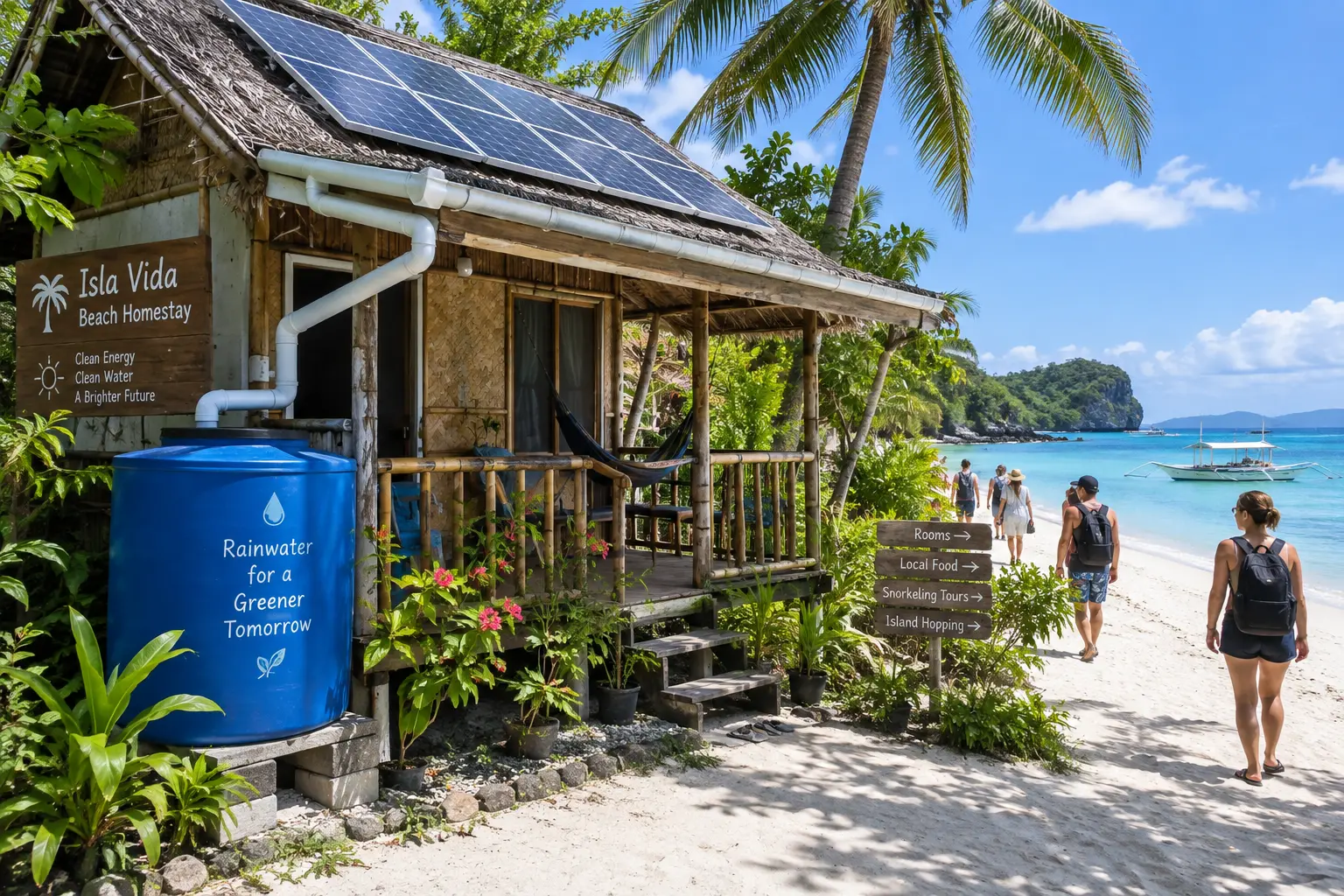
Sustainable tourism thesis proposals are often sent back at title defense for one specific reason: “sustainable tourism” as a phrase is now so broad that a panel cannot tell what you are actually going to measure. The fix is not to abandon the trend — it is to anchor it in the Philippines’ own Tourism Act definition and narrow it to one measurable practice, population, or destination. Here is the angle that actually survives a title defense.
Why “Sustainable Tourism” Alone Gets Rejected
Tourism programs in the Philippines see many proposals titled some version of “sustainable tourism practices in [destination].” A panel’s first question is almost always: sustainable according to which definition, measured by whom, using what instrument? A generic version of this topic cannot answer that question, and gets sent back for a full rewrite — often losing a full defense cycle a student did not need to lose.
The Legal Definition Your Thesis Should Actually Cite
Republic Act No. 9593 (the Tourism Act of 2009), Section 4(v), defines sustainable tourism development as “the management of all resources that meets the needs of tourists and host regions while protecting the opportunities for the future, in such a way that economic, social and aesthetic needs can be fulfilled while maintaining cultural integrity, essential ecological processes, biological diversity and life support systems.” This is the actual legal definition your literature review should open with, not a generic dictionary or textbook definition — citing the Tourism Act by section number signals you looked at the actual Philippine framework rather than importing an international definition wholesale. The Department of Tourism is named in Section 5 as the primary planning, programming, coordinating, implementing and regulatory agency for the industry, and the Tourism Infrastructure and Enterprise Zone Authority (TIEZA) is given authority under Section 64 to designate, regulate and supervise Tourism Enterprise Zones — both worth naming if your thesis touches a TIEZA-designated area or a DOT accreditation requirement.
Five Narrowed Angles That Actually Pass
- MSME adoption angle: what specific sustainable practices small tourism enterprises (a homestay, a dive shop, a small resort) in one named destination have actually adopted, and what barriers keep them from adopting more.
- Tourist willingness-to-pay angle: whether tourists in a specific destination are willing to pay a premium or an environmental fee for verified sustainable practices, and what predicts that willingness.
- Community-based tourism angle: how a specific community-based tourism initiative balances income generation with environmental or cultural conservation, from the perspective of the community members who run it.
- Carrying capacity angle: whether visitor numbers in a specific site exceed an environmentally or socially sustainable threshold, and how local stakeholders perceive the trade-off between visitor volume and site preservation.
- Regulatory compliance angle: how tourism establishments in a specific TIEZA-designated zone or LGU-regulated area comply with a named single-use plastic ordinance or environmental regulation, and what enforcement gaps exist.
Each of these names a specific population, a specific destination, and a specific measurable practice — the three things “sustainable tourism practices” alone leaves undefined.
A Worked Title, Before and After
Before (generic, likely to be sent back): “Sustainable Tourism Practices in [Destination]: A Descriptive Study.” After (narrowed, illustrative): “Barriers to Sustainable Practice Adoption Among Small Dive Tour Operators in [Destination]: A Descriptive-Correlational Study.” The second version names the specific enterprise type, states the specific research angle (barriers to adoption, not just “practices”), and implies a design (correlational) the first version does not.

What Instrument Should I Use?
For the MSME adoption or compliance angles, a researcher-made checklist against the specific practices named in RA 9593 and any relevant DOT accreditation criteria or LGU ordinance is common, pilot-tested and reported with reliability the same way any adapted instrument should be, as covered in our general instrument-comparison approach. For the tourist willingness-to-pay or carrying-capacity angles, an adapted SERVQUAL-style or contingent-valuation survey instrument works, provided you adapt it explicitly to the sustainability dimension rather than general service quality — our tourism thesis survey instrument comparison covers SERVQUAL, a destination-image scale, and a custom-questionnaire option in more depth for the general tourism-satisfaction case, which a sustainability-specific study should adapt from rather than copy directly.
Where Do I Get the Data to Justify the Topic in the First Place?
Your Chapter 1 needs at least one citable figure establishing that the destination or issue is significant enough to study — visitor arrival trends, a documented environmental concern, or an existing DOT or LGU sustainability initiative in the area. Our tourism thesis data sources guide covers where PTSA, DOT arrival figures, and OpenSTAT tables actually live, including the specific trap of citing a stale World Bank figure without checking its last-updated date. A sustainability-specific figure — a documented case of overtourism, a local ordinance’s stated rationale, an environmental assessment already published for the site — strengthens your justification far more than a generic global sustainable-tourism statistic that says nothing about your specific destination.

How Is This Different From the Site’s Climate-Smart Agriculture Trend Piece?
Our climate-smart and sustainable agriculture thesis topics guide covers the same sustainability-trend lens applied to agriculture rather than tourism — useful background on how a trend angle should be scoped, but built around a different vertical’s own practices, regulations and data sources. If your own study actually sits at the intersection (agritourism, for instance), both guides’ framing devices apply and are worth reading together.
What Sample Size and Access Should I Plan For?
The MSME adoption and regulatory compliance angles typically draw a small, defined population — the registered tourism enterprises in one destination or zone, which may number in the dozens rather than hundreds, making a full census or a purposive sample more realistic than a large probability sample computed from a formula. The tourist willingness-to-pay and carrying-capacity angles can draw a larger convenience sample of visitors intercepted on-site, but state clearly how you controlled for seasonality (a peak-season sample answers a different question than an off-peak one) and avoid presenting a single-season sample as representative of year-round visitor sentiment without that caveat. Our HM thesis Chapter 3 sampling plan guide covers the same population-and-access reasoning in more depth for a hospitality-management framing, worth reading alongside this piece if your program uses that framing rather than tourism proper.
What Ethical and Practical Access Issues Come Up Specifically Here?
Small tourism operators are often wary of a student survey they suspect will be used to report them for non-compliance, particularly on the regulatory compliance angle — secure a letter of introduction from your school explaining the academic, non-enforcement purpose of your study, and consider anonymizing individual enterprise responses in your reported results even if you know which specific business gave which answer, unless a business has explicitly agreed to be named. For community-based tourism studies, build in enough time to establish trust with the community before distributing any instrument; a one-time visit survey often gets a politely uninformative response compared to a study that spends time understanding the community’s own priorities first.
A Note on the Trend-Lens Framing Itself
Because “sustainability” is a genuinely global trend right now, a thesis in this space risks reading as chasing a buzzword rather than answering a real local question. The strongest version of any of the five angles above ties the sustainability framing to a concrete, local stake — a specific destination’s actual environmental pressure, a specific enterprise group’s actual compliance burden, a specific community’s actual livelihood trade-off — rather than opening with a global statistic about climate change or tourism’s carbon footprint that says nothing about your particular site. Keep the global framing to a sentence or two of context at most, and spend the bulk of your introduction establishing why this destination, this population, and this practice specifically need to be studied now.
Where This Fits With the Rest of Your Thesis
Once your angle and destination are chosen, the sample-size and access planning above connects directly to your Chapter 3, and if your specific program uses a hospitality-management framing rather than tourism proper, check the HM-specific sampling-plan conventions linked above before finalizing your design. Whichever angle you choose, keep your Chapter 2 review of related literature scoped to studies of the same practice type (adoption, willingness-to-pay, compliance) rather than a broad survey of every sustainable-tourism paper you can find — a tightly scoped review that clearly maps onto your five-angle choice reads as more deliberate than a wide, unfocused one.
Everyone in your batch is proposing “sustainable tourism.” Yours needs a sharper angle.
Tesify turns a narrowed angle like the ones above into a fully structured statement of the problem, objectives, and significance of the study, cited to the actual Tourism Act provisions your topic touches. A free tier is available to start drafting before you decide whether to upgrade. Over 9,000 students have used Tesify to write more than 15,000 chapters, and every word is still written by you.
Frequently Asked Questions
- Is “sustainable tourism” a saturated topic I should avoid entirely?
- No — the trend itself is not the problem, the generic framing is. Any of the five narrowed angles above (MSME adoption, willingness-to-pay, community-based tourism, carrying capacity, regulatory compliance) gives the trend a specific, defensible research question.
- Do I need to cite RA 9593 even if my thesis is really about a business or marketing angle?
- If your thesis touches sustainability claims at all, citing the actual Philippine legal definition strengthens your Chapter 1 regardless of whether your core discipline is tourism management, business, or marketing — it shows you are working from the local legal framework rather than an imported definition.
- How much does Tesify cost, and is there a free option?
- Tesify offers a free tier so you can start drafting before deciding whether to upgrade to a paid plan; check the current pricing and feature breakdown on the Tesify site, since plans and features are updated from time to time.
- Is using Tesify to draft my proposal considered academic dishonesty?
- No, when used as intended: Tesify drafts structure and prose around your own research question, chosen angle, and findings, similar to how a research assistant might help organize a chapter. Disclose AI tool use per your specific university’s policy.
- What is the difference between TIEZA and the Department of Tourism?
- The Department of Tourism (RA 9593, Section 5) is the primary national agency for planning, coordinating and regulating the tourism industry generally. TIEZA (Section 64) has the more specific authority to designate, regulate, and supervise Tourism Enterprise Zones and their infrastructure — relevant if your study site sits inside a designated zone.
- Can I study overtourism in a destination without official carrying-capacity data?
- Yes — where official carrying-capacity figures do not exist for your site, a perception-based study (how stakeholders and visitors themselves perceive crowding and its effects) is a legitimate substitute design; state clearly that you are measuring perception rather than an official technical carrying-capacity assessment.
- Should I survey tourists in one season or across multiple seasons?
- A single-season sample is often the realistic option on an undergraduate timeline, but state which season you sampled and note explicitly that findings may not generalize to other seasons, rather than presenting a peak-season sample as year-round visitor sentiment.
- Do small tourism operators usually agree to participate in a compliance-focused study?
- Willingness varies and can be lower than for a general satisfaction survey, since operators may worry about how compliance information will be used. A clear letter of introduction explaining the academic, non-enforcement purpose of your study, plus a credible anonymity commitment, improves participation.