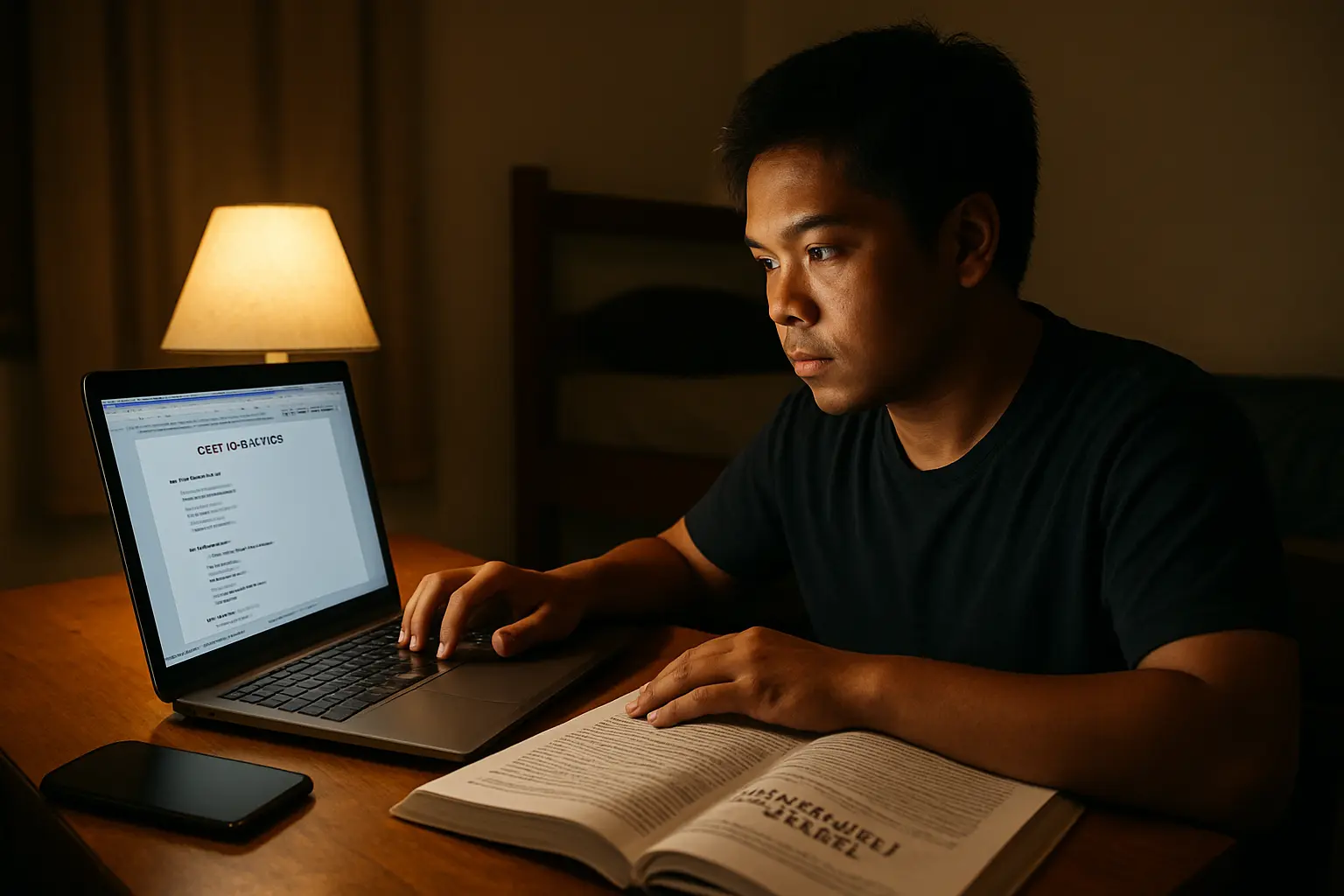
Your final defense is in five weeks, Chapter 2 is a folder of unread PDFs, one groupmate has stopped replying to the chat, and your adviser wants a draft by Monday. That is the position most people are in when they search for an AI thesis maker, and it is a speed problem, not a laziness problem.
The cost of not solving it is concrete in the Philippine system: miss the submission window and you do not simply hand in late, you carry the subject to the next semester, delay graduation and in many programmes push back the board exam you were supposed to sit. That is the real price of a stalled Chapter 2.
So here is the honest account of what an AI thesis maker can do about it, what it categorically cannot, and how to make sure you are not breaking a rule your school has already written down.
Turn your notes into a chapter you can defend
Tesify structures your thesis chapter by chapter around your own topic, sources and data, keeping every citation attached to the source you actually read. Over 9,000 students have used it to write more than 15,000 chapters, and 100 per cent of the work is still written by you.
The four things no AI thesis maker can supply
Start here, because every disappointment with these tools traces back to expecting one of them.
- An approved title. Your panel approves the topic, and it approves it against feasibility, scope and originality within your department. No tool sits in that room. If your title keeps coming back, that is a scoping problem — the way out is set out in the guide to getting a rejected thesis title approved.
- Your respondents. Someone has to obtain the Dean’s permission, hand out 344 questionnaires and chase the ones that do not come back. There is no substitute for this and there never will be.
- Your data. The numbers in Chapter 4 must come from your instrument. A tool that produces plausible numbers has produced the one thing that can end a thesis rather than delay it.
- Your school’s research manual. Section names, ordering, margins, the certification page — these differ between UP Diliman, Ateneo de Manila, De La Salle and UST, and between colleges inside one university. Your manual is the authority.
Everything else — structure, sequencing, turning notes into academic prose, keeping citations attached, checking internal consistency — is genuinely accelerable, and that is where the five weeks come back.
What it does well, chapter by chapter
Chapter 1. The strongest use is structural rather than generative. Write your problem, your objectives and your research questions in note form yourself, then have the tool expand them and check that each research question corresponds to an objective. That one-to-one correspondence is what a panel tests first, and it is a check a tool performs reliably. What belongs in each section is set out in the guide to writing Chapter 1.
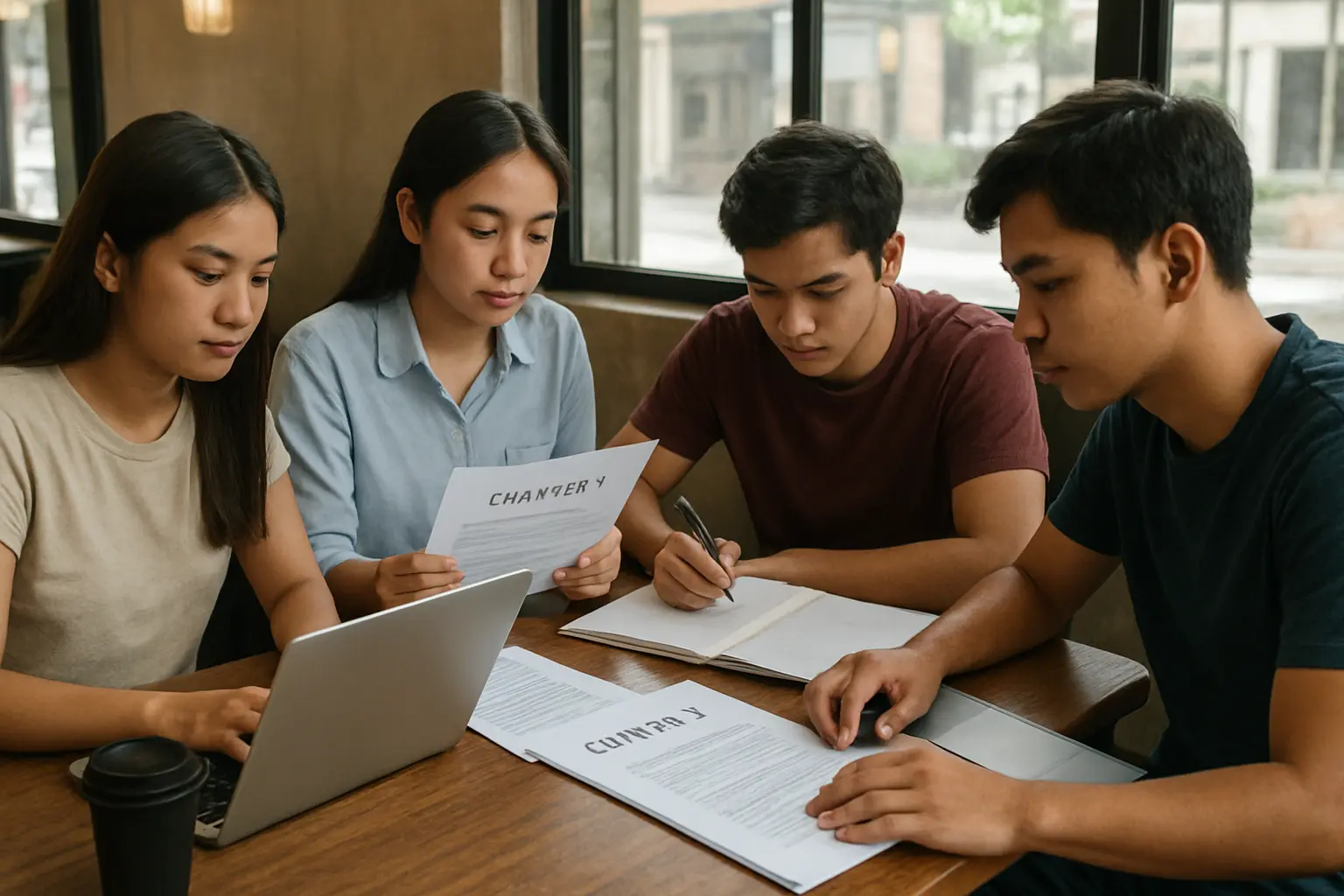
Chapter 2. The highest-value chapter and the highest-risk one. Used correctly — you collect real sources, read them, write two sentences on each, then draft from your own notes — it turns weeks into days. Used incorrectly, it produces fluent paragraphs attached to references that do not exist. More on that below; the safe method is in the guide to writing a review of related literature.
Chapter 3. Formatting and consistency only. A tool can put your sections in the order your manual expects, keep the whole chapter in past tense and check that your population exceeds your sample and your retrieved count is below your distributed count. It must not choose your design or invent a validation you did not run. The nine sections and the arithmetic panels check are in the guide to writing Chapter 3.
Chapter 4. You bring the tables. What a tool does well is turn “weighted mean 3.05, criterion 2.50, hypothesis rejected” into the three-part interpretive sentence a panel wants: what the finding says, whether it supports the hypothesis, and whether it agrees with the literature. Many students can compute the mean and cannot write that sentence.
Chapter 5. The easiest win, because summary, conclusion and recommendations follow mechanically from what came before. Have the tool check, objective by objective, that each one has a finding, a conclusion and a recommendation. A missing link there is one of the defects panels find fastest.
The citation problem, stated plainly
General-purpose chatbots asked for a literature review will produce citations in perfectly ordinary author-year format for papers that do not exist. Filipino advisers now check this routinely, and the check takes seconds: they search for the paper.
A Chapter 2 with four unresolvable references is worse than a Chapter 2 with fewer sources, because it puts a question mark over everything else in the manuscript, including the parts you did write.
Two rules make this impossible rather than unlikely. Never accept a citation you have not opened. And resolve anything you are unsure about by its DOI, which is self-verifying. This is also why a tool that keeps citations attached to the sources you actually opened is structurally safer than one that generates text and citations together — the difference, and the seven formatting errors that follow, are covered in the guide to APA citation generators and what to fix before you submit.
What your school actually says
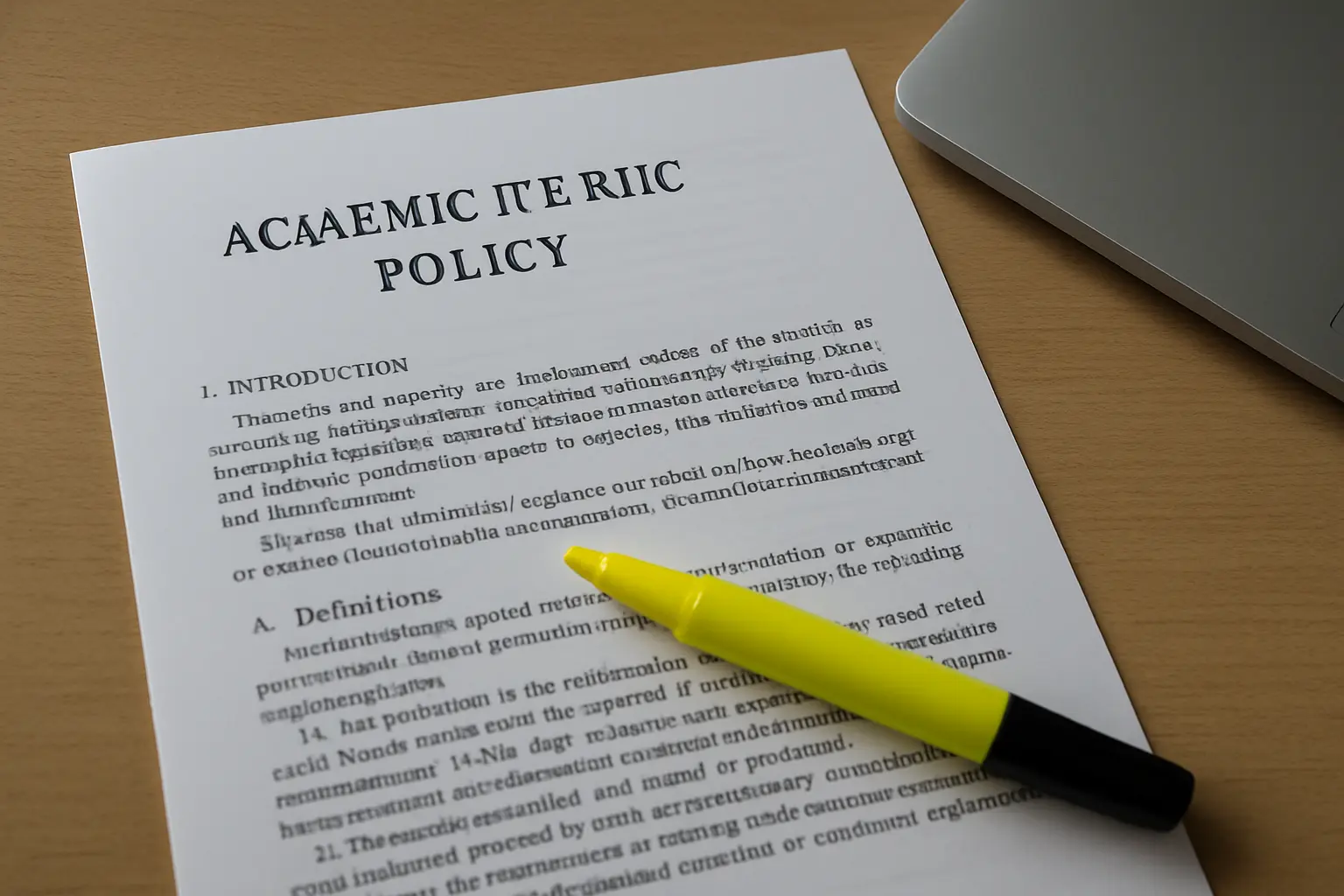
There is no single national rule that settles this for every Philippine HEI. Institutions and individual departments set their own policies, and they differ sharply: some prohibit generative AI in written coursework, some require a declaration of what was used, some distinguish drafting assistance from content generation, and some have no written policy yet.
So do three things before you build a workflow around any tool.
- Read your student handbook and your research manual for a section on academic integrity or AI use. This is the governing document, not anything you read online.
- Ask your adviser directly and specifically. Not “can I use AI” but “may I use a tool to draft from my own notes and sources, and do you want that declared?” A specific question gets a usable answer.
- Write down what they said. If a panel asks in the defense room, you want to be able to say when you asked and what you were told.
Volunteering the information is almost always safer than being asked. Advisers respond very differently to a student who says at the outset how they intend to work than to one who is discovered afterwards.
Will it raise my similarity score?
Similarity and AI detection are two separate measurements and it helps to keep them apart.
A similarity report compares your text against a corpus of existing documents. Text you drafted from your own notes about your own data has little to match against, so it behaves like any other original writing. What raises a similarity score is uncited paraphrase of somebody else’s work — which is a citation discipline problem, not an AI problem.
AI detection is a different feature, offered separately, and Philippine research offices differ in whether they use it and what weight they give the output. Neither measurement is a substitute for the real test, which is whether you can account for what you wrote. Both are covered in more depth in the comparison of plagiarism checkers for Filipino students.
A five-week plan that actually works
If your defense is five weeks out and Chapter 2 is empty, this is the order to work in.
- Week 1. Lock the title with your adviser. Collect fifteen to twenty real sources and read them, writing two sentences on each. Do nothing else.
- Week 2. Draft Chapter 2 from your notes, grouped by theme rather than by author. Draft Chapter 1 alongside it, since the gap you just identified is your rationale.
- Week 3. Finalise the instrument, get it validated by named experts, and start data collection. Draft Chapter 3 in parallel while the questionnaires are out.
- Week 4. Encode, analyse, and draft Chapter 4 table by table. Then draft Chapter 5 directly from your objectives.
- Week 5. Reference list, formatting to the manual, and rehearsal. Reconcile the respondent count across Chapter 3, Chapter 4 and the abstract — a mismatch found by the panel costs more than a weak finding.
The tool compresses weeks 2, 4 and 5. It cannot compress week 1 or the data collection in week 3, which is why those go first. If you are further behind than this, the recovery sequencing is in the guide for when Chapter 2 is empty and the deadline is next week.
Start with the chapter you are stuck on
Tesify takes your own topic, sources and data and helps you draft chapter by chapter in the structure your research manual expects, with the citation trail intact. Every decision — design, sample, interpretation — stays yours, which is exactly why the result survives a panel. Current pricing, including what you can do before paying anything, is listed on the Tesify site.
Frequently asked questions
How much does an AI thesis maker cost in pesos?
Prices change and this article does not quote a figure it cannot verify at source. Check the current plans on the Tesify site, and if you are splitting the cost across a thesis group, check the terms on account sharing there rather than assuming.
Is using an AI thesis maker cheating in the Philippines?
There is no single national rule; your school and your department decide, and their policies differ. Using a tool to draft your own material from your own sources is a different act from submitting generated findings, and most policies turn on that distinction. Ask your adviser and follow the answer.
Will my adviser know I used one?
Usually through content rather than style: citations that do not resolve, a methodology you cannot explain, or a sudden change in register. Working from sources you actually read removes all three tells, because the work genuinely is yours.
Can it write my whole thesis?
It can produce text that looks like a thesis. It cannot produce your respondents, your data or your decisions, and those are what the panel examines. A complete generated document leaves you undefendable at exactly the wrong moment.
What about my data privacy?
Read the privacy terms before uploading unpublished work, and check whether your ethics approval restricts where respondent data may be stored. If your study involves identifiable personal data, that restriction is usually explicit in the approval you were granted.
Can our whole thesis group use one account?
Check the terms of the specific tool rather than assuming, since sharing rules vary. Whatever you decide, agree in advance who owns which chapter, because unclear ownership is what produces the silent groupmate in the first place.
Can it help with Chapter 4 if I already have my data?
Yes, and this is one of its strongest uses. It turns computed results into the interpretive sentences a panel expects. It must never generate a figure that is not in your output.
What if my adviser bans AI completely?
Then do not use it. Ask whether grammar checking and reference managers are still acceptable, since many advisers who prohibit generative drafting have no objection to either.
Is it useful for a capstone project rather than a thesis?
Yes, for the documentation, which is where most capstone groups lose time. The system itself is still yours to build. What else differs between the two formats is in the comparison of a thesis and a capstone project.
I have two weeks, not five. What do I do first?
Establish whether your data exists. If it does, drafting is the constraint and a tool genuinely helps. If it does not, collection is the only thing that matters this week and everything else waits behind it.