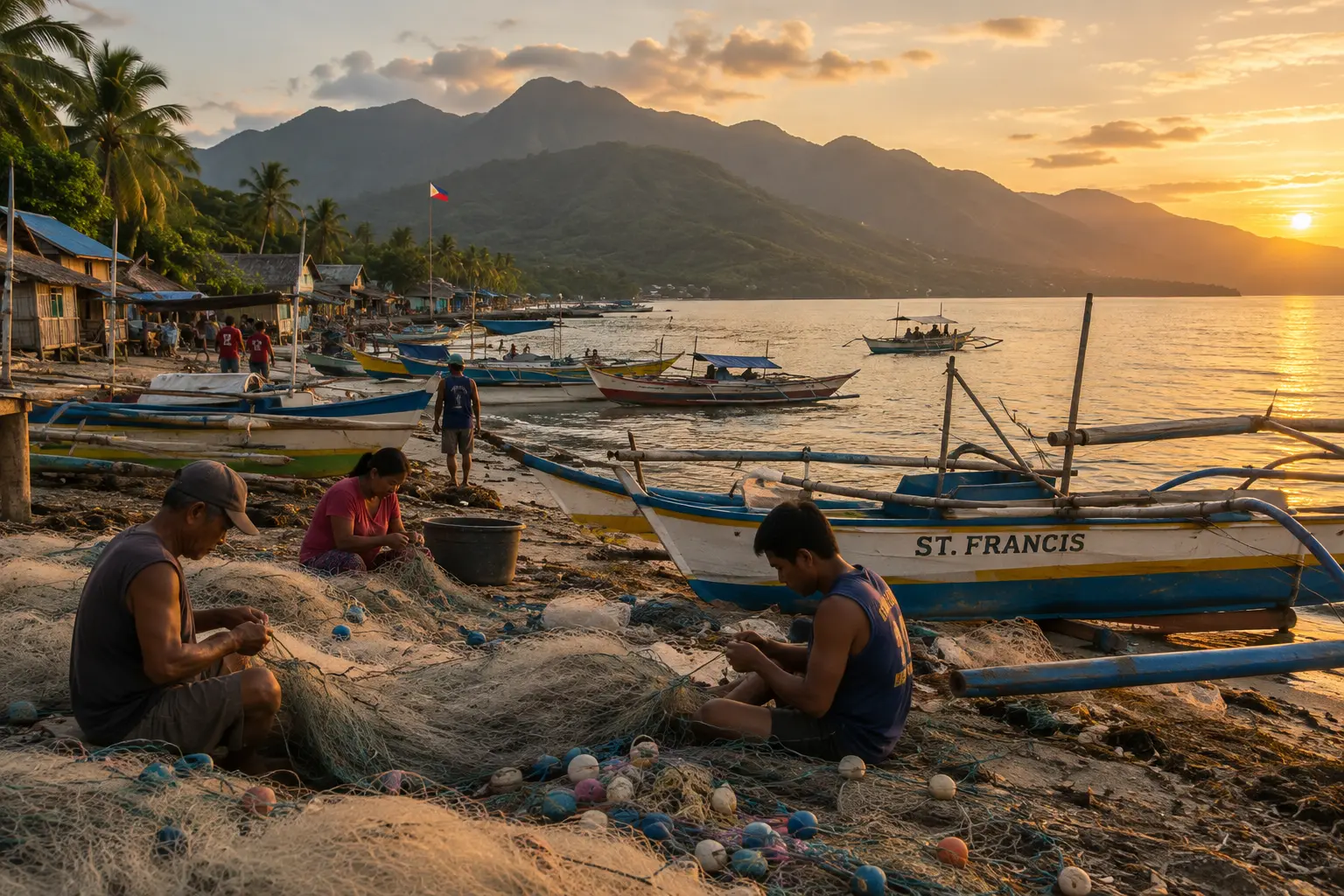
Philippine fisheries production fell 2.5 percent in 2025, and municipal fisheries — the fishing done by coastal households, not commercial fleets — was one of the two segments driving that decline, according to the Philippine Statistics Authority’s Fisheries Situation Report. That single figure is the reason a coastal-communities angle inside an Environmental Science thesis is not a niche topic; it sits on top of a national trend a panel can verify. Here is how to scope that population inside your field, the designs that fit a semester, and where the supporting data actually lives.
Why “coastal communities” is a population, not a topic
An Environmental Science thesis on “coastal resources” or “marine pollution” is a subject area. A thesis on coastal communities is a population: the households, fisherfolk associations and barangay-level residents whose livelihood and exposure to environmental change are tied to one stretch of coastline. Republic Act 8550, the Philippine Fisheries Code, defines the working vocabulary a thesis needs to name this population precisely. Its Section 4 definitions describe fisherfolk as “people directly or personally and physically engaged in taking and/or culturing and processing fishery and/or aquatic resources,” and define municipal waters as including marine waters out to “fifteen (15) kilometers from such coastline” of the municipality — the jurisdictional boundary that decides which households are inside your study’s coastal-community population and which are not.
Naming the population this precisely does two things a vague “coastal communities” label cannot: it gives you a legal definition to cite in your definition of terms, and it gives you a real access point, because Section 21 of RA 8550 states that “resident municipal fisherfolk of the municipality concerned and their organizations/cooperatives shall have priority to exploit municipal and demarcated fishery areas” — meaning your municipality’s own fisherfolk organizations are both your subject and, often, your entry point for reaching respondents.
Four ways to scope the population and setting
| Scope | Population | Typical environmental issue | Access route |
|---|---|---|---|
| Municipal fisherfolk household | Registered municipal fisherfolk in one coastal barangay or municipality | Declining catch, water quality, marine protected area compliance | Barangay fisheries and aquatic resource management council (FARMC), local fisherfolk cooperative |
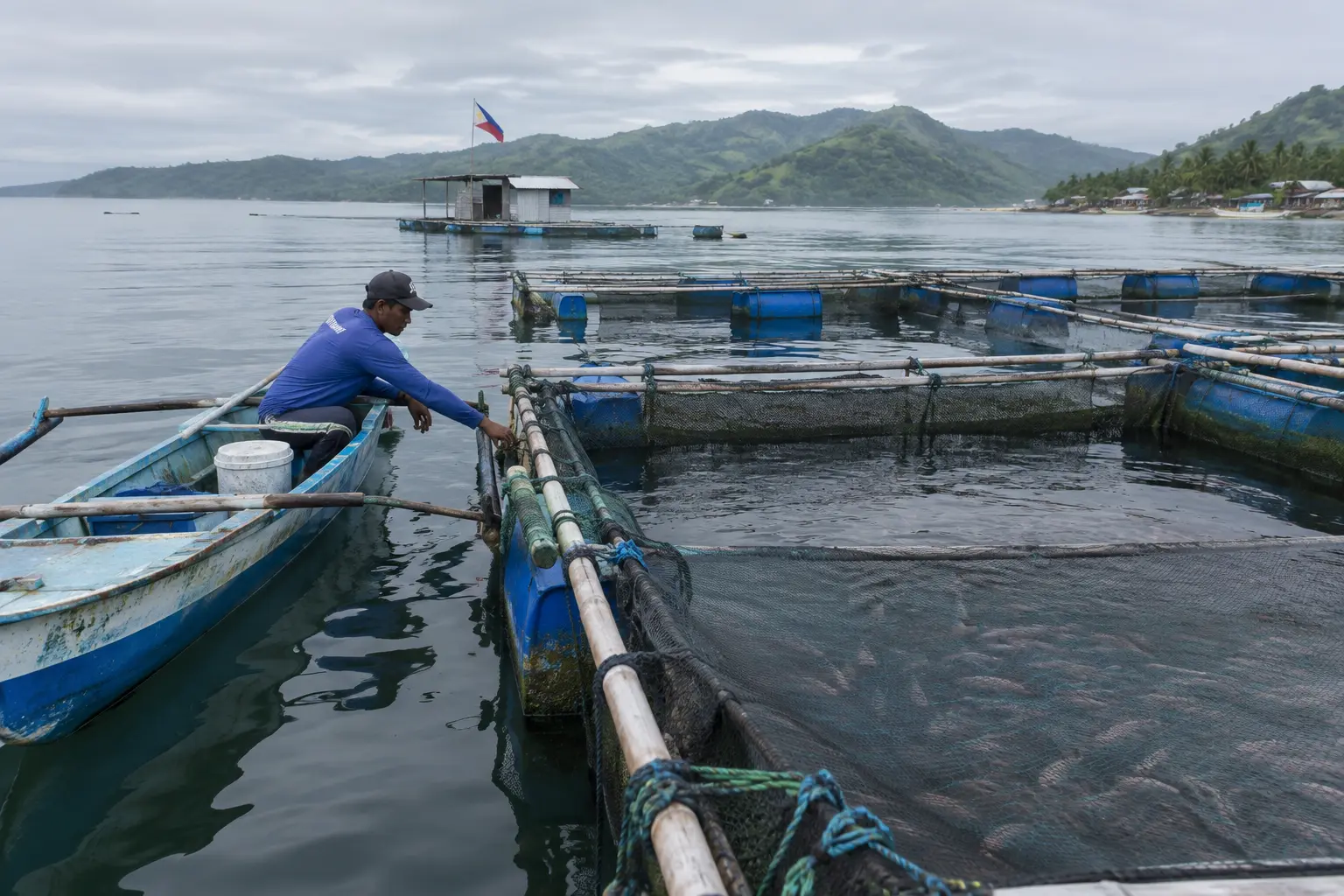
| Coastal aquaculture operators | Small-scale fishpond or fish cage operators along one stretch of coast | Water quality impact on stocked species, feed and waste management | BFAR regional/provincial office, local aquaculture association |
| Coastal barangay residents (non-fisherfolk) | General households in a coastal barangay, not limited to fishing livelihood | Flooding, coastal erosion, solid waste, disaster preparedness | Barangay council, local government disaster risk reduction office |
| Coastal small-business or tourism operators | Sari-sari store owners, resort staff or vendors in a coastal tourism town | Environmental impact of tourism activity, waste management, livelihood diversification | Municipal tourism office, business permit records for initial sampling frame |
Pick one row, not a blend of two. A study that surveys both fisherfolk households and tourism-sector households in the same instrument is really two studies wearing one title, and the panel will ask which population the findings actually describe. If your interest is really the environmental issue itself rather than one population’s experience of it, the site’s general Environmental Science thesis topics list scopes by issue instead, and is the better starting point for that angle.
A design that fits a semester
Three designs are realistic once the population is fixed:
- Descriptive survey of awareness, perception or practice — coastal households rate their awareness of a specific environmental programme or their perceived exposure to a specific risk (coastal erosion, illegal fishing, plastic waste). Fastest to run, needs a sampling frame from the barangay or fisherfolk association.
- Correlational study linking a practice to an outcome — for example, the relationship between household waste disposal practice and observed shoreline debris, or between fishing method and self-reported catch trend. Needs both a perception instrument and an observational or secondary-data component.
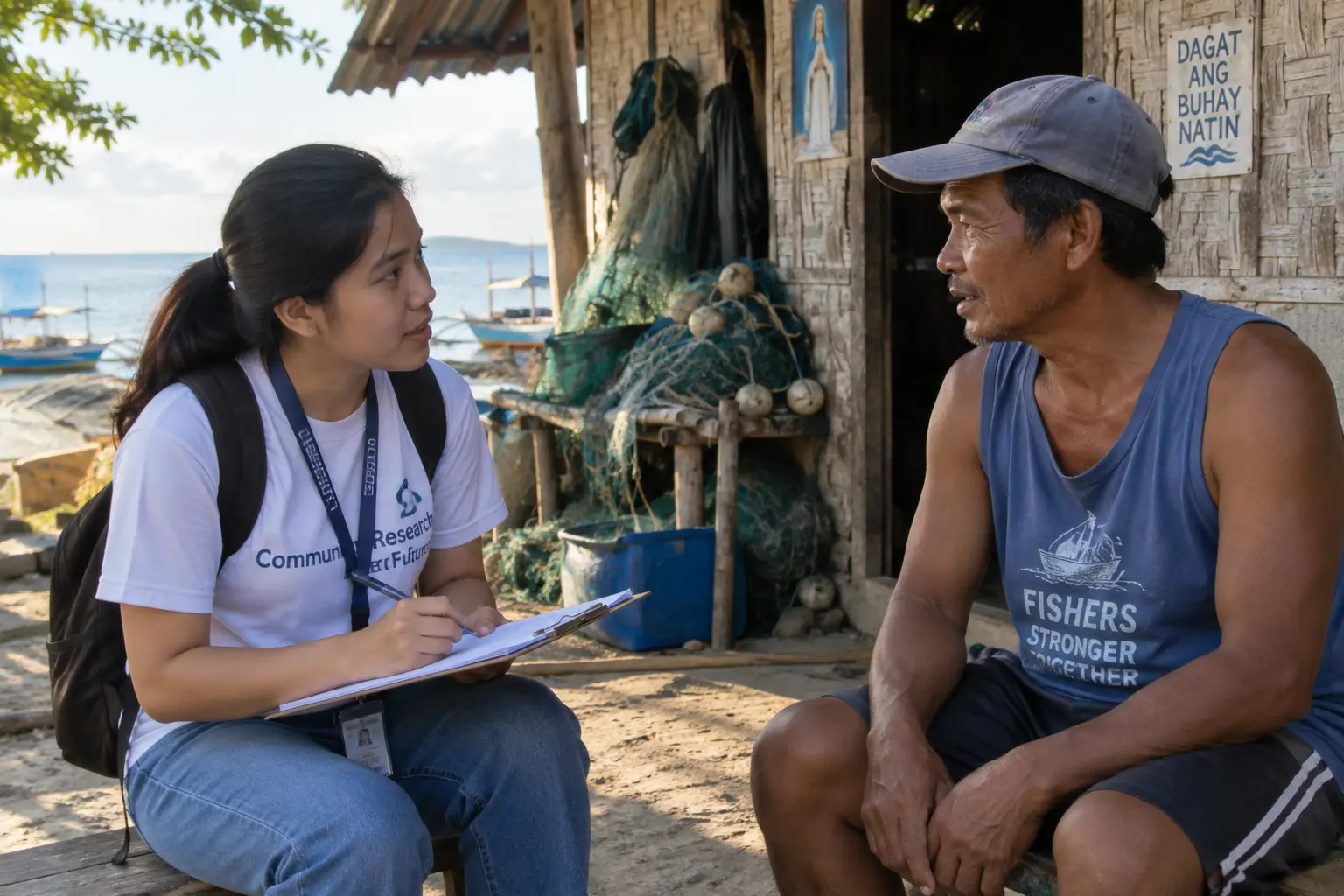
- Case study of one coastal barangay’s environmental management programme — a single Marine Protected Area, a single coastal clean-up initiative, or a single local ordinance, assessed through key-informant interviews with barangay officials and FARMC members plus a small resident survey. Works well when the population of interest is small and concentrated.
The legal and policy backbone your Chapter 1 can cite
Republic Act 10654, which amended the Fisheries Code specifically to address illegal, unreported and unregulated fishing, gives a coastal-communities thesis its policy hook. Section 2 commits the state to “conserve and manage threatened aquatic species, straddling and highly migratory fish stocks,” and Section 14 mandates a “monitoring, control and surveillance system” to ensure fisheries and aquatic resources “are judiciously and wisely utilized.” A thesis on community-level compliance with, or awareness of, these mandates has a statute to cite for why the study matters, not just a general statement that “the environment is important.”
Section 87 of RA 10654 also matters for any thesis touching aquaculture operators specifically: it prohibits unlicensed persons from operating “fish corrals” or otherwise exploiting demarcated fishery areas without proper licensing, and Section 112 requires aquaculture operations to comply with “good aquaculture practices and guidelines for environmentally-sound design and operation” — the citable basis for a thesis asking whether small-scale coastal aquaculture operators actually follow these guidelines.
Where the coastal-community data comes from
The Philippine Statistics Authority’s Fisheries Situation Report is the national baseline: it reported total fisheries production of roughly 3.96 million metric tons in 2025, down from about 4.06 million metric tons in 2024, with municipal fisheries — the segment coastal households work in — named as one of the two categories driving the decline, alongside aquaculture. That figure belongs in a background-of-the-study paragraph establishing that coastal livelihoods are under measurable pressure; it is a national trend, not a substitute for your own municipality’s data, which you obtain from the local BFAR office or the municipal agriculture office’s fisheries records.
Below that national layer, three sources supply the local detail a coastal-communities thesis actually needs:
- Barangay FARMC and municipal agriculture office records — the registered fisherfolk list, which is also your sampling frame.
- BFAR regional/provincial office — municipal water boundary maps, marine protected area designations, and aquaculture licensing records for the area.
- Local government disaster risk reduction and management office — coastal hazard maps and past flooding/storm-surge incident records, relevant to any thesis on climate exposure rather than fisheries specifically.
A related population-and-programme framing already exists for BS Agriculture students in the site’s guide to climate-smart and sustainable agriculture thesis topics, which names the DA’s own climate-adaptation programmes; a coastal-communities Environmental Science thesis can borrow the same habit of anchoring topics in a named government programme rather than a general climate-change statement. For the general method of searching Philippine literature databases once your population and issue are fixed, see where to find related literature for a Philippine thesis.
Five researchable questions for a coastal-communities Environmental Science thesis
- What is the level of awareness of municipal fisherfolk regarding the marine protected area ordinance in [municipality]?
- Is there a significant relationship between household waste disposal practice and observed shoreline debris density in a selected coastal barangay?
- What environmental risks do coastal aquaculture operators in [municipality] perceive as most significant to their operations?
- How do coastal barangay residents’ disaster preparedness practices compare with the local government’s official hazard classification for their area?
- What compliance gaps exist between RA 10654’s good-aquaculture-practice requirements and the observed practices of small-scale coastal fishpond operators?
A worked statement of the problem
A filled-in example built on the municipal-fisherfolk-household scope from the table above:
General problem: This study assessed the level of awareness and compliance of municipal fisherfolk households with the marine protected area ordinance of [Municipality], [Province], as a basis for a community-level awareness programme.
Specific questions:
1. What is the profile of the respondent fisherfolk households in terms of years of fishing activity, membership in a fisherfolk organization, and average monthly catch?
2. What is the level of awareness of the respondents regarding the marine protected area ordinance’s boundaries, restrictions and penalties?
3. What is the level of self-reported compliance with the ordinance among the respondents?
4. Is there a significant relationship between the level of awareness and the level of self-reported compliance?
5. What barriers do respondents report to full compliance with the ordinance?
Notice question 1 collects membership in a fisherfolk organization specifically because RA 8550 Section 21 ties priority access rights to organizational membership — a profile variable that matters for this population is not generic age-and-sex demographics alone, but the specific standing that determines a household’s actual relationship to the resource being studied.
Sampling and consent for a fisherfolk or coastal-household population
Where a barangay FARMC or the municipal agriculture office maintains a registered fisherfolk list, that list is your sampling frame for a Slovin’s-formula calculation, and it should be requested in writing with a stated purpose rather than assembled informally by asking around the wharf. Where no such list exists or is incomplete — common in smaller coastal barangays — a purposive or snowball sample through the local fisherfolk association is defensible, provided the limitation is stated plainly in Chapter 1 rather than presented as if a complete sampling frame existed.
Consent follows the same standard as any adult respondent: fisherfolk household heads and coastal barangay residents consent for themselves, with no special procedure required by RA 8550 or RA 10654, which are resource-management statutes rather than research-ethics instruments. Where a study also involves minors — for instance, documenting how fishing households’ children help with the family’s catch — the general parental-consent and assent procedures already established for any Philippine thesis involving minors apply, not a fisheries-specific exception.
Two failure modes to pressure-test before your title defense
- The population is named but never actually reached. A title naming “coastal communities” broadly, with a convenience sample gathered wherever respondents happened to be available, does not match its own claimed population. Narrow the title to the specific barangay, association or occupational group you can actually access.
- The environmental issue swallows the population. A study that opens with three pages on climate change in general before ever mentioning who is being studied reads as an environmental-science essay, not a population-scoped thesis. Introduce the population in the first paragraph of the background, not after the general problem is already established.
Frequently asked questions
How is a “coastal communities” study different from a general environmental science topics list?
A general topics list scopes by issue (water quality, waste management, climate change) across any setting. A coastal-communities study scopes first by population — who is being studied — and only then narrows to the environmental issue that population actually faces, which is why the respondent group and the access route come before the variable.
Do I need BFAR’s permission to survey fisherfolk?
You need the barangay or the fisherfolk association’s own cooperation to reach respondents through their membership list; BFAR is a data and policy source, not a gatekeeper for a voluntary household survey, unless your design also involves a government-run facility or protected area that requires its own research clearance.
Can I combine fisherfolk and non-fisherfolk coastal residents in one sample?
Only if your research question is genuinely about the whole barangay rather than the fishing livelihood specifically — otherwise treat them as two populations, since their environmental exposure and their stake in fisheries policy differ enough that combining them muddies both findings.
What sample size does a coastal-barangay survey need?
Use the barangay’s or the FARMC’s registered household or fisherfolk count as your population for a Slovin’s-formula calculation where a sampling frame exists; where no formal list exists, a purposive sample with a clearly stated limitation is defensible, provided you say so rather than inventing a population figure.
Is this population scope available outside fisheries-heavy provinces?
Yes — any municipality with a stretch of coastline has municipal waters under RA 8550’s definition and, usually, a registered fisherfolk association, even where fishing is not the area’s dominant industry; check with the municipal agriculture office before assuming the population is too small to study.
Should I cite the national PSA fisheries figure if my study is only about one barangay?
Yes, in the background of the study, to establish that the local pressures your community faces sit inside a measurable national trend — but keep it in the background section only; your actual findings should come from your own local data, not from the national figure.
Scope your coastal-communities thesis before you write Chapter 1
Tesify helps you turn a population and a setting — municipal fisherfolk, coastal aquaculture operators, a coastal barangay’s residents — into a scoped statement of the problem, with your RA 8550/RA 10654 legal basis and the PSA background figure placed where the panel expects them. Over 9,000 students have used it to write more than 15,000 chapters, and every word is still written by you.