Eighteen environmental science thesis topics in the Philippines, each anchored in the exact statute that governs it — the Clean Air Act, the Clean Water Act, or the Ecological Solid Waste Management Act — so the rationale in your Chapter 1 cites the real legal standard your data is measured against, not a general “pollution is a problem” opening. Every topic states its one-line research question and the standard or section it is measured against.
The three statutes this list is anchored to
Three laws, read directly from LawPhil’s full statute text, carry the topics below. Republic Act No. 8749, the Philippine Clean Air Act of 1999 — Section 6 requires the DENR to prepare an annual National Air Quality Status Report covering pollution extent by pollutant type, trend analysis and critical areas needing monitoring; Section 12 requires an annually reviewed list of hazardous air pollutants with their ambient guideline values. Republic Act No. 9275, the Philippine Clean Water Act of 2004 — Section 4(d) defines water body classification by existing quality, size, depth, surface area and most beneficial use; Section 5 has the DENR designate water quality management areas using watersheds, river basins or water resource regions as the physiographic unit. Republic Act No. 9003, the Ecological Solid Waste Management Act of 2000 — Section 21 mandates that segregation of waste happen at the source, across household, institutional, industrial, commercial and agricultural generators; Section 20 requires LGUs to divert at least 25% of solid waste from disposal facilities within five years of the law’s effectivity, through re-use, recycling and composting, with the diversion target rising every three years after.
Citing the specific section a topic tests — not just the law’s title — is what separates an environmental science thesis background that reads as researched from one that reads as a paragraph pulled from a textbook. A background paragraph that opens with “pollution is a serious global problem” and never returns to a specific section of a specific statute is the single most common weak opening this field produces; every topic below is built to avoid it by naming the exact provision the data will be compared against before a single sample is collected. None of these three statutes is itself a research design or a theoretical framework — they establish the legal standard a finding is measured against, and the thesis still needs its own framework, commonly an environmental management systems model or a human-environment interaction theory, argued separately in Chapter 1.
Eighteen topics, by category
Air quality (anchor: RA 8749)
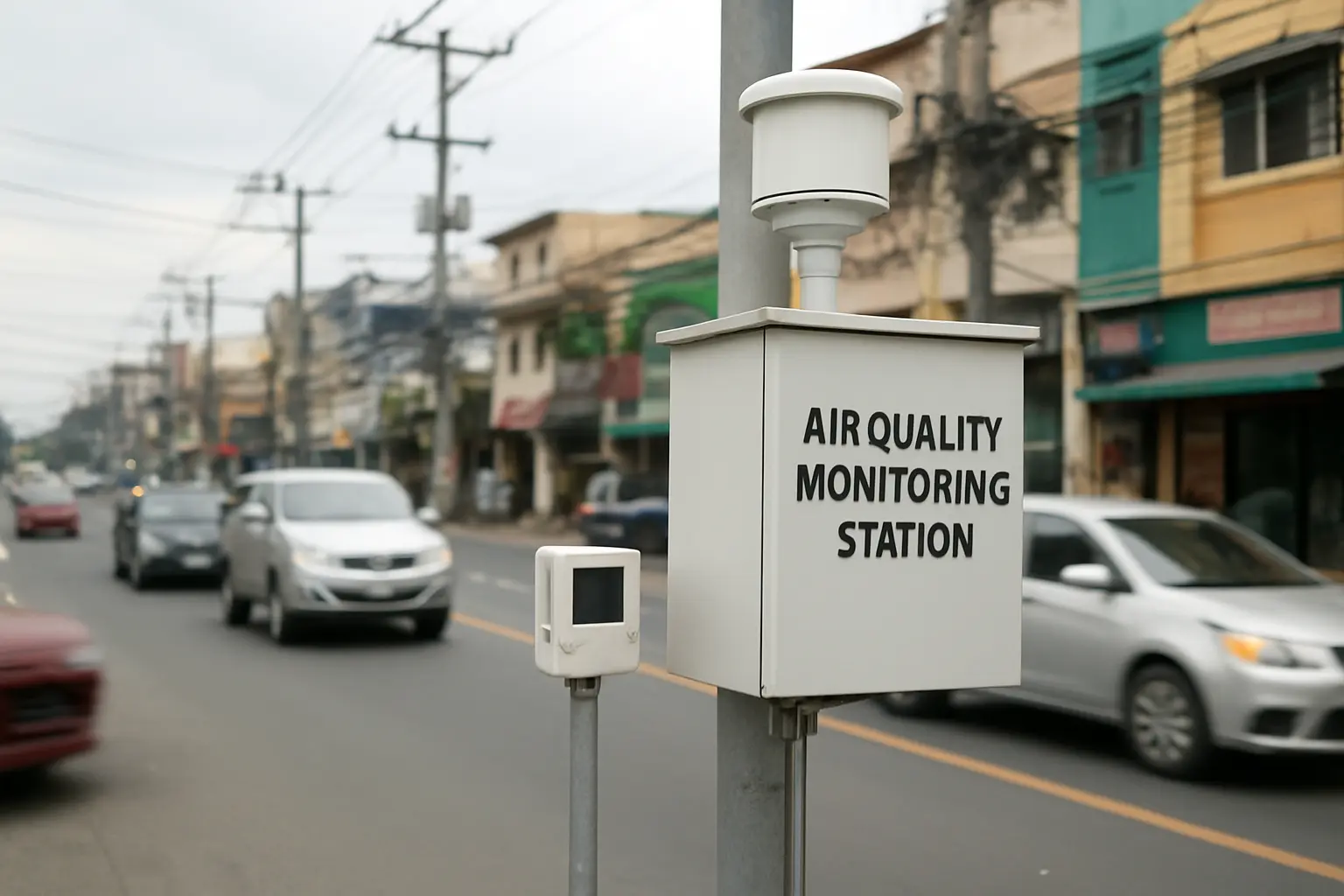
- Ambient air quality along a specific high-traffic corridor in [City], measured against the DENR’s published ambient guideline values under Section 12 — how do readings compare across peak and off-peak hours?
- Public awareness and self-reported behavior change in response to a local air quality advisory or smoke-belching enforcement drive — does awareness predict behavior?
- Indoor air quality in a specific institutional setting (a school, a jeepney terminal waiting area) compared to outdoor ambient readings at the same site and time.
- Vehicle-emission testing compliance patterns at a named local testing center, and what factors predict a failed test.
Water quality (anchor: RA 9275)
- Water quality classification status of a specific named river or creek segment against the parameters implied by its designated most-beneficial use under Section 4(d) — does current quality still support that classification?
- Household water-source choice and perceived water safety in a barangay without a piped water connection — what factors predict which alternative source is used?
- Industrial or commercial effluent compliance patterns for a named water quality management area, using publicly available discharge permit or monitoring data where accessible.
- Community perception of a local water quality management area’s designation and its effect on reported waste-disposal behavior near the water body.
Solid waste management (anchor: RA 9003)
- Household compliance with mandatory source segregation under Section 21 in a specific barangay — what factors predict compliant versus non-compliant households?
- A named LGU’s progress toward the Section 20 diversion target — what does the LGU’s own solid waste management plan report, and how does it compare to the statutory schedule?
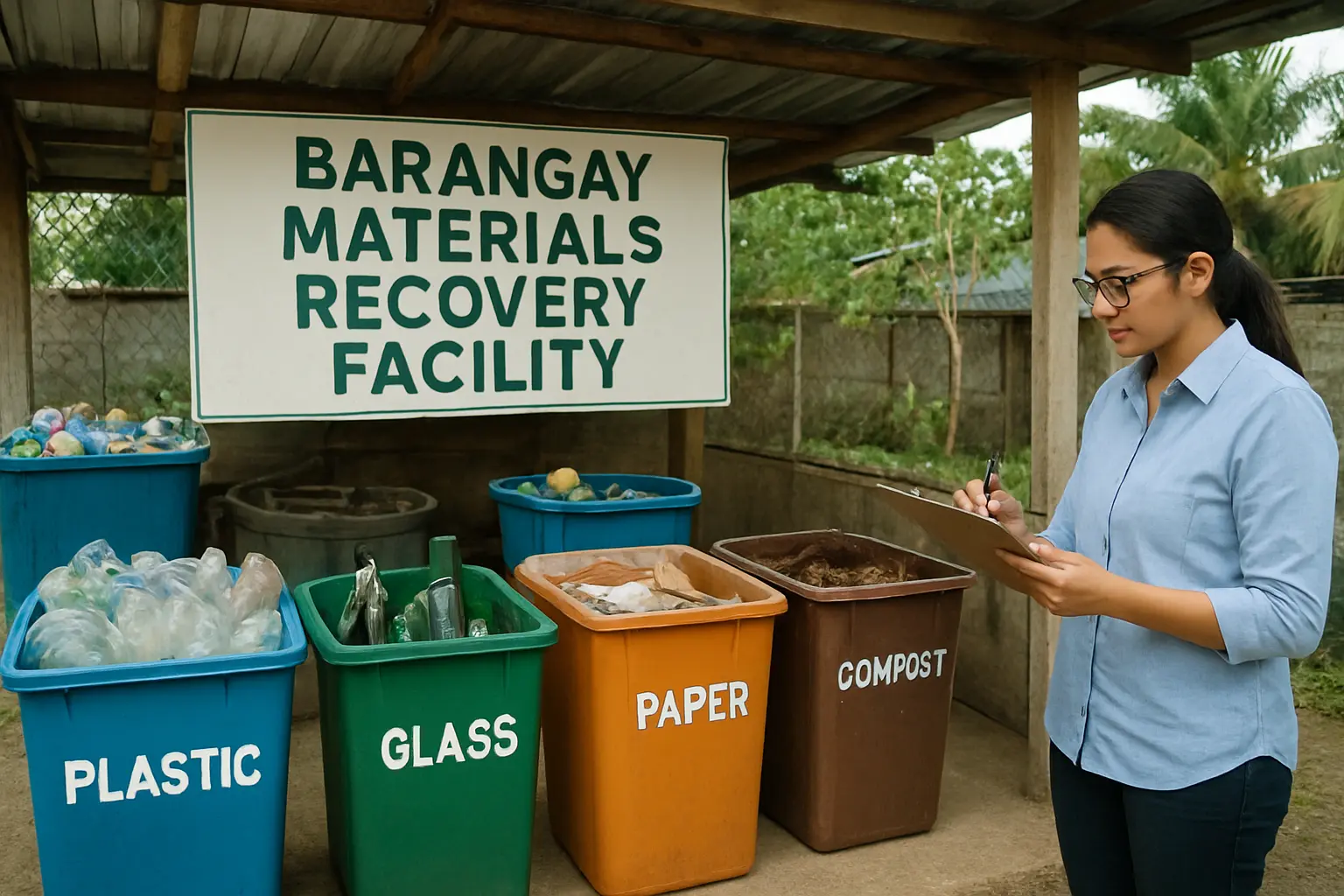
- Materials recovery facility (MRF) operational effectiveness in a specific barangay — throughput, recovery rate by material type, and operator-reported constraints.
- Informal waste-picker livelihood and its relationship to a barangay’s formal solid waste management system — where do the two systems overlap or conflict?
Cross-cutting environmental management
- Environmental compliance certificate (ECC) conditions and actual on-site implementation for a named small-scale development project — a document-and-field comparison.
- Coastal or mangrove area encroachment patterns in a specific municipality, mapped against a barangay’s or LGU’s own land-use plan.
- School-level environmental education program effectiveness, measured by a pre- and post-program knowledge and attitude assessment tied to one of the three laws above.
- Corporate social responsibility environmental programs of a named local business or industry group — stated commitments versus a documented, observable outcome.
- Flood-risk perception and household-level mitigation behavior in a flood-prone barangay, and its relationship to solid waste practices that affect local drainage.
- Environmental impact of a named small-scale quarrying or extraction operation on a nearby water body’s classification status.
What each topic category needs in Chapter 3
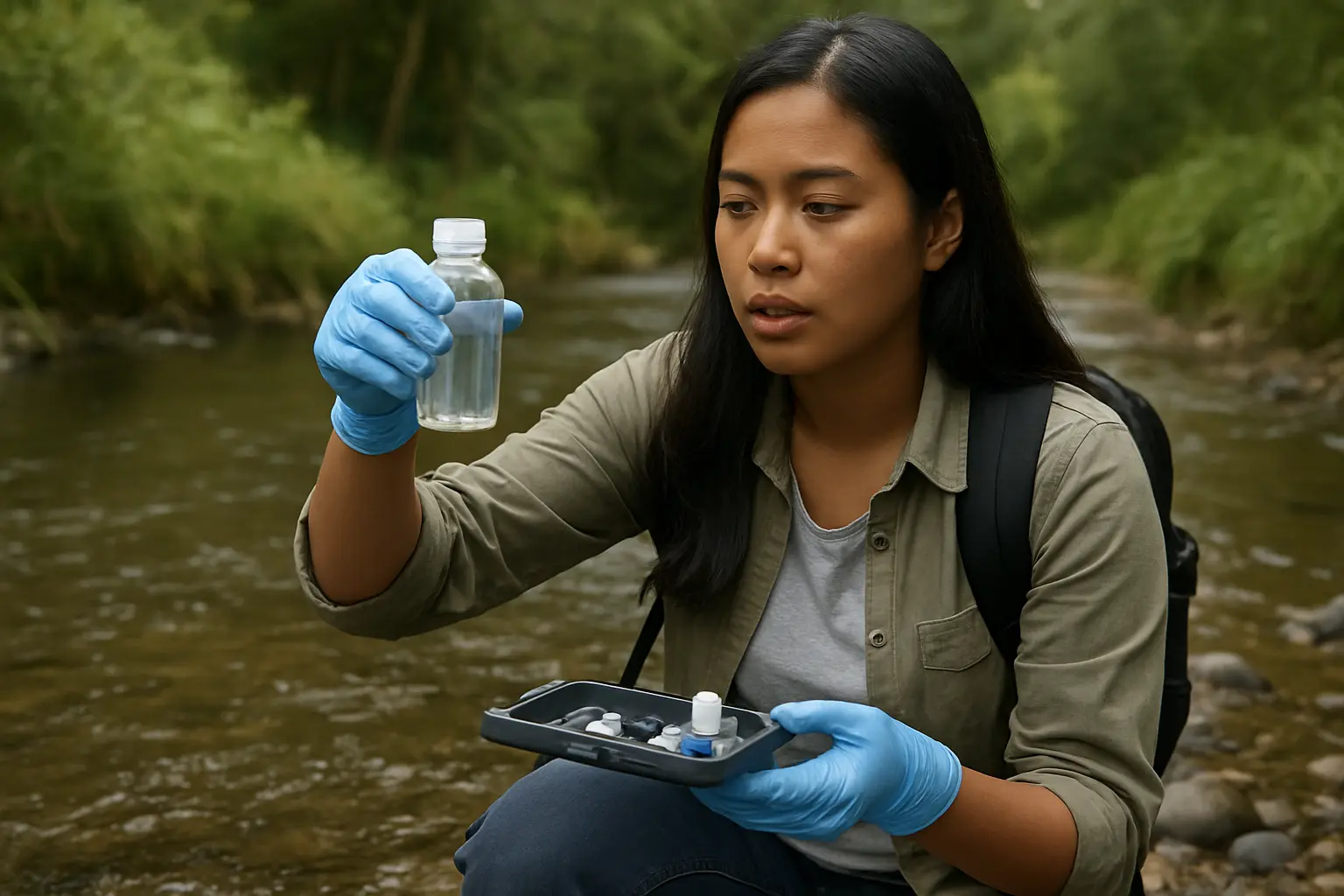
Parameter-testing topics (1, 3, 5, 7) need either a partner laboratory or a field test kit rated for the specific parameter, and the methodology section should name the exact test method and its detection range, not just “water quality was tested.” Sample collection also needs a stated chain-of-custody procedure — container type, preservation method, holding time before analysis — because a panel in this field checks whether the sample could plausibly still reflect the site’s actual condition by the time it was tested, especially for parameters that degrade quickly. Compliance and document-comparison topics (10, 13, 16) are largely qualitative or content-analytic, working from an LGU’s or agency’s own published plans and reports compared against the statutory requirement, with key-informant interviews filling gaps the documents do not cover. Perception and behavior topics (2, 6, 8, 9, 15, 17) are descriptive-correlational survey designs, following the same weighted-mean and chi-square logic used across the site’s other field-vertical guides. Whichever category a topic falls into, state explicitly in the scope and delimitation which specific parameters, sections or barangays are covered — a study that implies it assessed “the environment” broadly, rather than the specific statute and site it actually tested, is a common environmental science Chapter 1 fault.
What this list deliberately leaves out
Republic Act No. 9729, the Climate Change Act of 2009, was not opened this session and is not used as an anchor here — a topic built specifically around that law’s own adaptation and mitigation planning mechanisms should verify its provisions directly rather than borrowing the citations above, which are scoped to air, water and solid waste only. No national baseline figure for air quality, water quality or waste diversion is asserted anywhere in this piece; every topic is scoped to what a student’s own field data, a partner laboratory, or a named LGU’s own published report can actually support, consistent with the rule that an unverified number is worse than none. Where a study genuinely needs a national comparison point — how a local reading compares to a countrywide average, say — that figure has to come from a source the researcher opens directly, such as the DENR’s own annual status report referenced under Section 6, not a secondhand citation copied from another thesis.
Titling an environmental science thesis
The same rule that applies to the agriculture topics on this site applies here: fit the site, the parameter and the standard into the title before trying to fit the statute’s acronym in. A working title such as “Water Quality Assessment of [River Segment] Against Its Designated Classification Under RA 9275” states the site, the method and the statute in one readable line; forcing the section number itself into the title usually makes it harder to read without adding anything a Chapter 1 background paragraph could not state just as clearly.
Checking a topic is not already studied, and starting Chapter 1
Environmental science as a distinct undergraduate program is less saturated on Philippine thesis repositories than biology or civil engineering, but a specific barangay, water body or LGU combination should still be checked before committing — the site’s own guide on checking whether a topic has already been studied covers the search strategy. Once a topic is chosen, open the background of the study with the statute and section the topic tests, following the funnel structure in the site’s Chapter 1 guide, and build the methodology section following the same standard the site’s Chapter 3 guide uses for a standards-anchored study in a neighboring field — the same discipline the site’s civil engineering topics guide uses for NSCP- and ASTM-anchored topics, and the sustainability lens the site’s own climate-smart agriculture topics guide uses for DA program-anchored ones.
Turn your chosen topic into a full Chapter 1
Tesify drafts the background, statement of the problem and significance of your environmental science thesis from the specific statute, site and parameter you choose — grounded in the actual legal standard, not a generic pollution paragraph. Over 9,000 students have used it to write more than 15,000 chapters, and every word is still written by you.
Frequently asked questions
Do I need a laboratory to do a water or air quality thesis?
Many undergraduate environmental science theses use field test kits or a partner laboratory (a DENR-accredited lab, a university laboratory, or a local water district’s own testing facility) rather than building full laboratory capacity themselves; confirm access to a testing partner before finalizing a topic that needs parameter-level water or air data.
Can I study an LGU’s compliance with RA 9003 without their cooperation?
Some public information — a solid waste management plan filed with the National Solid Waste Management Commission, or public LGU reports — may be accessible without direct cooperation, but a study assessing on-the-ground implementation, such as household segregation compliance, needs the barangay’s cooperation to survey or observe residents.
Is climate change a separate category from these three laws?
Yes. Republic Act No. 9729, the Climate Change Act of 2009, is a distinct statute from the three used here and was not opened this session; a topic specifically framed around that law’s own mechanisms should verify its provisions directly rather than borrowing the citations in this piece.
What data can I cite for a national baseline if I cannot access DENR’s own reports directly?
State plainly in Chapter 1 that no national baseline was verified this session where that is the case, and scope the study to what your own field or secondary data can support locally rather than asserting a national figure you have not opened yourself.