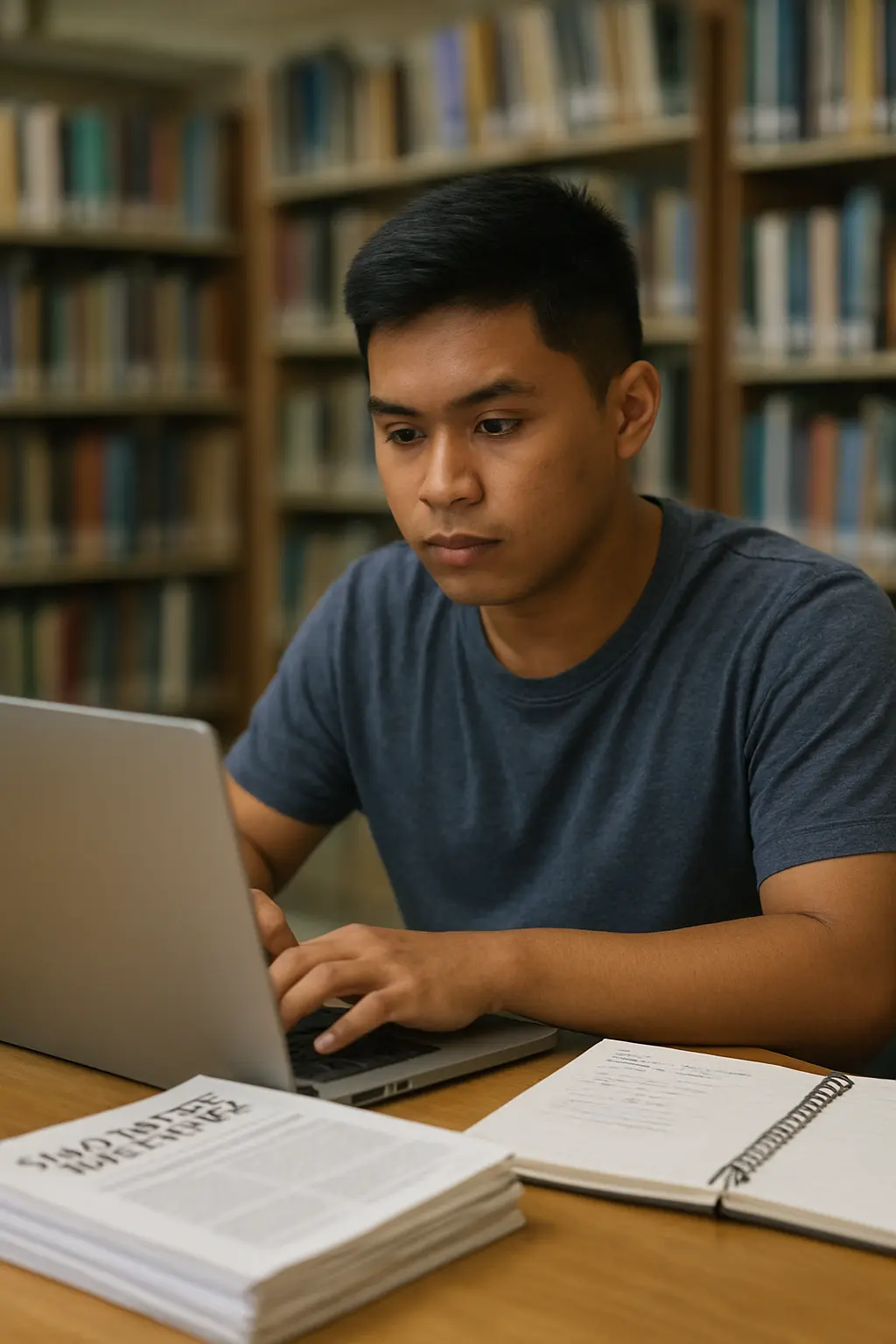
| Rank | Source | What it holds | Philippine studies? | Full text free? | Best for |
|---|---|---|---|---|---|
| 1 | Philippine E-Journals | 278 journals, 32,361 articles, 154 publishers | Yes — this is the point | Abstracts open; full text often gated to subscribing institutions | The “local studies” half of your RRL |
| 2 | Your institutional repository | Bound and digitised theses from your own school | Yes, and from your own department | Usually on campus only | Format, scope and topic precedent |
| 3 | HERDIN | Over 50,000 records, incl. 44,344 journal items and 11,121 theses and dissertations | Yes — national health research repository | Mixed; links out to publishers | Health, nursing, medical technology, public health |
| 4 | Google Scholar | Everything, indiscriminately | Poorly separated from foreign work | Sometimes, via the right-hand link | Finding a known paper fast; citation counts |
| 5 | OpenAlex | Open scholarly index with country and institution filters | Yes, filterable — but see the caveat | Links to open versions where they exist | Counting the literature, not reading it |
Holdings read directly from each platform on 16 August 2026. Counts move; re-check them before quoting one in your own manuscript.
The criterion that decides this, and it is not “which has the most papers”
Philippine research manuals almost universally ask for local and foreign literature, and most panels want to see that you looked for Philippine studies specifically. That requirement is what makes Google Scholar the wrong default: it is superb at finding a paper you already know about and poor at answering “what has been done on this in the Philippines”, because it has no reliable way to separate a study conducted in Cebu from one conducted in Ohio.
So the ranking below is not by size. It is by how efficiently each source answers the question your Chapter 2 has to answer. How you then turn what you find into an argument rather than a stack of summaries is a separate skill, set out in the guide to writing a review of related literature step by step.
1. Philippine E-Journals — the local-studies problem, largely solved
Philippine E-Journals is an online collection of academic publications from Philippine higher education institutions and professional organisations, hosted by C&E Publishing. Its own front page reports 278 journals, 32,361 articles, 47,559 authors, 154 publishers and 160 institutional subscribers.
That is the single densest concentration of Philippine-authored, Philippine-context research a student can reach, and it is browsable by an A–Z index of journals as well as searchable. If your topic is education, business, psychology, agriculture or the social sciences in a Philippine setting, start here rather than at Scholar.
Where it falls short: abstracts are open but full text is frequently behind an institutional subscription, and 160 subscribing institutions is a real number rather than an unlimited one. Check whether your school is one of them at the library, not by guessing. Coverage is also uneven by discipline — engineering and pure sciences are thinner than education and management.
Who it suits: essentially every undergraduate thesis that needs a local-studies section, which is essentially every undergraduate thesis.
2. Your own institutional repository — the source students walk past
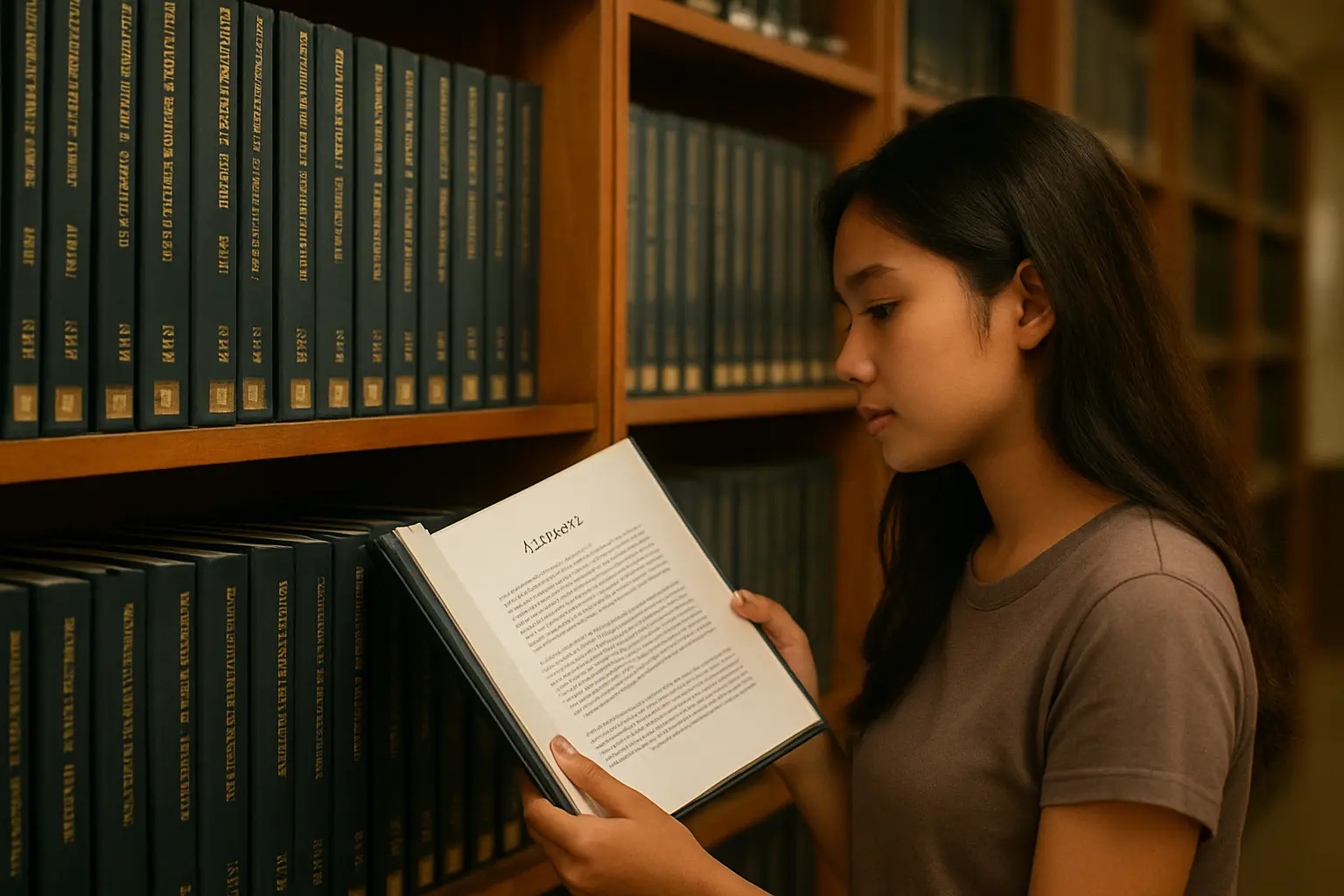
Every Philippine university with a research programme keeps its approved theses, usually hardbound in a designated reading room and increasingly also in a digital repository. Most students never open one until the week before the defence.
This is a mistake for three reasons that have nothing to do with citation. A previous thesis from your department shows you the exact format your manual expects, including the section names your adviser will use. It shows you what scope was considered acceptable for one semester. And it tells you immediately whether your topic has already been done in your own college, which is one of the four reasons Philippine titles get rejected — a problem covered in the guide to getting a rejected thesis title approved.
Where it falls short: access is normally on-campus and often no-photocopy, so you read and take notes rather than download. And an approved undergraduate thesis is a weaker citation than a peer-reviewed article — usable, but not a substitute for journal literature.
Who it suits: everyone, in week one, before the topic is locked.
3. HERDIN — indispensable if your study touches health
HERDIN describes itself as the national health research repository of the Philippines, and its own about page reports more than 50,000 citation and bibliographic records drawn from Philippine health research journals, conference proceedings, international databases, and — the part that matters most to a student — unpublished institutional research including theses and dissertations.
Its published category breakdown makes the shape of the collection concrete: Journal 44,344 · Thesis/Dissertations 11,121 · Proceedings 2,044 · Research Project 1,382 · Book of Abstracts 1,214 · Research Report 1,267.
Eleven thousand indexed Philippine theses and dissertations is a resource with no equivalent anywhere else in this list, and it is exactly what a nursing, medical technology, pharmacy or public health student needs when a panel asks whether the study has been done locally.
Where it falls short: it is a health database. If your thesis is on marketing or teaching methods, most of it is irrelevant. Full-text availability is mixed and many records link out to a publisher rather than hosting the file.
Who it suits: health-allied programmes, and any study with a health outcome variable.
4. Google Scholar — fine as a tool, dangerous as a strategy
Scholar is fast, free and the best thing in existence for locating one specific paper. Three operators make it substantially more useful than most students realise, and they cost nothing to learn.
- Quotation marks force an exact phrase:
"academic procrastination"rather than the two words scattered anywhere in a document. - Cited by, under each result, walks the literature forward in time from a paper you already like — the fastest route from one good source to five.
- The year filter in the left sidebar enforces the recency your manual asks for without you re-reading dates.
Where it falls short, and it matters: Scholar indexes predatory journals, undergraduate coursework and working papers alongside peer-reviewed research, and it presents them identically. It also cannot answer “is there a Philippine study on this”, because a keyword such as Philippines appears in papers that merely mention the country. Adding Philippines to a Scholar query returns a mixture you then have to sort by hand.
Who it suits: everyone, as the second stop rather than the first.
5. OpenAlex — for counting the literature rather than reading it
OpenAlex is an open index of scholarly works with a free public interface and a free API, and its distinguishing feature for a Philippine thesis is that you can filter by the country of the authors’ institutions rather than by whether a paper mentions the country. That is the filter Scholar lacks.
It is most useful for a question Chapter 2 has to answer implicitly: how much Philippine work exists on this at all. A count is a far stronger justification for a research gap than an assertion, and how to produce one defensibly is set out in the guide to checking whether your thesis topic has already been studied in the Philippines.
Where it falls short: it is an index, not a library — many records link to a paywalled publisher. And its automated institution matching is imperfect enough that institution-level figures must be checked before being cited, a defect examined in detail in the article on how much research Philippine universities publish.
Who it suits: students who need to evidence a gap, and anyone whose adviser has asked “how do you know nobody has done this”.
The recommendation
Run Philippine E-Journals and your own repository first, Google Scholar second, and add HERDIN if your study touches health. That order front-loads the local studies your panel will ask about and stops you building a Chapter 2 that is entirely foreign and then scrambling for Philippine sources in the last week.
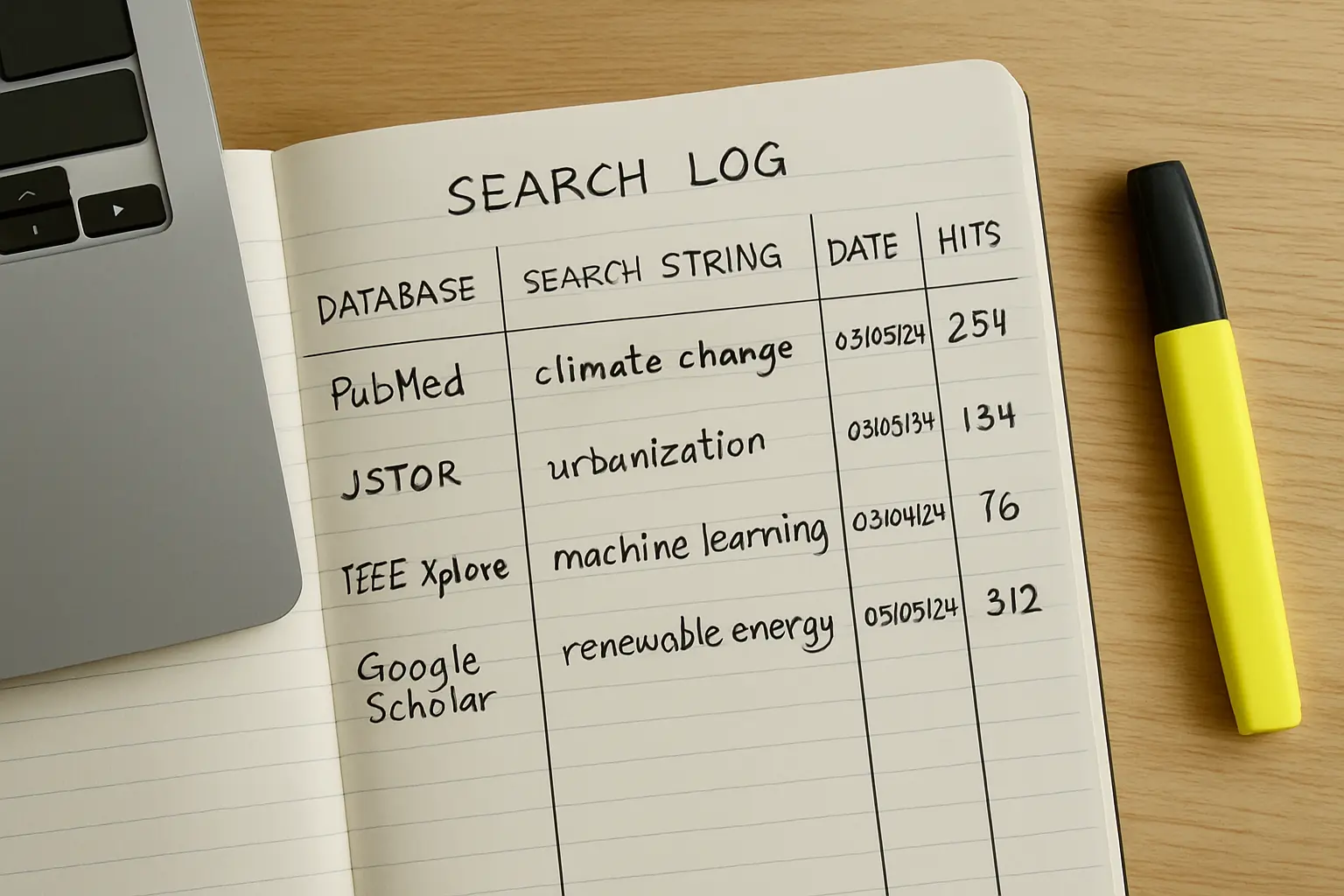
Whatever order you use, keep a search log: four columns for the database, the exact search string, the date you searched and the number of hits. It takes seconds per search and it converts “there are no local studies on this” from an assertion your panel can challenge into a claim you can evidence. It also protects you at the defence, where “how did you search?” is a standard question — one of many listed in the guide to what panels ask during a thesis defense.
One boundary that is not negotiable: sites selling completed theses and “research materials” are not sources. If one of them quotes a study, find and open the original. A reference that traces to a marketplace listing is a reference you cannot defend, and it puts every other citation in your chapter in doubt. What each source actually is, and how it should be described in your methodology, connects back to Chapter 3, while the way the whole document fits together is summarised in Chapters 1 to 5.
Keep every source attached to the sentence it supports
Tesify holds your chapter structure and keeps each citation tied to the source you actually opened, so your reference list builds itself from what you really read rather than from what you meant to. Over 9,000 students have used it to write more than 15,000 chapters, and every word is still written by you.
Frequently asked questions
Where can I find related literature for a Philippine thesis?
Start with Philippine E-Journals for local journal articles and your own institutional repository for local theses, then use Google Scholar for foreign literature and specific known papers. Add HERDIN if your study touches health.
Is Philippine E-Journals free?
Abstracts are openly viewable. Full-text access is commonly provided through an institutional subscription, and the platform reports 160 institutional subscribers, so ask your librarian whether your school is one before assuming either way.
How many articles does Philippine E-Journals have?
Its front page reported 278 journals and 32,361 articles from 154 publishers in August 2026. Re-check the figure before quoting it, because it grows.
What is HERDIN?
The national health research repository of the Philippines. It indexes over 50,000 records, including 44,344 journal items and 11,121 theses and dissertations, drawn from both published and unpublished Philippine health research.
Can I cite a thesis from another school?
Yes, if it is an approved, deposited thesis you have actually read, and you cite it as an unpublished thesis with the institution named. It is weaker than a peer-reviewed article, so use it to establish local precedent rather than as your main evidence.
How recent should my sources be?
Follow your manual; where none is stated, lean on the last five to ten years for empirical studies while keeping the foundational works behind your framework whatever their date. A review whose newest source is a decade old tells the panel the search stopped early.
How many sources does Chapter 2 need?
Enough to cover each concept, anchor the framework and review the empirical work relevant to your problems. Some departments state a minimum. Fifteen sources you can discuss beat forty you skimmed, and the difference is visible under questioning.
Can I use ChatGPT to find sources?
No. General chatbots fabricate plausible-looking references in ordinary author-year format, and a Chapter 2 with unresolvable citations is worse than a shorter one. Use a real database to find sources, and confirm every reference resolves to a document you opened.
What if there really are no Philippine studies on my topic?
Say so, and show the search log that supports it — databases, strings, dates, hits. A genuine local gap strengthens your justification. An unsearched one is exposed the moment a panellist runs one query on a phone.
Do university repositories let me take a copy?
Usually not. Most Philippine thesis rooms are read-only and often no-photocopy. Bring a notebook, record full bibliographic details on the spot, and photograph nothing you have not been given permission to photograph.
Which database should I name in my methodology?
All the ones you actually searched, with the date range covered. Naming the databases and the period is what makes your literature search reproducible, and it is a line a panel reads carefully in a documentary or review-based study.