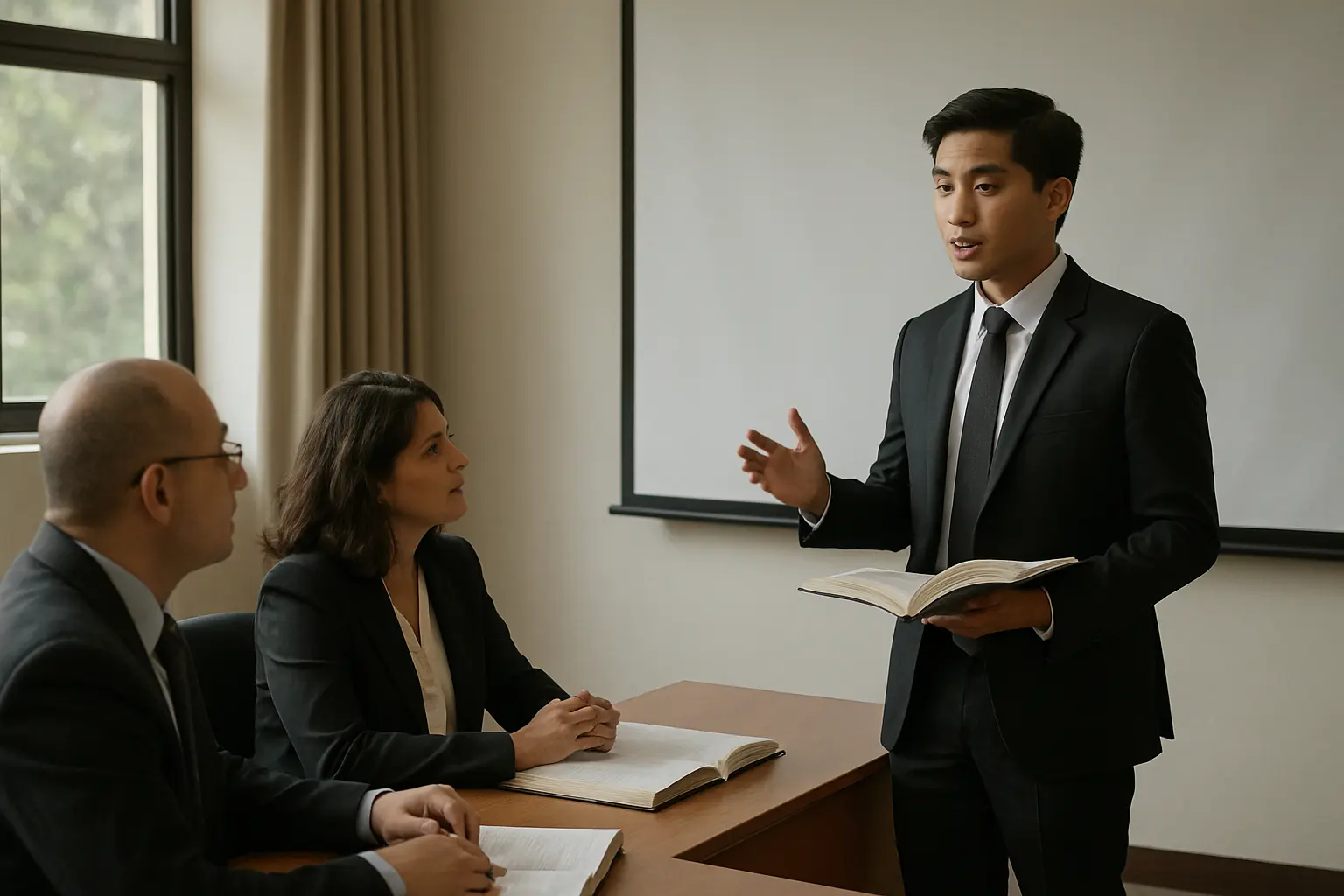
Panels ask from a small and predictable set. Expect: why this topic and this population, what your variables mean operationally, why this design and this sample size, what one specific table shows, why a finding disagrees with the literature, and what you would do differently. Almost every question maps to a chapter you have already written.
Are the questions really predictable?
Yes, and for a structural reason. A Philippine panel has your manuscript in front of it, usually for a few days beforehand, and it examines the document it was given. It cannot ask about work you did not do. So the questions come from the seams of the manuscript — the places where two chapters have to agree with each other — and there are only about a dozen such seams in a five-chapter thesis.
What varies is tone and depth. Some panels open conversationally; some open with the hardest question they have. What does not vary is the source of the questions: your statement of the problem, your operational definitions, your sample, your instrument, your tables and your conclusions.
The practical consequence is that a defence is preparable in a way most students do not believe. If you can answer the sixty or so questions below about your own study, you have covered the overwhelming majority of what a panel will raise.
What is the difference between a title defense and a final defense?
They examine different things, and preparing for one as though it were the other is the commonest preparation error in Philippine programmes.
A title defense — in some schools called the proposal defense — examines a study that does not exist yet. The panel is deciding whether your problem is researchable, whether it can be finished within the time you have, and whether your proposed method can actually answer it. Nothing you say about findings matters, because you have none.
A final defense examines a study you have completed. The panel already accepted the design at title defense, so it now tests whether you did what you said, whether your numbers reconcile, and whether your conclusions are supported by your own data rather than by your hopes for it.
| Question type | Title defense | Final defense |
|---|---|---|
| Topic justification | Central — most of the session | Brief — assumed settled |
| Method | Proposed, in future tense | Executed, with what changed |
| Sample | How you will get it | How many you actually got, and why some are missing |
| Findings | None | Central — table by table |
| Recommendations | None | Tested for whether your data supports them |
If your title was rejected once or twice before it was approved, the panel remembers, and the title defense will press hardest on whatever it flagged. The four faults that get Philippine titles sent back, and how to fix them, are in the guide to getting a rejected thesis title approved.
What does the panel ask about Chapter 1?
Chapter 1 questions test whether the study has a reason to exist and whether you can say what you are measuring.
- Why did you choose this topic?
- Why this population, and why this locale?
- What is the problem, in one sentence, without reading from the page?
- Who benefits from this study, concretely?
- What do you mean by [your key variable]? Give me the operational definition, not the dictionary one.
- How will you know if you found it? What counts as high, and according to whom?
- Your third specific problem asks about a relationship. Where is the hypothesis for it?
- Why did you exclude [some obvious group]?
- What is outside the scope of this study, and why?
The operational-definition question is the one that catches most groups, because it looks trivial and is not. If your variable is “level of digital literacy”, the panel wants to hear the number of items, the scale and the band that makes a score “high” — not a definition copied from a 2011 journal article. If those definitions are vague in your manuscript, fix them in Chapter 1 before the defence rather than improvising at the table.
What does the panel ask about Chapter 2?
Chapter 2 questions test whether you read what you cited and whether the gap you claim is real.
- Which study is closest to yours, and how is yours different?
- You say there is a gap. Who says there is a gap besides you?
- Why are most of your sources from before 2020?
- You cite [author] twice. What did they actually find?
- Are there local studies on this? If not, how do you know?
- Where did your framework come from, and why that one rather than a competing model?
“What did they actually find?” is the question that exposes a review assembled from abstracts. There is no recovery from not knowing what a source you cited three times concluded, so the cheapest preparation in the whole exercise is one sentence per source, written by you, in your own words. The synthesis method that produces those sentences is in the guide to writing a review of related literature.
What does the panel ask about Chapter 3?
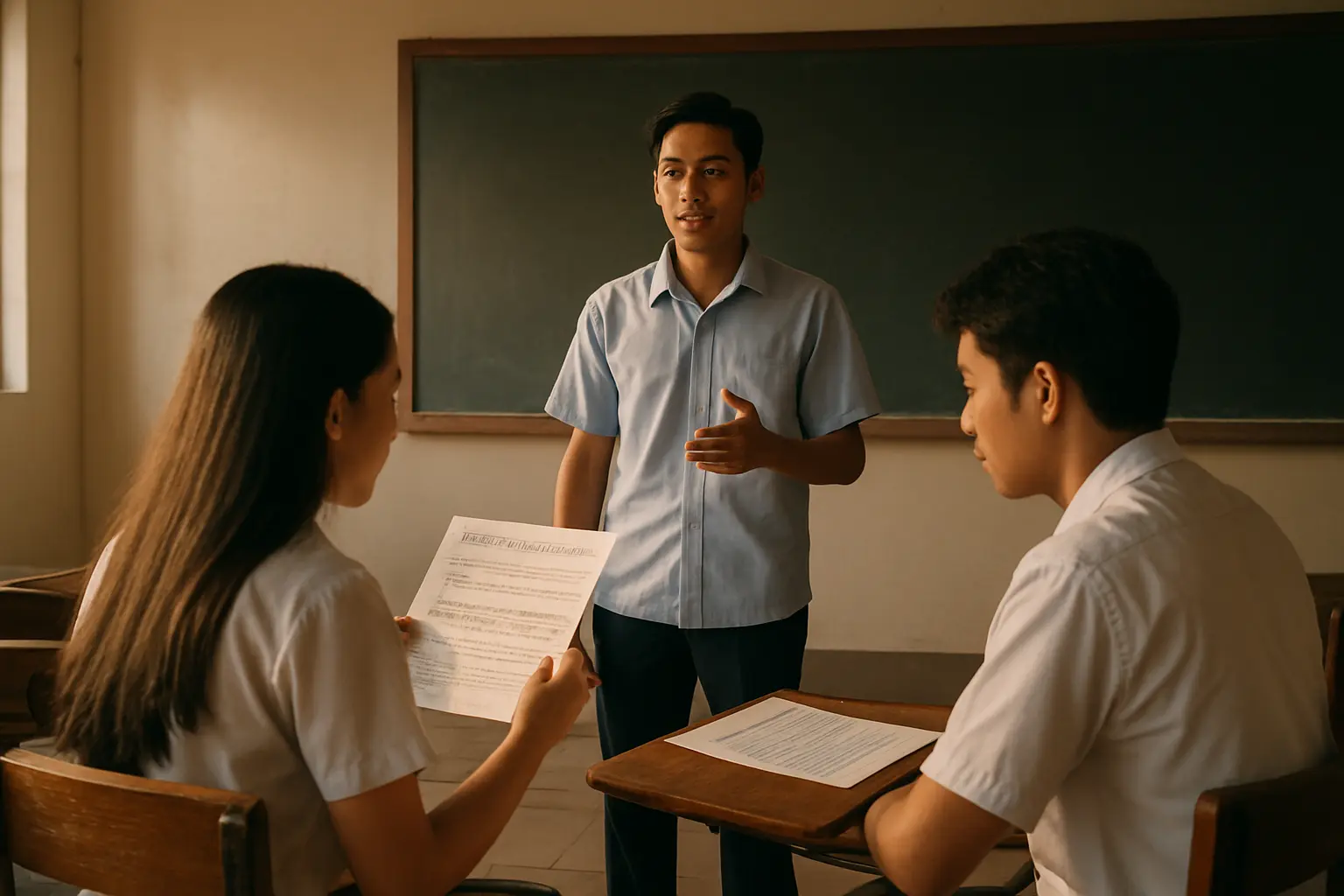
Chapter 3 is where a panellist with a calculator can settle an argument in ninety seconds, which is exactly why it attracts the sharpest questions.
- Where did your population figure come from, and who certified it?
- Show me how you computed your sample size.
- Why 0.05 and not 0.01?
- You said random sampling. Describe exactly how a respondent got selected.
- Your strata add up to what? Say the numbers.
- Who validated your instrument, and what did they change?
- What was your pilot sample, and what reliability coefficient did you get?
- Why a four-point scale and not five?
- You distributed 344 and analysed 326. What happened to the other eighteen?
- Why this statistical tool for this problem?
- Did you obtain ethics clearance? From whom, and when?
Two of these are traps in the sense that a wrong answer is worse than “I do not know”. Never call convenience sampling random — if you cannot describe how every member of the population had a known chance of being chosen, say purposive or convenience and justify it, which is entirely defensible. And never report a reliability coefficient you did not compute yourself; you will be asked on what software, on how many items and on what pilot sample. The section-by-section version of all of this is in the guide to writing Chapter 3.
What does the panel ask about Chapter 4?
Final-defence questions concentrate here, and they nearly always start the same way: the panel picks one table and asks you to explain it.
- Explain Table 4 to me without looking at it.
- Why is this indicator the lowest? What do you think is going on?
- Your p-value is .04. What does that actually mean?
- Is that difference significant, or just large?
- This finding contradicts the study you cited on page 22. Why?
- Your correlation is .42. Is that strong?
- Why do you report a mean for an ordinal variable?
- Where is the standard deviation for this table?
- Your Chapter 3 says 326 respondents and this table says 331. Which is right?
The last one is not hypothetical. A respondent count that drifts between chapters is the single most frequently caught defect in Philippine manuscripts, and it costs credibility on every other number. The reconciliation checks that prevent it, along with the reporting sentence each test needs, are in the guide to writing Chapter 4 table by table, and the underlying question of which statistic answers which problem is covered in the statistical treatment of data.
What does the panel ask about Chapter 5?
- Which of your conclusions does your data actually support?
- You recommend that the College do X. Where in your findings is that?
- What are the limitations you are not admitting?
- If you had another semester, what would you do differently?
- Who should read this, and what should they do on Monday?
The recommendation question is the most common failure at final defence. Recommendations must trace to a finding; a recommendation that appears from nowhere tells the panel you wrote Chapter 5 from expectation rather than from data.
How should you structure an answer?
Three moves, in this order, and stop.
- Answer the question in one sentence. Directly, first, before any context.
- Give the evidence. The number, the section, the source — one piece, not four.
- Stop talking. If the panel wants more, it will ask.
Over-answering is what turns a two-minute exchange into a ten-minute excavation. Every extra sentence is a new surface for a follow-up, and students routinely talk themselves into a weakness the panel had not noticed.
What do you say when you genuinely do not know?
Say what you do know, name the boundary precisely, and offer the route you would take. “My study did not measure that, because my second problem was limited to fourth-year students. To answer it you would need a comparison group from the lower years, and that is in my recommendations for further study” is a strong answer. It shows you understand the limits of your own evidence, which is the thing a panel is actually assessing.
What is not a strong answer is a guess. A guess that unravels under one follow-up costs more than the admission would have, and panels ask follow-ups precisely because they can tell.
What happens after the questions stop?
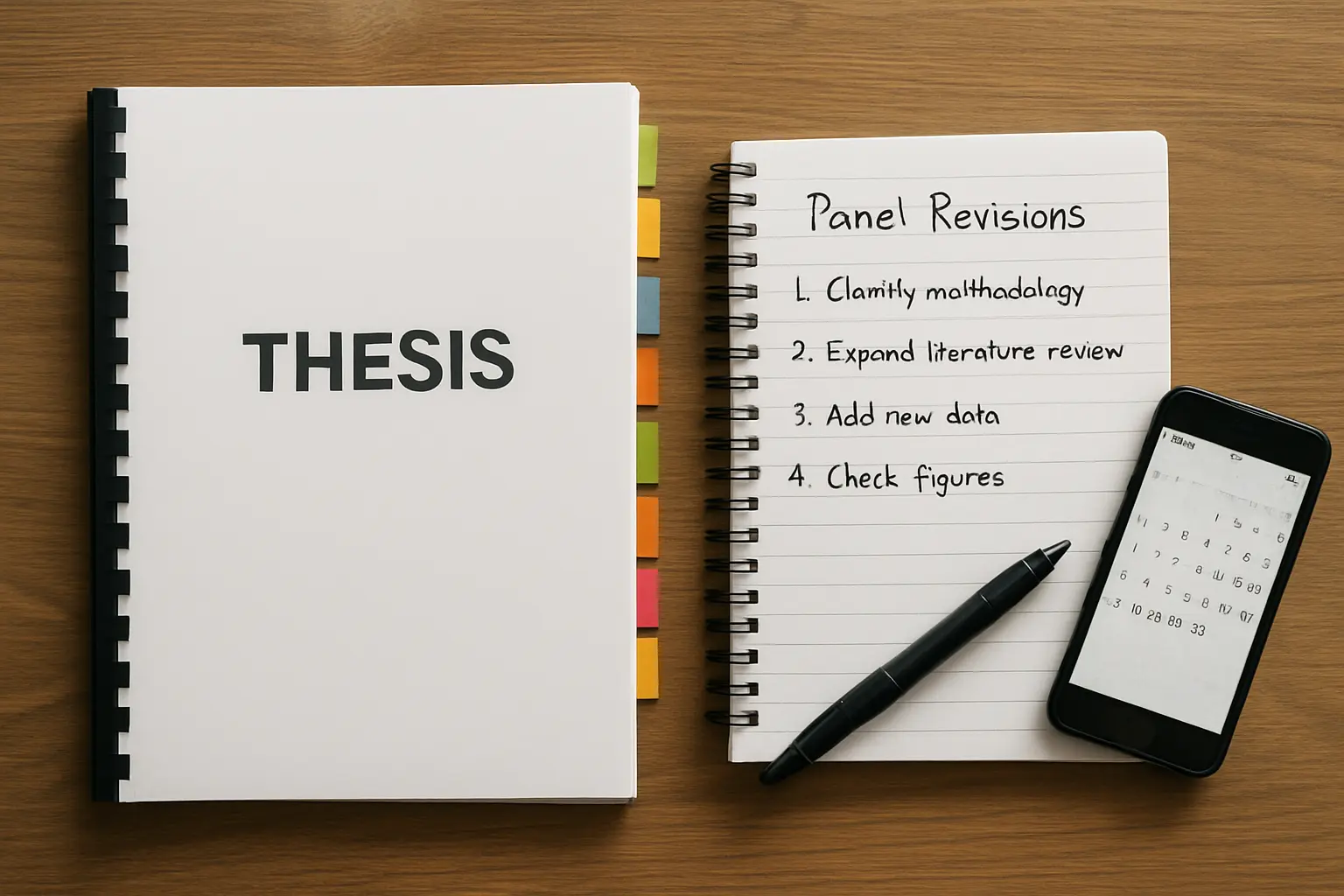
You are usually asked to step outside while the panel deliberates, and you come back to one of four outcomes: passed with no revisions, which is rare; passed with minor revisions; passed with major revisions, which may require a re-submission to the panel; or a redefense. Most Philippine undergraduate groups land in the second or third category, and neither is a failure.
Whatever the outcome, one member of the group should be writing down every revision verbatim as it is spoken, with the name of the panellist who asked for it. Panels contradict each other, and the record is what lets your adviser arbitrate later. How the five chapters are meant to hang together, which is the frame every revision will be judged against, is summarised in the overview of Chapters 1 to 5.
Fix the revisions before the deadline closes
Tesify keeps your chapters in the structure your research manual expects and every citation attached to a source you actually opened, so a panel revision costs an evening instead of a week. Over 9,000 students have used it to write more than 15,000 chapters, and every word is still written by you.
Frequently asked questions
What questions are asked during a thesis defense?
Why this topic and this population, what your variables mean operationally, why this design and this sample size, what one specific table shows, why a finding contradicts the literature, and what you would do differently. Nearly every question maps to a chapter you already wrote.
How long does a thesis defense last?
Most Philippine undergraduate defences run between forty-five minutes and two hours, of which the presentation is usually fifteen to twenty. The questioning is the longer half, so rehearsing answers matters more than rehearsing slides.
What is a title defense?
The defence of a study you have not yet conducted. The panel decides whether your problem is researchable, finishable within your timeline and answerable by your proposed method. Findings are not discussed because there are none.
Who asks the questions?
A panel of faculty members, typically three to five, chaired by one of them, with your adviser present. Your adviser is usually there to clarify rather than to defend you, so do not expect to be rescued.
Can my adviser answer for me?
No. An adviser may clarify a procedural point, but the substance has to come from you. A group that keeps looking at its adviser signals that someone else did the thinking.
What if a panelist asks about something outside my scope?
Say so, point to the scope and delimitation section that excludes it, and put it in your recommendations for further study. A scope you can defend is a strength, not an evasion.
What if two panelists give contradictory instructions?
Write both down verbatim with the name attached, and take the conflict to your adviser afterwards. Do not attempt to adjudicate between two faculty members in the room.
Should the whole group answer, or just one member?
Whoever owns the chapter being asked about answers, and everyone must be able to answer for Chapter 3. Panels deliberately ask the quiet member, and a group where only one person can explain the methodology has told the panel something it will act on.
What happens if you fail your thesis defense in the Philippines?
Outright failure is uncommon; the usual outcome is major revisions with a re-defence. The consequences differ by institution, so the document to consult is your own school’s research manual rather than any general account, including this one.
How do I prepare in the last week?
Read your own manuscript cover to cover once, write one sentence per source, check that the respondent count is identical in Chapter 3, Chapter 4 and the abstract, and rehearse out loud with a groupmate playing a hostile panellist. That order, and nothing else.
Can I bring notes to the defense?
Usually yes, and your bound manuscript is the notes. Reading answers off a card is a different matter, and it reads badly. Know where things are in your own document so you can turn to a page rather than search for it.