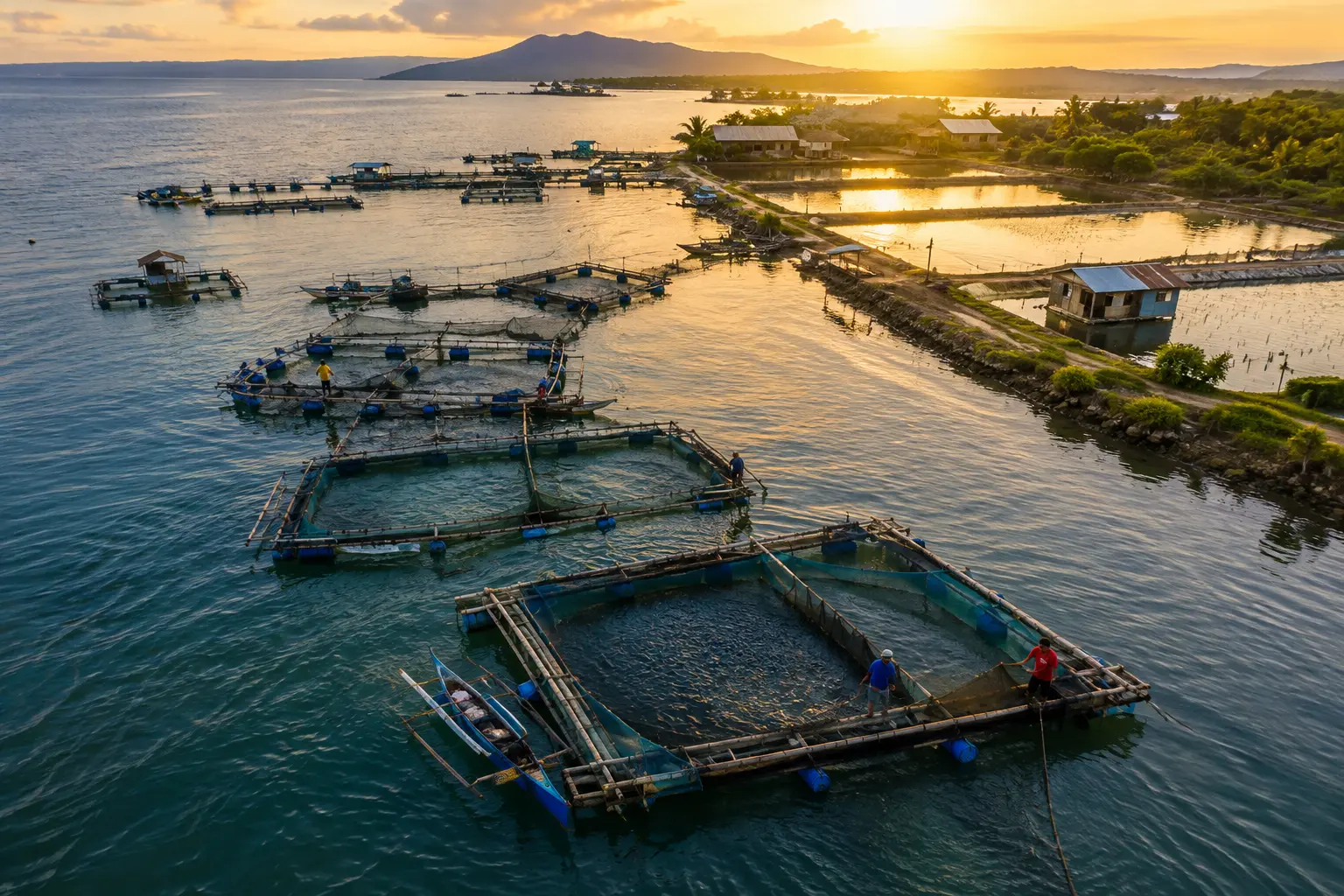
Aquaculture produced 2.18 million metric tons in 2025, down 1.9 percent from the year before, yet it still supplied the largest single share of the country’s total fisheries output at 55.1 percent, according to the Philippine Statistics Authority’s Fisheries Situation Report. Within that total, seaweed alone produced about 1.38 million metric tons in 2025, down 5.5 percent, while milkfish rose 11.4 percent to about 402,860 metric tons, per the same PSA release. Twenty BS Agriculture thesis topics below are each anchored in a national figure, a named statute or a Bureau of Fisheries and Aquatic Resources (BFAR) programme — not a general appeal to “sustainability.” This list is scoped to aquaculture specifically; the site’s broader climate-smart and sustainable agriculture topics list covers crop and livestock programmes and does not overlap with the aquaculture-specific angles below, and the field’s existing limitations and delimitations guide is the companion piece once a topic below is chosen and fieldwork begins.
The national aquaculture figures a Chapter 1 can cite today
| Indicator | Figure | Source and year | The trap |
|---|---|---|---|
| Total aquaculture production, 2025 | 2.18 million metric tons, down 1.9% year on year | PSA, Fisheries Situation Report, January–December 2025 | A decline year — do not frame it as sector growth |
| Aquaculture share of total fisheries output | 55.1 percent | PSA, Fisheries Situation Report, January–December 2025 | Share of volume, not share of value — the two can diverge |
| Seaweed production, 2025 | About 1.38 million metric tons, down 5.5% | PSA, Fisheries Situation Report, January–December 2025 | Seaweed dominates volume; do not generalize its decline to all aquaculture species |
| Milkfish (bangus) and tilapia production, 2025 | About 402,860 metric tons (up 11.4%) and 319,336 metric tons (up 3.3%) | PSA, Fisheries Situation Report, January–December 2025 | Species trends move in opposite directions in the same year — cite the species your thesis actually studies |
| National Aquaculture Development and Management Plan (ADMP) 2025–2030 | BFAR’s first development and management plan dedicated solely to aquaculture, launched September 2024 | BFAR / Department of Agriculture announcement | A policy framework, not a production statistic — cite it for direction and priorities, not for a number |
What BFAR actually governs, and what to cite it for
The Bureau of Fisheries and Aquatic Resources, under the Department of Agriculture, is the agency Republic Act 8550 (the Philippine Fisheries Code) and Republic Act 10654 (its amendment) assign to license aquaculture operations, designate fishery management areas, and enforce good-aquaculture-practice standards. Section 112 of RA 10654 requires aquaculture operations to comply with “good aquaculture practices and guidelines for environmentally-sound design and operation” — BFAR is the body that issues and enforces those guidelines. For a thesis on regulatory compliance, licensing, or a specific aquaculture programme, BFAR’s own regulations and named programmes (such as the ADMP 2025–2030) are the correct citation. For production volumes, value and species breakdowns, the Philippine Statistics Authority’s fisheries releases are the correct citation — the two agencies answer different questions, and a Chapter 1 that cites BFAR for a production figure or PSA for a licensing rule has the attribution backwards.
For your own province or municipality’s aquaculture registry, licensed operator counts and local production estimates, contact the BFAR regional or provincial office directly and cite the data as unpublished information obtained by request, with the office name and the date, rather than assuming it exists online.
Choosing a design and population for an aquaculture thesis
Three designs fit most of the twenty topics below within a semester:
- Descriptive survey of practice or compliance — aquaculture operators rate or report their own practices against a named standard (BFAR’s good-aquaculture-practice guidelines, a biosecurity protocol). Fastest to run where a registered operator list exists.
- Comparative study — registered versus unregistered operators, cooperative members versus non-members, adopters versus non-adopters of a specific practice. Needs both groups to be reachable in comparable numbers.
- Case study of one operation or one barangay’s aquaculture sector — works well where the population is small and concentrated, paired with key-informant interviews and a document review of BFAR registration or inspection records where available.
Whichever design you choose, the population is the licensed or self-identified aquaculture operators in your chosen locality, not aquaculture workers generally — a hired laborer on a fishpond and the operator who holds the BFAR registration answer different research questions, and conflating them in one sample muddies both.
Sample size follows the same logic as any other BS Agriculture thesis: where a registered operator list exists, Slovin’s formula against that known population gives a defensible number; where the population is small, scattered or partly informal — common for aquaculture in a single municipality — a total-population or purposive approach with a clearly stated limitation is the honest choice. Do not inflate a local population by importing the national PSA figures as if they described your one municipality; the national numbers exist only for the background-of-the-study framing, never for your own sample-size computation.
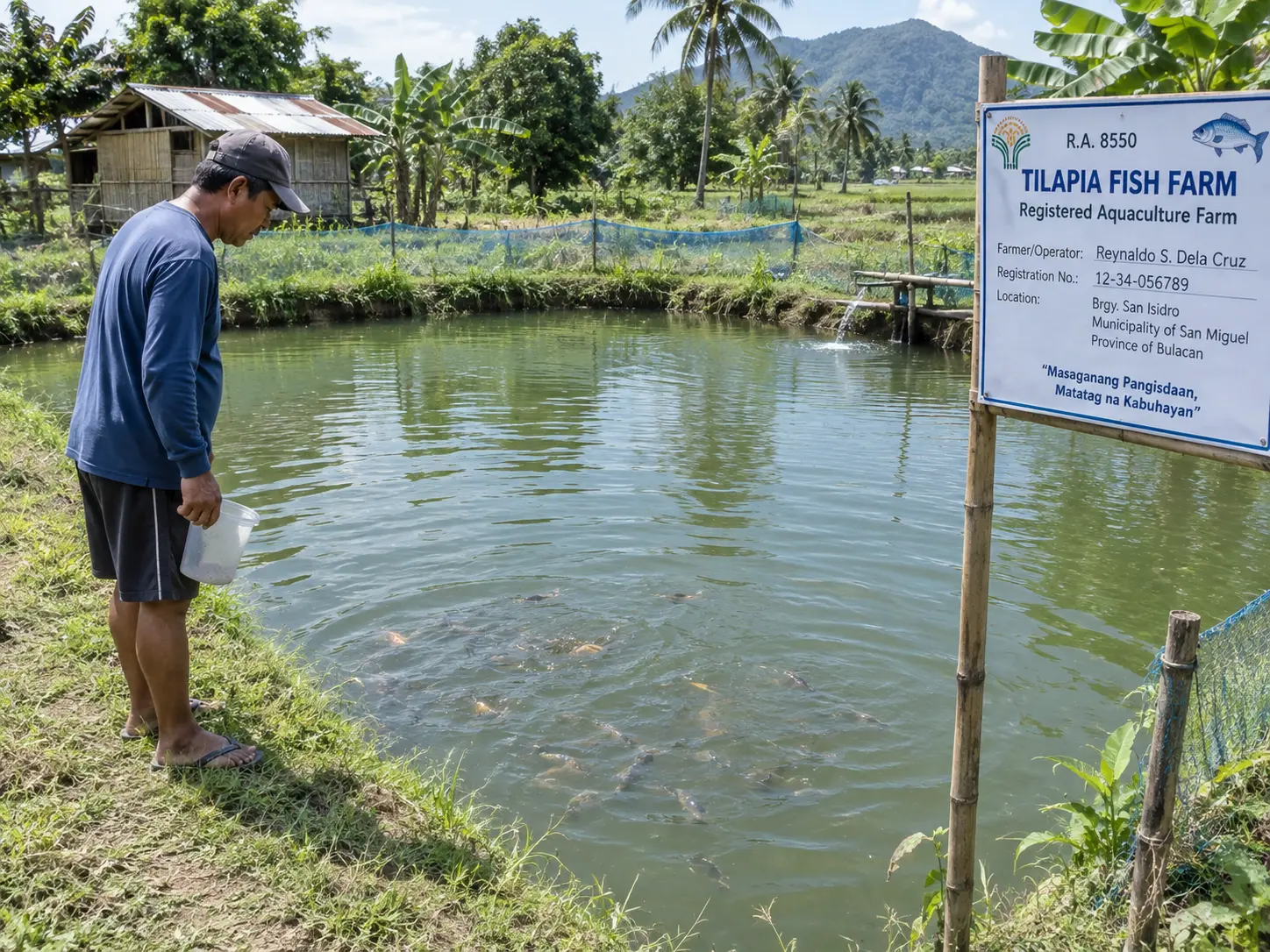
20 sustainable aquaculture thesis topics for BS Agriculture students
- Compliance of small-scale fishpond operators with RA 10654’s good-aquaculture-practice requirements. A compliance audit against Section 112’s standards, in one municipality.
- Adoption of BFAR-recommended feed management practices among tilapia growers. Practice-level survey tied to a named BFAR extension programme.
- Seaweed farming livelihood resilience amid the sector’s 2025 production decline. A household-level study using the PSA figures above as background.
- Water quality management practices of milkfish (bangus) pond operators in a coastal municipality. Practice survey plus water-quality observation.
- Licensing and registration barriers reported by small-scale aquaculture operators. A barrier-identification study against BFAR’s own registration requirements.
- Disease management practices in shrimp (sugpo/hipon) aquaculture and their alignment with BFAR biosecurity guidance. Practice audit plus operator interviews.
- Awareness and participation in the National Aquaculture Development and Management Plan among local fishpond operators. Awareness-level survey tied to the 2025–2030 ADMP.
- Economic viability of integrated multi-trophic aquaculture (seaweed and fish co-culture) for small operators. Cost-benefit case study of adopters versus non-adopters.
- Post-harvest handling practices and product quality among seaweed farmers. Practice-outcome correlational study.
- Access to formal credit among registered aquaculture operators, compared to unregistered ones. Comparative survey tied to BFAR registration status.
- Climate-related production risks reported by coastal fishpond operators, and their adaptation practices. Descriptive survey with a climate-exposure angle.
- Youth participation and succession intentions in family-run aquaculture operations. A generational-transition study in one aquaculture-dependent barangay.
- Effectiveness of BFAR extension training as perceived by participating fishpond operators. Perception survey of training-programme participants.
- Gender roles and division of labor in household-level seaweed farming operations. A descriptive study on household labor allocation.
- Market channel choices of small-scale aquaculture producers and their effect on reported income. Comparative study across market-channel types.
- Environmental impact perceptions of fish cage aquaculture among lakeside or bay communities. Perception survey among residents near aquaculture operations.
- Adoption of recirculating or biofloc aquaculture systems among small operators: barriers and drivers. Adoption-determinants study.
- Cooperative membership and its relationship to aquaculture operators’ reported productivity. Comparative study, cooperative members versus non-members.
- Post-typhoon or post-flood recovery practices among aquaculture operators in a disaster-prone province. A resilience and recovery case study.
- Consumer perception of farmed versus wild-caught fish in a local market. A consumer-side complement to any of the producer-side topics above.
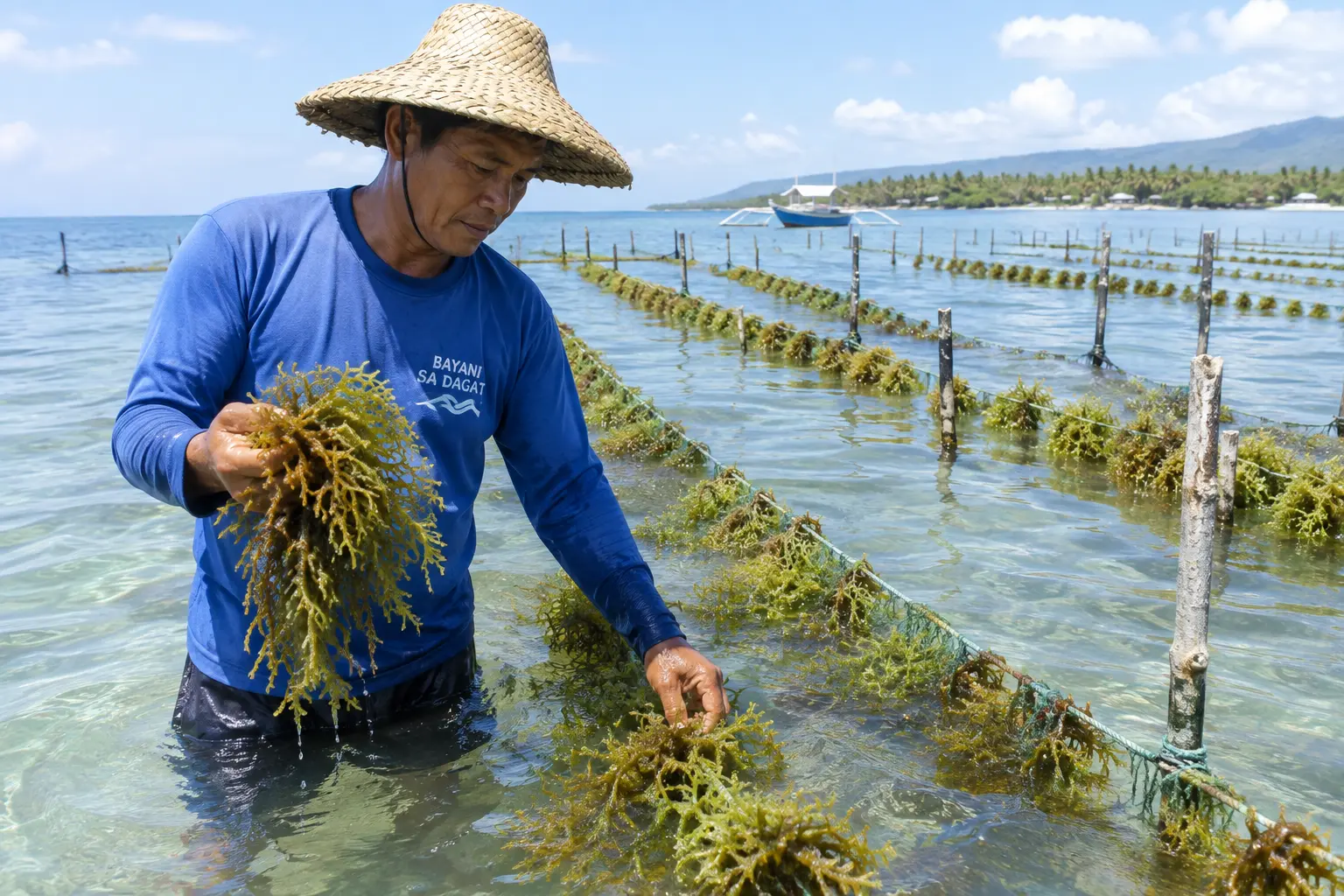
How to write the figure into a Chapter 1 sentence
A worked example combining the PSA figure and the statutory basis:
Aquaculture supplied 55.1 percent of the Philippines’ total fisheries production by volume in 2025, though the sector’s output declined 1.9 percent from the previous year (Philippine Statistics Authority, 2026), a trend that places renewed importance on the operational compliance standards Republic Act No. 10654 (2015) requires of aquaculture operators, the subject this study examines at the municipal level.
Notice the sentence separates the statistical claim (PSA, with the release year) from the regulatory claim (the statute, with its own year) rather than blending the two into one unsourced assertion — the same discipline covered for coastal-communities population topics in studying coastal communities for an Environmental Science thesis, which shares the same RA 8550/RA 10654 legal basis from the fisherfolk side of the same statute. Keep this separation consistent through Chapter 2 as well: a related-literature paragraph that cites a PSA production trend as evidence a BFAR programme succeeded, without a study actually linking the two, is asserting a causal claim your data was never designed to support.
Frequently asked questions
Where do I find data specific to my own province’s aquaculture sector?
Contact your province’s or region’s BFAR office directly for local registration counts and production estimates; national PSA figures do not break down to the barangay or municipal level, and BFAR’s own local offices hold the finer-grained data most undergraduate theses actually need.
Is seaweed farming the only aquaculture topic with real data behind it?
No — it is simply the largest by volume in the national figures. Milkfish, tilapia and shrimp all have their own PSA production series and BFAR regulatory touchpoints; seaweed’s dominance in the topics list above reflects its volume share, not an exclusion of other species.
Can I use PSA figures from different years in the same thesis?
Yes, provided each is cited with its own year and the sentence around it makes clear which year each figure describes — using an older figure as if it were current, or mixing years without labeling them, is the trap the table above flags.
Do I need BFAR’s permission to study a licensed aquaculture operation?
You need the individual operator’s own consent to be studied; BFAR licensing records establish that an operation is registered and can help you build a sampling frame, but BFAR itself is not the gatekeeper for a voluntary operator survey unless the site is a BFAR-run facility.
What if my locality has very few registered aquaculture operators?
A small, clearly stated population is still defensible — report the actual count from your local BFAR office and use a purposive or total-population approach rather than inflating the number or importing a national figure as if it applied locally.
Is the ADMP 2025–2030 the same thing as a production statistic?
No — it is a policy and development framework BFAR launched in 2024 covering the 2025–2030 period. Cite it for programme direction, priorities or awareness-level research; cite the PSA for actual production numbers.
Can I study more than one aquaculture species in the same thesis?
You can, but a comparative design across species needs a genuine reason for the comparison — cost, disease risk or regulatory treatment that differs meaningfully between them — rather than covering several species simply to broaden the topic. A single-species focus, scoped to one locality, is easier to defend and to actually complete in one semester.
What if the aquaculture operators in my area are informal or unregistered?
That is itself a valid finding, not a dead end — a study on barriers to registration, or on practices among unregistered operators compared to registered ones, turns the informality into the research question rather than an obstacle to one. State plainly in your methodology that your population includes unregistered operators and how you located them, since a convenience or snowball sample through local contacts is the realistic method here.
Turn a topic and a national figure into a scoped Chapter 1
Tesify helps you structure the background of the study around the PSA aquaculture figures and the BFAR regulatory basis you choose, keeping the statistical and legal citations attributed to their own sources. Over 9,000 students have used it to write more than 15,000 chapters, and every word is still written by you.