
The entire OpenAlex index holds 652 works typed as a dissertation with a Philippine institutional affiliation — against 10,952,448 worldwide, and 273,954 for France alone. At least 50 of those 652 are Brazilian dissertations attached to a Philippine institution by an affiliation error.
Every figure below was queried directly from the OpenAlex API on 23 August 2026. The point of the article is not that Philippine students write few theses. Hundreds of thousands are written every year. The point is that almost none of them ever becomes a record anybody outside your school can find — and that the route to a findable record does not run through the thesis at all.
The national figures
| Measure | Count | Source and date read |
|---|---|---|
| Works of type dissertation with a Philippine institutional affiliation, all years | 652 | OpenAlex API, 23 Aug 2026 |
| Of those, carrying a DOI | 575 (88.2%) | OpenAlex API, 23 Aug 2026 |
| Of those, flagged open access | 619 (94.9%) | OpenAlex API, 23 Aug 2026 |
| Works of every type with a Philippine affiliation, dated 2024 | 21,916 | OpenAlex API, 23 Aug 2026 |
| Of those 2024 works, journal articles | 15,476 | OpenAlex API, 23 Aug 2026 |
| Philippine institutions listed in the index | 384 | OpenAlex API, 23 Aug 2026 |
Read the first and fifth rows together. The whole historical stock of indexed Philippine dissertations — 652 — is smaller than the number of Philippine-affiliated journal articles indexed in an average fortnight of 2024.
How does that compare internationally?
| Country | Works typed as a dissertation |
|---|---|
| France | 273,954 |
| United States | 209,274 |
| Brazil | 42,501 |
| Canada | 27,523 |
| United Kingdom | 26,596 |
| Germany | 25,657 |
| Japan | 18,511 |
| Netherlands | 14,798 |
| Spain | 12,602 |
| Australia | 10,689 |
| Mexico | 9,886 |
| Philippines | 652 |
OpenAlex API, grouped by institution country, 23 August 2026. World total across all countries: 10,952,448.
Do not read this table as a ranking of research effort. It is a ranking of national deposit practice. France leads because French universities have run a mandatory national electronic thesis deposit for years, and the records flow into the global index automatically. The Philippines sits at 652 not because Filipino students write fewer theses than Mexicans, but because a Philippine thesis is normally deposited as a hardbound copy on a shelf, and a hardbound copy on a shelf is not a record.
The defect: even 652 is an overcount
Filtering the 652 by institution shows the top holders as Adventist International Institute of Advanced Studies (83), the University of the Philippines System (82) and UP Open University (60) — all plausible, all institutions that run electronic deposit. Then the list produces Universidade de São Paulo with 53 and FishBase Information and Research Group with 43, which are not Philippine universities at all.
Opening the records explains it. Fifty of the 652 carry a São Paulo affiliation, and the two sampled on 23 August 2026 are Portuguese-language Brazilian nursing dissertations — Rotatividade da equipe de enfermagem em hospital privado (2020) and a 2008 respiratory therapy dissertation — whose author records carry a University of Mindanao affiliation alongside four or five Brazilian ones. The dissertations are Brazilian. The Philippine affiliation is attached to the author, not to the work.
So the honest statement is that fewer than 652 Philippine theses are indexed, and the true figure cannot be recovered from a country filter alone. That is worth saying plainly rather than quoting a round number, and it is the same class of defect as the institutional works counts described in the analysis of how much research Philippine universities actually publish.
Has the number moved over time?
Barely, and not in the direction the rest of Philippine research output moved.
| Publication year | Dissertations indexed |
|---|---|
| 2014 | 24 |
| 2015 | 21 |
| 2016 | 27 |
| 2018 | 21 |
| 2019 | 49 |
| 2020 | 38 |
| 2021 | 32 |
| 2022 | 61 |
| 2023 | 55 |
| 2024 | 28 |
| 2025 | 66 |
| 2026 (partial) | 68 |
OpenAlex API grouped by publication year, 23 August 2026.
Three things to be careful about before quoting that column. The counts are so small that a single institution switching on electronic deposit moves a whole year — 2022’s 61 and 2024’s 28 are almost certainly the same country behaving the same way, seen through different deposit timing. The 2026 row covers a year that was under eight months old when the query ran, so it is not comparable with the settled years above it. And the same affiliation defect described below runs through every row.
Set that column beside the journal article series further down. Over roughly the same decade, Philippine journal output rose six-fold while indexed dissertations stayed in the dozens. Whatever changed in Philippine research, it did not change how a thesis is deposited.
Can you count Philippine repositories instead?
Not from this index. OpenAlex knows 7,007 sources of type repository, but only 69 countries appear at all when those repositories are grouped by country, and the largest group is Japan with 76. A country filter returns zero Philippine repositories — which is a gap in the index’s metadata, not a fact about the Philippines, since Philippine institutional repositories demonstrably exist.
This is the trap to avoid in your own Chapter 1. A query that returns zero is not evidence of absence until you have shown the query works. Where Philippine studies actually live, and what each platform holds, is set out in the comparison of where to find related literature for a Philippine thesis.
What does get indexed, and how fast it is growing
Journal articles. The World Bank’s scientific and technical journal article series for the Philippines, read on 23 August 2026 and last updated on 13 July 2026, runs:
| Year | Journal articles |
|---|---|
| 2012 | 792 |
| 2015 | 1,339 |
| 2018 | 2,327 |
| 2020 | 3,137 |
| 2021 | 3,948 |
| 2022 | 4,284 |
| 2023 | 4,752 |
World Bank indicator IP.JRN.ARTC.SC, series last updated 13 July 2026. The series ends at 2023; anything more recent you see quoted is from a different source with a different counting basis.
Six-fold growth in eleven years, and the dissertation count did not move with it. The article channel works; the thesis channel does not.
What this means for your own manuscript
Three practical consequences, in the order they will reach you.
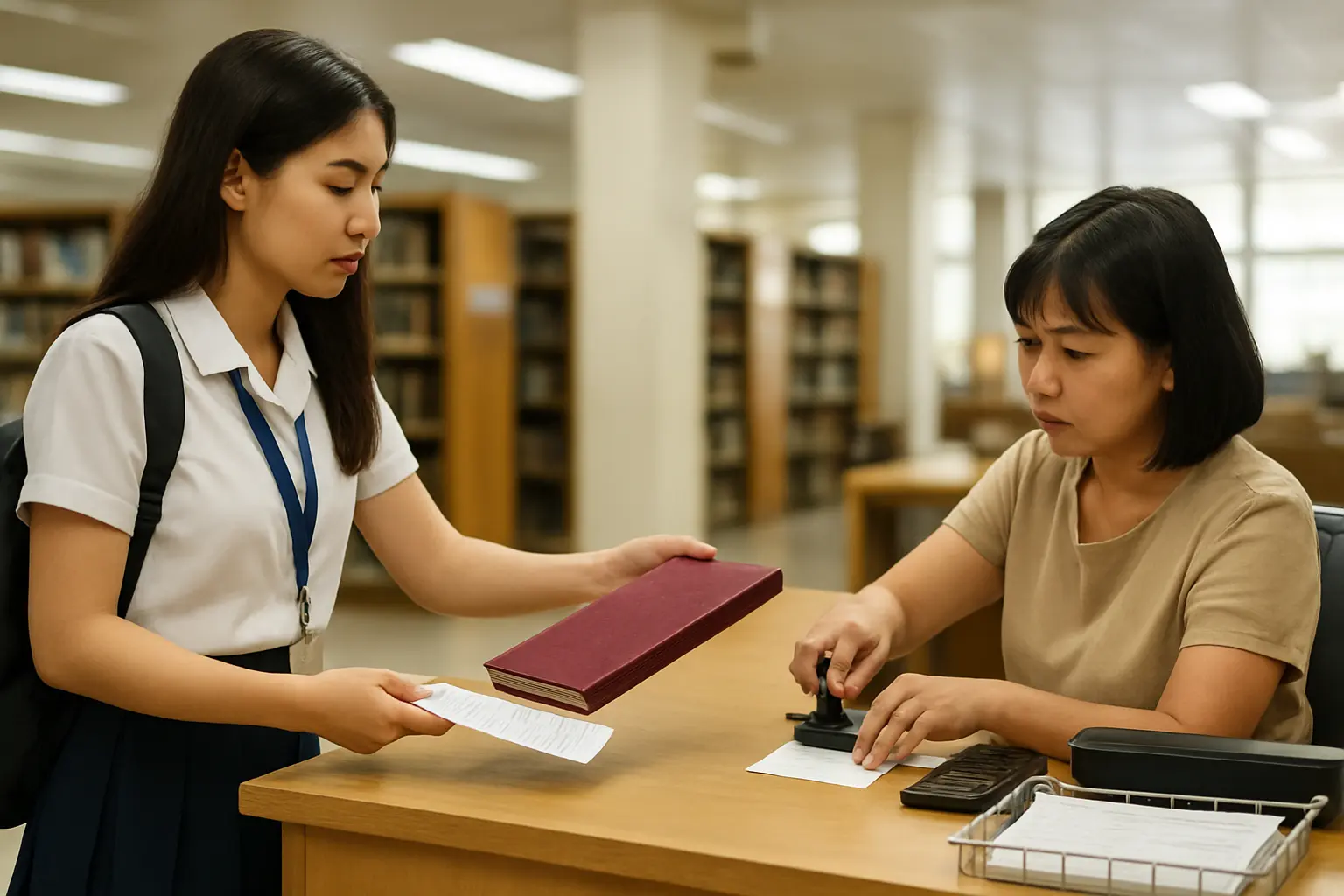
- Your school’s deposit and your discoverability are different things. Submitting the hardbound copy closes your requirement. Ask separately whether your library runs an electronic repository, whether deposit into it is opt-in, and whether an embargo period applies. If nobody at the counter knows, that is your answer about how many Philippine theses reach a repository.
- If you want the work to be findable, the route is a journal article. That is the channel with six-fold growth and reliable indexing. An undergraduate thesis rarely converts as-is: the usual path is a shortened paper with your adviser, aimed at a Philippine journal or your own institution’s journal.
- Settle authorship before you write the paper, not after. Who appears, and in what order, is a conversation to have while the paper is still an idea. The line between the help a supervisor gives and the credit that help earns is set out in the guide to what you can legitimately pay for and who counts as an author.
How to cite these figures without overstating them
- Name the index and the date. These are live databases. “OpenAlex, queried 23 August 2026” is the honest form; a bare number is not checkable.
- Do not say the Philippines produces 652 theses. Say that 652 works with a Philippine affiliation are typed as dissertations in OpenAlex, and that at least 50 of those are Brazilian.
- Do not turn a deposit statistic into a productivity claim. France’s 273,954 measures a national deposit mandate, not French diligence.
- Never mix vintages. A World Bank 2023 figure and an OpenAlex 2024 figure do not belong in one sentence without both dates attached — the same discipline that applies to the enrolment and completion figures in the Philippine higher education statistics roundup.
- Say when a query returned zero and you do not trust it. The repository count above is a worked example of a zero that means “not recorded”, not “does not exist”.
Keep the manuscript in a form you can still use after graduation
Tesify holds your chapters in one connected document with every citation attached to the source it came from, which is what makes turning a finished thesis into a short paper a matter of cutting rather than rebuilding. Over 9,000 students have written more than 15,000 chapters with it, and every word is still written by you.
Frequently asked questions
How many Philippine theses are indexed in global research databases?
652 works with a Philippine institutional affiliation are typed as a dissertation in OpenAlex, queried on 23 August 2026. At least 50 of those are Brazilian dissertations attached to a Philippine institution through an author affiliation, so the true figure is lower.
Why does France have 273,954 indexed dissertations and the Philippines 652?
Because France runs a mandatory national electronic thesis deposit whose records flow into global indexes. The Philippine norm is a hardbound copy deposited with the school library, which creates no indexed record. The gap measures deposit practice, not scholarship.
Does my thesis get published when I submit it?
No. Submitting your hardbound copy discharges a graduation requirement. Publication is a separate act, and unless your library deposits your file into an electronic repository, no record of your study exists outside your campus.
How do I make my thesis findable?
Two routes. Ask your library whether it runs an institutional repository and whether deposit is opt-in, and separately work with your adviser to turn the study into a short journal article. The journal route is the one that reliably produces an indexed, citable record.
Can I cite my own undergraduate thesis?
Yes, as an unpublished bachelor’s thesis, naming the institution. Whether anyone else can find it is the separate question this article is about, and a reader who cannot retrieve a source will discount it.
How many research papers does the Philippines publish each year?
The World Bank recorded 4,752 scientific and technical journal articles for the Philippines in 2023, in a series last updated on 13 July 2026 that ends at that year. The same series recorded 792 in 2012, a six-fold rise across eleven years.
Why did a search for Philippine repositories return zero?
Because OpenAlex assigns a country to only a small minority of the 7,007 repositories it indexes — 69 countries in total, the largest of them Japan with 76. The zero is missing metadata, not an absence of Philippine repositories.
Is 652 a figure I can put in Chapter 1?
Only with the caveat attached. Write it as the number of works with a Philippine affiliation typed as a dissertation in OpenAlex on a stated date, and say that the count includes foreign dissertations carrying a Philippine author affiliation.
Should an undergraduate thesis be turned into a journal article?
Where it is genuinely publishable, yes, and normally with your adviser. Expect to cut the manuscript to a fraction of its length, since a five-chapter thesis and a journal article have different structures and very different word limits.
How do I check these numbers myself?
Query the OpenAlex works endpoint filtered by institution country and work type, and read the count from the meta block. It requires no account. Record the date you ran it, because the totals change week to week.
Does a low indexed-thesis count mean Philippine research is weak?
No, and a panel will challenge you if you imply it. The article channel grew six-fold over the same period in which the dissertation count stayed flat. The two numbers measure deposit infrastructure and research output respectively, and only one of them is about quality.