
Your adviser resigned, went on study leave, or was reassigned. Nobody has told you who owns your file now, and your defence date has not moved by a single day. This is one of the few thesis problems where waiting a week costs you more than any writing mistake you could make — because the clock keeps running while the paperwork does not.
Keep drafting while the paperwork catches up — start free in Tesify
What it actually costs if you wait
A replacement adviser is usually assigned within one to three weeks. That sounds survivable until you count what has to happen after the assignment: the new adviser reads your chapters cold, forms a view, asks for changes, and then wants to see the changes before endorsing you for defence. Each of those steps is a consultation slot on somebody’s schedule.
A group that waits for the assignment before doing anything loses the transition weeks and then discovers that the endorsement queue is full. A group that keeps drafting arrives at the first meeting with a manuscript the new adviser can react to, and the reaction is the thing that takes time. The transition weeks are the only slack you will get this semester. Spend them on the manuscript.
Four situations that look the same and are not
| What happened | Who decides your new adviser | What usually survives | The risk |
|---|---|---|---|
| Resigned or moved to another school | Research coordinator or department chair | Approved title and approved instrument, if signed | Unsigned approvals evaporate with the person |
| Study leave or sabbatical | Department, usually with a named caretaker | Almost everything; it is a handover, not a restart | The caretaker may not want to sign off work they did not supervise |
| Reassigned to another load | Department chair | Everything, but the new adviser has their own preferences | Style and structure preferences change without warning |
| Retired at end of term | Department, often slowly | Everything signed before the last day | A signature you needed on the last week is now impossible |
Notice what all four rows have in common. Anything that was signed survives. Anything that was verbally agreed does not. If your adviser approved your revised instrument in a conversation and never initialled it, that approval is gone, and the new adviser is entitled to ask for it again.
Nobody sends an announcement about any of this. Most groups find out because a consultation gets cancelled twice and then a message stops being answered.
Day 1: establish, in writing, who owns your file
Not from a groupmate, not from a classmate in another section. Email the research coordinator and copy the department chair, in one short message that is easy to answer:
“Good day, Ma’am/Sir. Our group [names, program, section] is working on the study titled [title], approved on [date] under [adviser]. We understand [adviser] is no longer available. May we know who will be our adviser going forward, and whether our approved title and instrument stand? Our target defence period is [month]. We will continue drafting Chapters [x] in the meantime.”
That last sentence is doing real work. It tells the coordinator that you are not stalled and not about to become an emergency, which makes you an easier problem to solve. Keep the email; it is the document that shows you acted on Day 1 if the timeline slips later.
Assemble the handover pack in one sitting
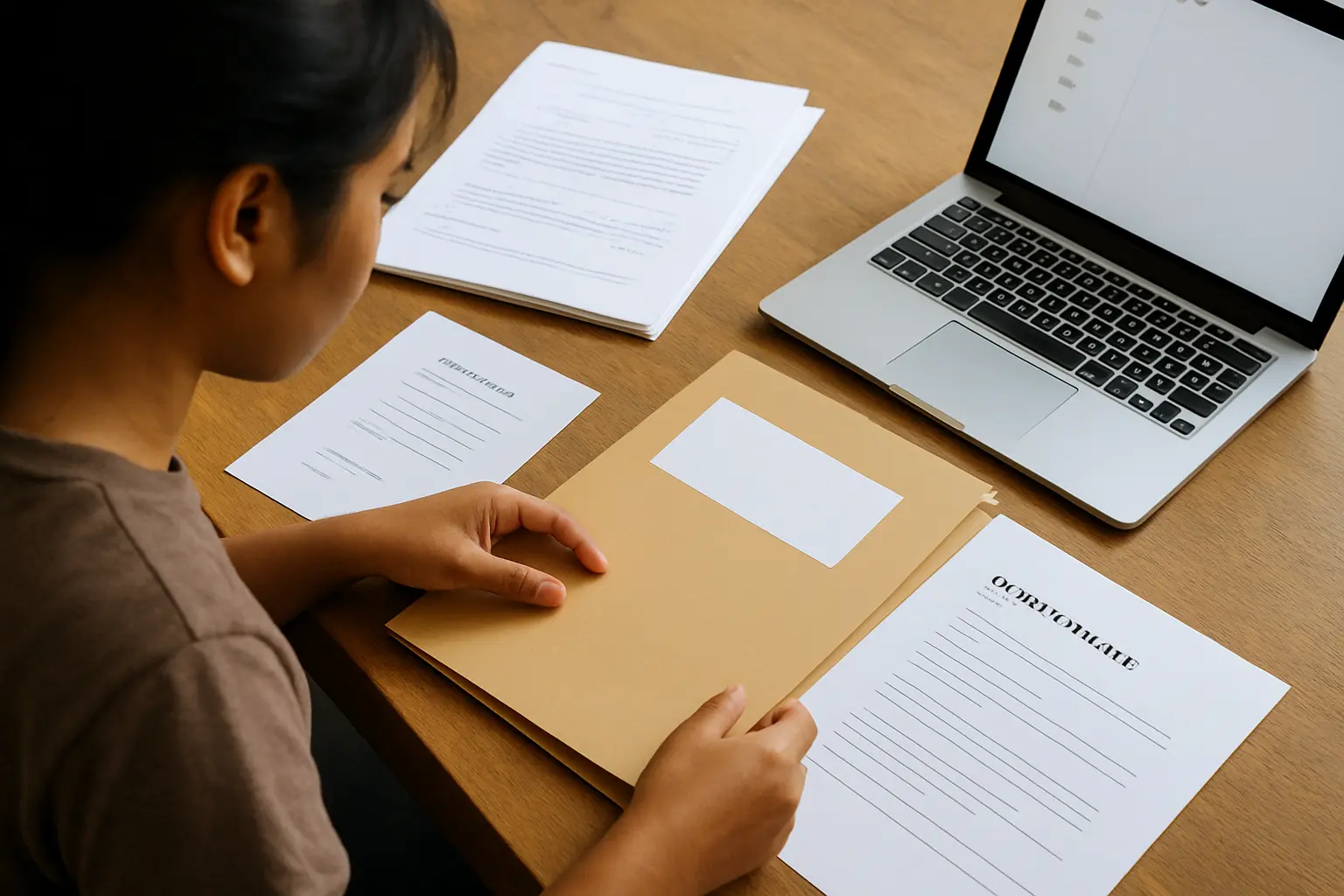
A new adviser inheriting a group mid-semester is being handed unpaid work. The single strongest thing you can do is make that work small. Build one folder — physical and digital — containing:
- A one-page summary. Title, program, research questions verbatim from your statement of the problem, design, respondents, current stage, target defence month. One page, nothing else.
- Every signed document. Title approval, instrument validation sheets, ethics or research office clearance, permission letters, routing forms. Scans included.
- The current draft of each chapter, with the previous adviser’s margin notes left in. Do not clean them out — they show what has already been decided and spare the new adviser from re-raising settled points.
- Your data, if collected. The encoded file, the blank instrument, and the count of returned questionnaires.
- A short list of open questions, at most five, that you actually need decided.
Groups that arrive with this get a first meeting about the research. Groups that arrive with a laptop and a story get a first meeting about the paperwork.
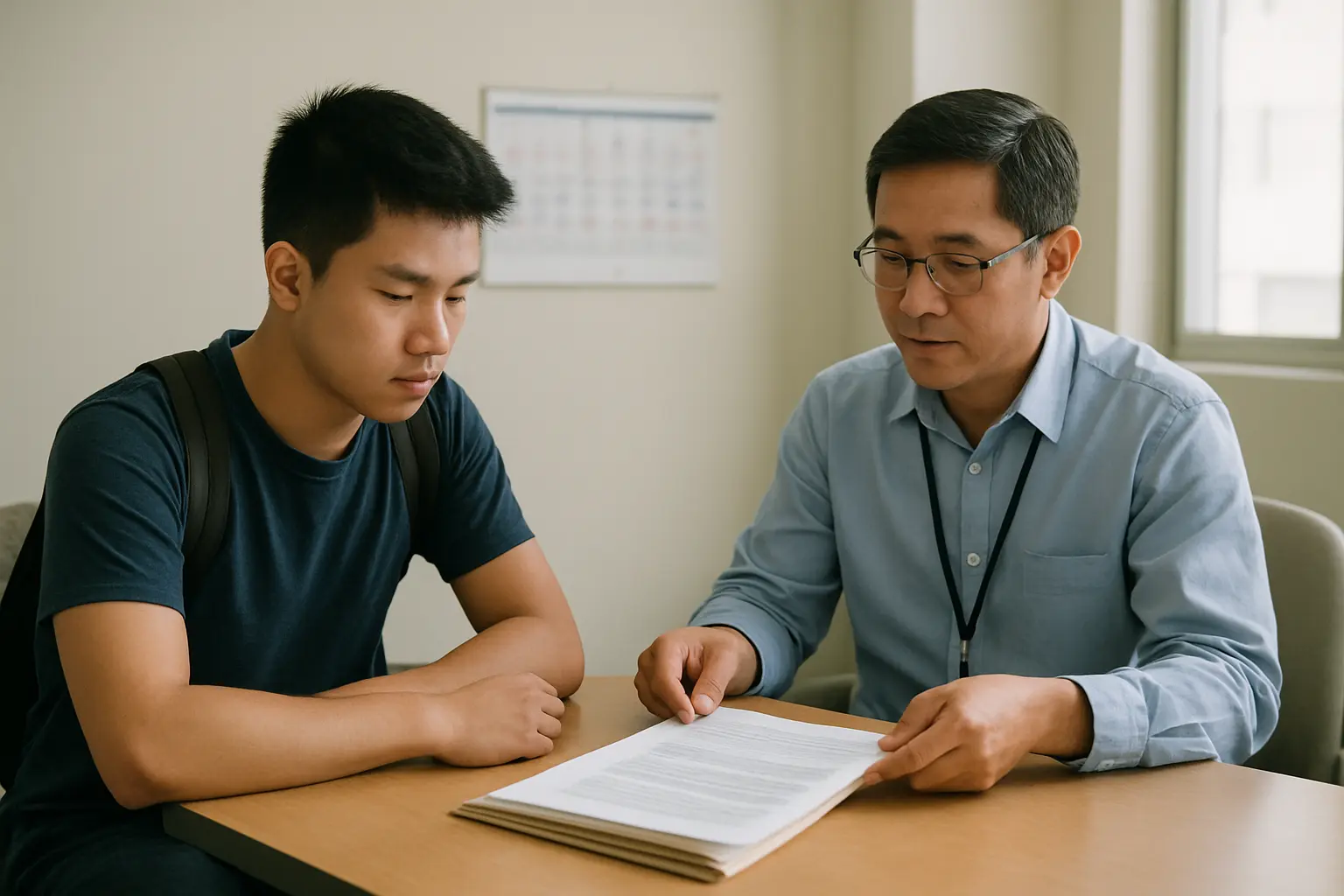
The first meeting: four questions, asked in this order
- “Does the approved title stand as it is?” Ask first, because everything downstream depends on the answer. If it does not, you are back in title work, and the four faults that get a title sent back are set out in the guide to getting a rejected title approved.
- “Does the instrument stand, or do you want it revalidated?” Revalidation costs one to three weeks depending on how quickly your validators respond. You need that number now, not in October.
- “What is your preferred format for Chapter 3?” Advisers differ on section order, on how the statistical treatment is written and on template wording, and it is far cheaper to ask than to be corrected. The standard section order is in the guide to writing Chapter 3 section by section.
- “What do you need from us before you can endorse us for defence?” This turns an open-ended relationship into a checklist, which is what you want when the calendar is against you.
Write the answers down during the meeting and send them back by email the same day as a short summary. That email becomes the record of what was agreed, and it is the thing that protects you if a fifth requirement appears in week six.
Deciding what to change and what to defend
A new adviser will want things changed. Some of it is genuine improvement, some of it is preference, and you do not have the calendar to treat both the same way.
- Do it without arguing: anything about format, section order, template wording, table layout or citation style. These are cheap and they are the adviser’s call.
- Do it, and be glad: anything that fixes an alignment problem — a research question with no matching instrument item, a statistical tool that does not answer the question it is attached to.
- Ask before doing: anything that requires re-collecting data. Say plainly what it costs in weeks and let the adviser decide with that number in front of them.
- Raise it with the coordinator: a request that contradicts a signed approval from the previous adviser. That is not defiance; it is exactly what the coordinator is there to resolve.
What you can safely progress with no adviser at all
More than most groups think. None of the following can be invalidated by a change of adviser, because none of it depends on a decision that is theirs to make:
- Reading and writing more of your review of related literature.
- Encoding data you have already collected and running descriptive statistics.
- Building your reference list properly and checking every entry against the source.
- Tightening the language and register of finished chapters.
- Drafting the defence deck skeleton against the questions a panel actually asks, listed in the guide to what panels ask at a Philippine thesis defence.
What you must not do without sign-off: collect data under an instrument that has not been approved, change your title, or change your design. Those three need a signature, and doing them speculatively is how a transition turns into a repeated semester.
Where Tesify fits in the gap
The specific problem of an adviser change is that your work has to survive being read cold by somebody who was not there for any of it. That is a document problem before it is a writing problem.
- Start free. The free plan is enough to bring your existing chapters into one connected document and see the whole study on one screen.
- Keep the chapters connected. When your research questions, instrument items, statistical tools and conclusions live in one place, the alignment check a new adviser runs in their head is something you can run first — and fix before the meeting.
- Keep every citation attached to its source. A new adviser asking “where did this come from?” about a Chapter 2 claim is a question you can answer in seconds instead of an evening.
- Draft through the transition weeks. The chapters that do not need a signature are the ones to move on now, so the assignment week starts with a manuscript rather than an apology.
Over 9,000 students have written more than 15,000 chapters with Tesify, and every word is still written by you. If your new adviser also wants a results chapter rewritten quickly, the triage order for that specific job is in the guide to handling a Chapter 4 rewrite on a deadline.
Do not lose the transition weeks
Bring your chapters into one place, keep drafting the parts that need no signature, and walk into the first meeting with a manuscript instead of a status update.
Frequently asked questions
What should I do first if my thesis adviser resigns?
Email the research coordinator and copy the department chair on the same day, asking who your adviser will be and whether your approved title and instrument still stand. Say in the same message that you are continuing to draft. That email is both your request and your record.
Do I have to start over with a new adviser?
Almost never. Anything signed — title approval, instrument validation, ethics clearance, permission letters — normally survives. What does not survive is anything that was only verbally agreed, so expect to re-secure those approvals in writing.
How long does it take to be assigned a new adviser?
Commonly one to three weeks, and longer across a semester break. There is no national rule; it is a departmental process. Treat the wait as drafting time rather than as a pause.
Can my new adviser change my approved title?
They can ask you to. If the change contradicts a signed approval, raise it with your research coordinator rather than simply complying or simply refusing — the coordinator exists to resolve exactly this.
Can I keep collecting data while I have no adviser?
Only if your instrument and your clearances were already approved and signed. Collecting under an unapproved instrument is the one mistake in this situation that cannot be undone later.
What if my defence date falls during the transition?
Ask the coordinator in writing whether the date moves, and ask early. Defence schedules, room bookings and panel availability are not yours to control, and they are usually the constraint that decides your semester.
How much does Tesify cost in pesos?
There is a free plan, which is the right place to start. Current plans and peso pricing are published on the Tesify site rather than quoted here, so you are reading today’s figure rather than one written months ago.
Will my school consider using Tesify cheating?
Tesify is built for honest writing: the research, the data and the argument stay yours, and every word is still written by you. Your school’s academic integrity policy is the document that governs it, and a growing number of Philippine research offices now ask for a declaration of AI assistance — read yours and follow it.
Is my unpublished data safe if I put my chapters in an online tool?
Treat it the way you would treat any cloud service holding unpublished research. Read the privacy terms, and if your study involves personal data from respondents, remember that your obligations under the Data Privacy Act follow the data wherever you store it — including your own laptop and your groupmates’ phones.
My adviser left after the defence but before the corrections were signed. What now?
Go to the research coordinator immediately, because a corrections sign-off is a signature that must come from someone. The triage order for the corrections themselves is set out in the guide to handling a corrections sheet after the defence.
Should our group complain about the disruption?
Frame it as a request for a timeline, not as a complaint. “May we know the revised expectation for our defence, given the change of adviser?” gets an answer. A complaint gets a meeting.
What if the new adviser is slower to reply than the old one?
Send shorter emails with one decision in each, and give a date by which you will proceed on your own reading if you do not hear back. Advisers answer specific questions far faster than open-ended updates.