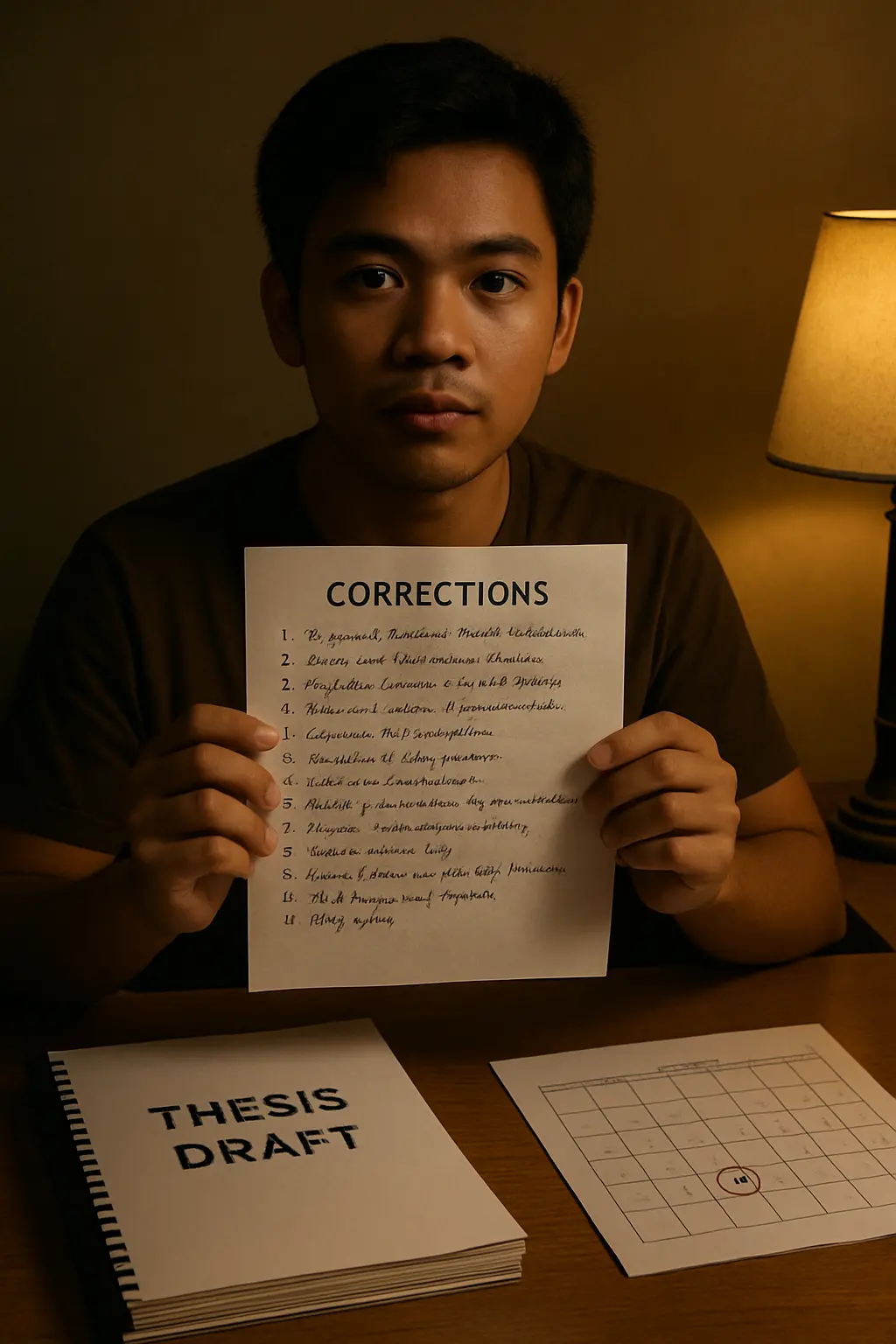
You passed, and then somebody handed you a sheet with fourteen numbered items and a date. Nobody explains that passing is conditional until those corrections are in, the approval sheet is signed by people who are not on campus, and the hardbound copy is submitted. That last stretch is where students who have already done the hard part lose a semester.
The cost of getting this wrong is specific and it is not academic. Miss the submission window and you are not held back by your research — you are held back by an unsigned page, a table of contents whose page numbers no longer match, and a binding shop that needs three days. Graduation lists close. Board exam applications and job offers move with them.
Turn your corrections into a finished manuscript with Tesify
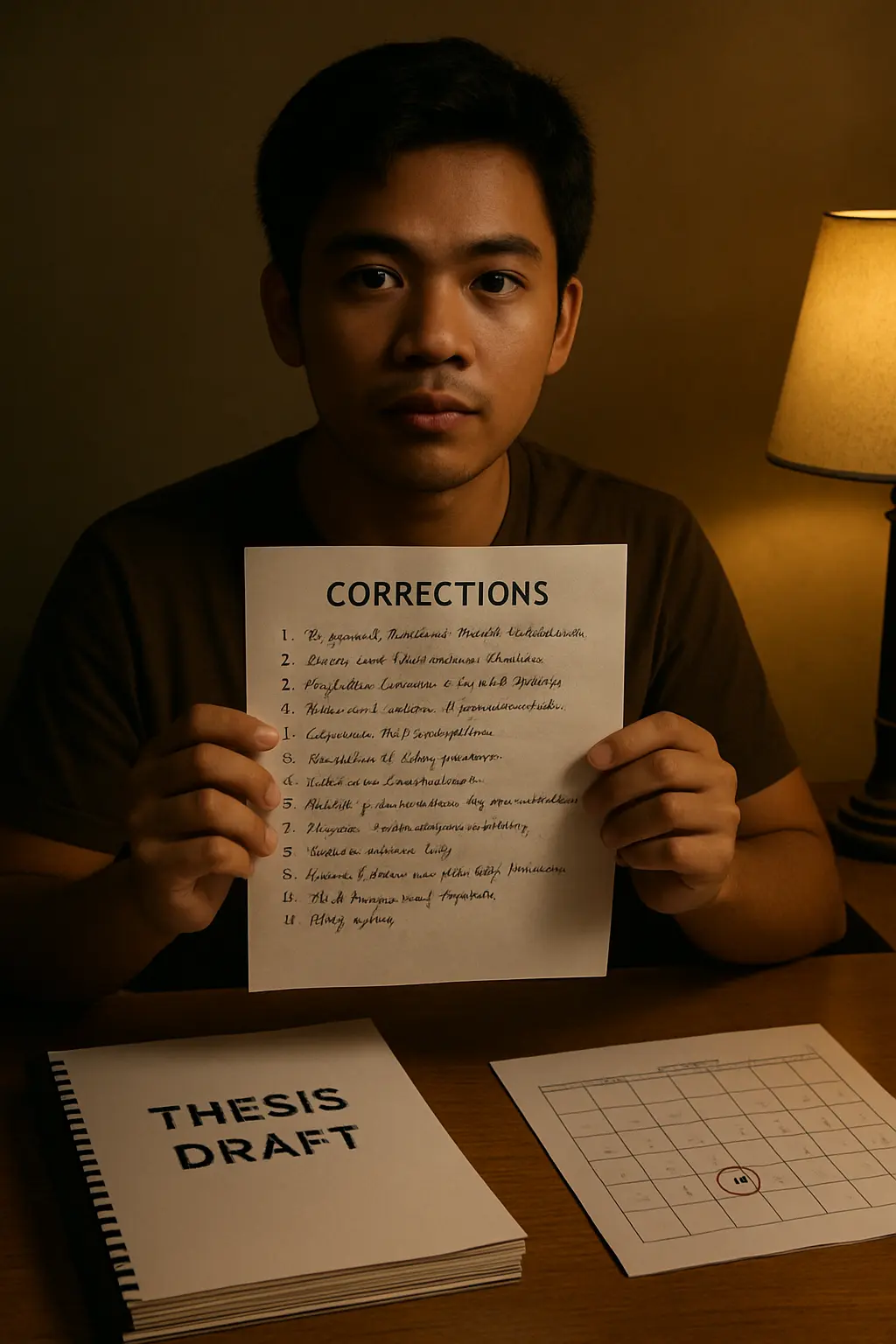
Day one: turn the corrections sheet into a table before you fix anything
The single most expensive mistake is to start at item one and work down. A panel’s list is written in the order the questions were asked, not in the order the work should be done, and it mixes ten-minute fixes with items that mean recomputing a result.
Copy every item into a table with five columns: item number · which panellist raised it · which chapter it touches · what output proves it is done · estimated hours. Do this while the defense is fresh, ideally the same evening. Two things fall out immediately: the items nobody actually required, and the items that quietly contain a second task.
Then sort by chapter, not by item number. If four corrections touch Chapter 4, you open Chapter 4 once.
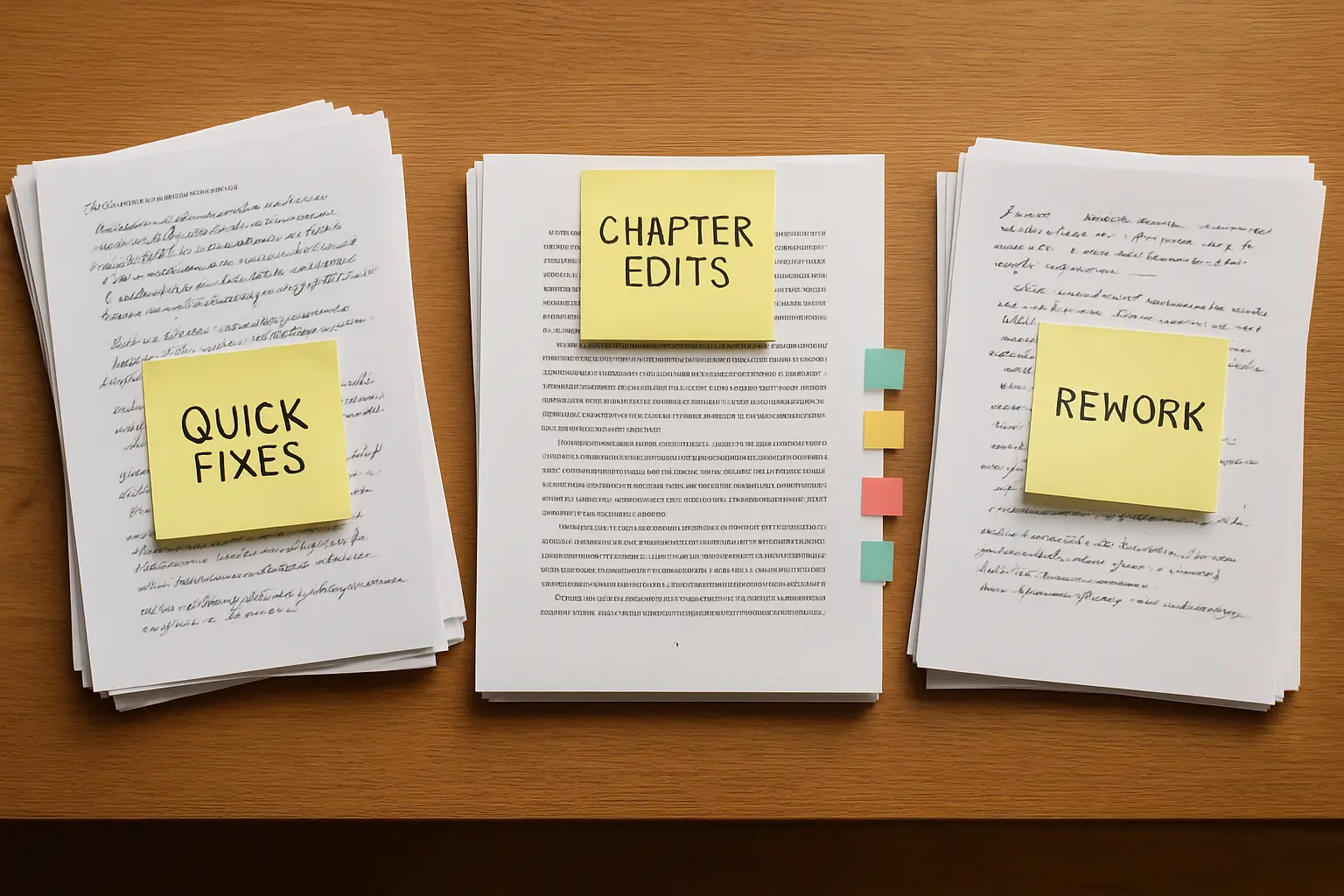
Triage into three piles
Every correction a Philippine panel gives falls into one of three, and they cost wildly different amounts of time.
- Mechanical. A misnumbered table, a missing source note, an APA entry with a publisher location in it, a heading in the wrong case. Minutes each. Do them last, in one sitting, because earlier edits will create more of them.
- Textual. Rewrite an interpretation paragraph, tighten a conclusion, add a limitation you conceded during questioning. Hours each. This is the bulk of the list.
- Structural. Add a test, re-run an analysis with a different grouping, split a table, re-derive a recommendation. Days. There are usually one or two, and they are the reason the deadline is tight.
Start with the structural pile, on day one, even though it is the hardest. A structural change ripples: a new test changes a table, which changes a finding, which changes a conclusion, which changes a recommendation, which changes your numbering. Doing it last means doing the mechanical pile twice.
The ripple check nobody runs
When a structural correction lands, four places must move together, and a panel that asked for the change will look at all four:
- The statistical treatment paragraph in Chapter 3, which must name the test you actually ran — the mapping is in the guide to the statistical treatment of data.
- The table and its interpretation in Chapter 4, written in the shape set out in the guide to writing Chapter 4 table by table.
- The finding, conclusion and recommendation in Chapter 5, which must stay in one-to-one correspondence with your research questions — see how to write Chapter 5.
- The abstract, which is the part everyone forgets. It states results. If a result changed, the abstract is now wrong, and it is the first page a reader opens.
A correction that moved three of these and not the fourth is worse than one you did not make, because it introduces a contradiction that was not there before.
Start the signature chase on day one, in parallel
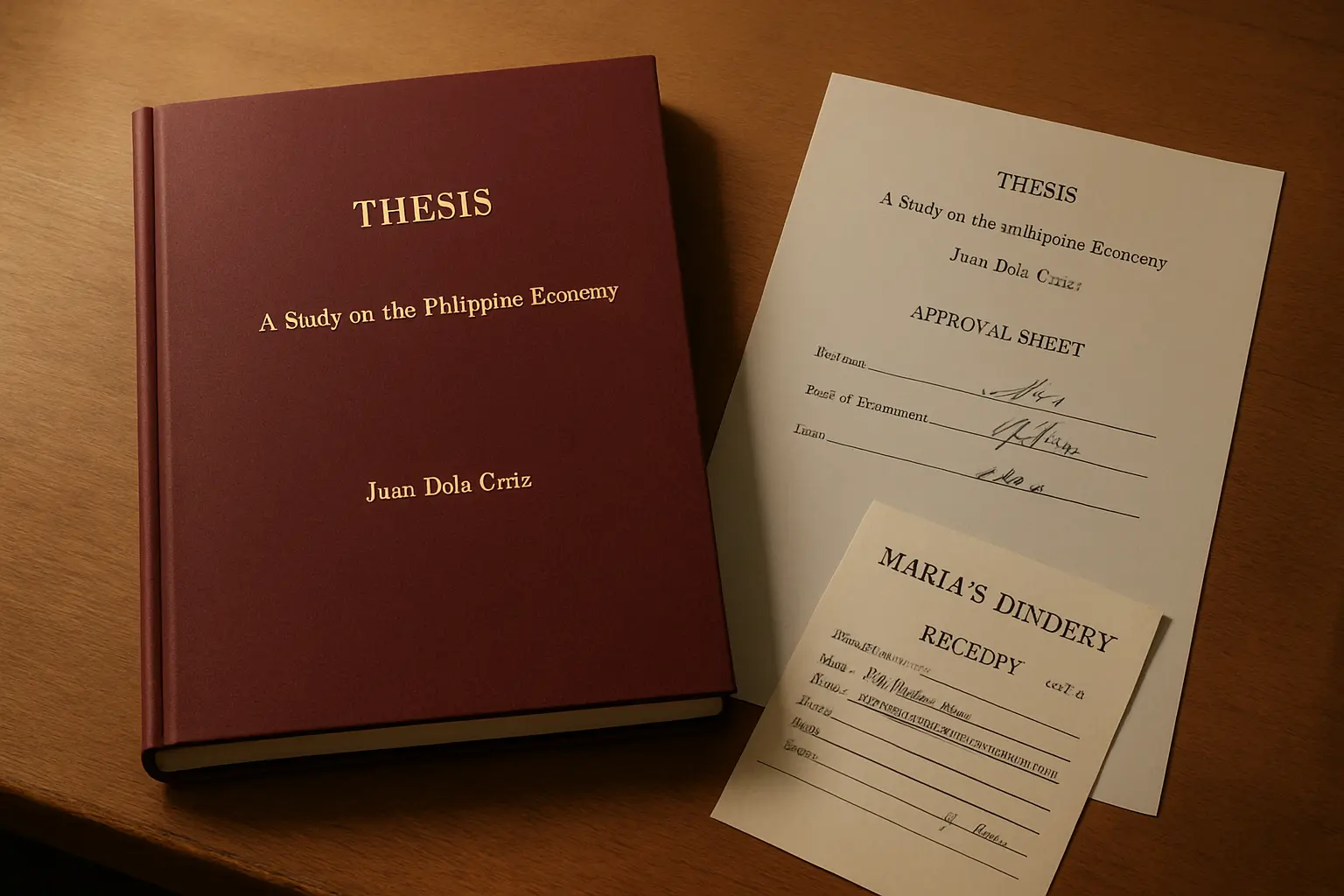
This is administrative, it is not your work, and it is the most common reason a finished manuscript misses a deadline. The approval or endorsement sheet needs signatures from your adviser, your panel members, your program chair and often a dean — people with teaching loads, off-campus duties and leave.
Do not wait until the corrections are done to start. On day one, email everyone whose signature you need, say when you expect to submit and ask how they prefer to sign. Find out that a panellist is on leave now, not on the afternoon of the deadline. Ask your research office in the same week what physical format they require, how many copies, and whether the binding shop they use needs an appointment.
The lists of tables and figures are the other timing trap. They must match the actual numbering inside your chapters, and every structural correction breaks them. Regenerate them after the final edit, never before — and check the page numbers by opening the pages, not by trusting the field update.
Where Tesify actually helps in this stretch
The two weeks after a defense are not a writing problem. They are a consistency problem across a document that four people wrote in different files. Tesify holds the whole thesis as one connected document, so the parts that must move together are visible rather than remembered.
- Paste the corrections in as a working list and route each one to the chapter it touches, so nothing is discovered on the last day.
- Make the structural change once and see what depends on it — objectives, tables, conclusions and recommendations sit in one chain rather than in four files.
- Rewrite the textual corrections in place, with the panellist’s wording next to the paragraph, so you can show what changed if you are asked.
- Keep citations attached to claims, so a source removed during revision does not leave an orphaned sentence — the failure mode described in the note on papers withdrawn after publication.
- Run the alignment check last: research questions, tables, conclusions, abstract. Four lists, same length, same order.
It is 100% written by you, alongside 9,000+ students and 15,000+ chapters. It does not sign your approval sheet and it does not talk to your panel, which are the two things on your list it genuinely cannot touch.
The last forty-eight hours
Reserve them. Do not schedule a correction into them. In order:
- Regenerate the table of contents and the lists of tables and figures, then spot-check five page numbers by opening the pages.
- Read the abstract against your final Chapter 5. They must state the same results.
- Run one reference pass — alphabetical order, hanging indents, and the mechanical errors described in the guide to fixing generated APA references.
- Print one physical copy and read it on paper. You will find things the screen hides.
- Deliver to the binding shop with a day of slack. They have other deadlines in the same week as your whole cohort.
Finish the corrections without breaking what already passed
Tesify keeps objectives, results and conclusions in one connected document, so a correction to a table shows you the conclusion and the abstract that move with it. Over 9,000 students have written more than 15,000 chapters with it, and every word is still written by you.
Frequently asked questions
How much does Tesify cost in pesos?
Current plans and peso pricing are listed on the Tesify site itself, because they change and we will not quote a figure here that might be out of date by the time you read it. Check the pricing page before you commit, and confirm what is included in the entry-level plan rather than relying on any third-party summary.
Is using an AI writing tool for corrections against my school’s rules?
That depends on your school, and it is a question with a written answer somewhere in your student handbook or research manual. Most Philippine institutions now permit assistance with language and structure while requiring that the analysis and the argument are yours, and several require a declaration of AI use. Read your own policy and follow it. The safe practice for corrections is narrow: you decide what the change is, the tool helps you write it, and you can explain every sentence at a re-defense.
Is my manuscript safe if I put it in an online tool?
Ask three questions of any tool before you paste a chapter in: does it retain your text, does it use it for anything beyond serving you, and can you delete it. If your data includes identifiable respondent information, that belongs in your locked data file, not in a writing tool — a manuscript quotes findings, not raw questionnaires.
Can the panel fail me during revisions?
Not usually — a pass with corrections is a pass, conditional on completing them. What can happen is that the adviser or panel refuses to sign until an item is genuinely addressed, which functions as a delay rather than a failure. Missing the submission window is the real risk.
How long do post-defense revisions usually take?
Your school sets the deadline and it is commonly one to three weeks. The work itself is dominated by the one or two structural items on the list, not by the number of items.
What if I disagree with a correction?
Raise it with your adviser first, with a reason and evidence, not with the panellist directly. Some corrections are preferences and some are errors on your part; your adviser knows which is which and is the person who has to defend the decision alongside you.
Two panellists gave me contradictory corrections. What do I do?
This is common and it is your adviser’s job to resolve. Do not implement both, do not pick the one you prefer silently, and do write down what was decided and by whom.
Do I have to update the abstract?
If any result changed, yes. The abstract states findings, so a changed number makes it inaccurate. It is the most frequently missed correction there is.
When should I start collecting approval-sheet signatures?
Day one, in parallel with the revisions. The people who sign are not always available in submission week, and finding out early costs one email.
Is there a re-defense?
Only if the panel required one, which is unusual after a pass with corrections. If there is, the questions come from the same predictable set — the bank is in the guide to what panels ask during a thesis defense.
Can I pay someone to do the corrections for me?
Language editing, transcription and printing are ordinary paid services. Somebody else rewriting your analysis is not, and the line is drawn in the guide to what you can legitimately pay for. A correction you did not make is one you cannot explain.